
When it comes to migraines vs. headaches, most people use the words interchangeably. You get a bad headache and call it a migraine. Or you have a migraine and someone hands you an Advil and tells you to drink more water. Neither of those is quite right, and the difference matters more than most people realize.
This post contains affiliate links. As an Amazon Associate and Walmart Creator, I earn from qualifying purchases. I may also earn a commission through other affiliate programs at no extra cost to you. I only share products I genuinely find useful or interesting.
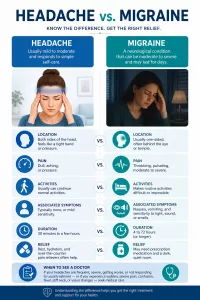
A headache is pain in the head, face, or neck. It can be dull or throbbing, mild or severe, and it usually responds to rest, hydration, or an over-the-counter pain reliever. There are many kinds of headaches, but the most common are tension headaches — that tight-band pressure across both sides of the head — and sinus headaches, which tend to settle into the face and forehead.
A migraine is not a worse headache. A migraine is a neurological disorder involving changes in brain activity, blood flow, and neurotransmitters like serotonin. The headache is one symptom of it, not the whole thing.
What a migraine actually looks like
Migraine is typically one-sided, throbbing or pulsating, moderate to severe, and associated with an intolerance of routine activities. For a clinical diagnosis, you need at least two of those first four characteristics, plus nausea, vomiting, or sensitivity to light or noise.
That last part is the piece that trips people up. If you can sit in a lit room and have a conversation, it’s probably not a migraine. If light feels like a personal attack and your own heartbeat is making things worse, it might be.
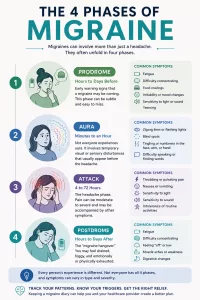
Migraines also occur in phases. Before the headache arrives, some people experience a prodrome — a few hours or days of symptoms including fatigue, difficulty concentrating, food cravings, irritability, yawning, and sensitivity to light and sound. This is the brain signaling that something is coming. A lot of people miss it, or mistake it for a mood shift or a rough sleep.
Some migraines also include aura — visual or sensory disturbances that precede the headache. Aura can look like zigzag lines at the edges of your vision, blind spots, or tingling in the face and hands. Not everyone with migraines gets aura. Many people have migraines for years before anyone tells them aura is even a thing.
A migraine attack can last anywhere from four to 72 hours. After the headache fades, there’s often a postdrome — sometimes called the migraine hangover — where you feel exhausted, foggy, and wrung out for a day or two. That part doesn’t get talked about enough.
The energy piece

For those of us already managing chronic illness, migraines aren’t just painful. They’re expensive in a spoonie sense. A full attack can cost two or three days. The prodrome alone can drain your reserves before the headache even starts.
Research suggests that migraine may actually be an adaptive response to a mismatch between the brain’s energy reserves and its expenditure — which, if you live with fibromyalgia or Sjögren’s or any other condition that runs down your baseline energy, explains a lot. Your nervous system is already working harder. The threshold is lower.
This is why the standard advice — “just rest and stay hydrated” — can feel so insufficient. It’s not wrong, exactly. It just doesn’t account for what it’s like to be in a body where rest is already a full-time project.
Living with this constant energy drain is a journey in itself, and I’ve written openly about navigating the reality of medical gaslighting and finding joy in the fog of Sjögren’s Syndrome.
What actually helps
For tension headaches specifically, rest, hydration, a cool cloth, and ibuprofen or acetaminophen are often enough. If you’re prone to stress headaches, gentle movement and heat on the neck and shoulders can help.

For migraines, the approach is different and more layered.
During an attack: A dark, quiet room. Cold or warm compress depending on what your body prefers. Hydration if you can manage it. Some people find that sleep helps end a migraine. Over-the-counter options like ibuprofen or aspirin sometimes work if taken early enough. Prescription triptans and newer CGRP inhibitors work better for many people — if you’re having frequent attacks and haven’t talked to a doctor about prescription options, it’s worth the conversation.
If you want to skip the guesswork and see exactly what I use, I’ve put together a curated Migraine & Headache Relief Essentials list on Amazon featuring the specific cooling wraps, magnesium, and tools that help me manage my symptoms.
Between attacks: Poor sleep can trigger attacks, and migraine symptoms can disrupt sleep — so keeping a consistent sleep and wake time, making your bedroom dark and quiet, and winding down without screens before bed can meaningfully reduce frequency. Easier said than done when your energy management is already complicated, but even small movement toward consistency tends to matter.
Keeping a headache diary can help identify triggers — noting when an attack started, what you were doing, how long it lasted, and what helped. Common triggers include skipped meals, dehydration, alcohol, weather changes, strong smells, and hormonal shifts. That last one tends to be underacknowledged.
There’s also a meaningful overlap between migraine and mental health — around 60% of people with migraine report being diagnosed with an anxiety disorder, and 50% report depression. It’s not a character flaw or a stress problem. It’s a neurological reality. Managing both tends to help both.
While drinking enough water is a solid baseline, plain water often isn’t enough when your system is depleted. I prefer to skip the artificial ingredients in store-bought options and mix up a DIY electrolyte powder for everyday hydration at home to help keep my cellular energy up.

When to see someone
If your headaches are frequent, getting worse over time, or not responding to what used to help — that’s worth a doctor’s visit. If you’ve never been formally evaluated and you’re having attacks that knock you out for days, you may be undertreated. Neurology has come a long way in the last decade, and there are more options now than there used to be.
If a headache comes on suddenly and severely, especially with fever, stiff neck, confusion, or vision changes, that’s an emergency, not a home remedy situation.
The difference between a headache and a migraine isn’t just about pain levels. It’s about knowing your own body well enough to give it what it actually needs — and not wasting energy on the wrong treatment while you’re already running low.
Managing that baseline requires specific tools that go beyond standard medical advice. Over time, I’ve rounded up the practical chronic illness products that actually help me manage daily symptoms so I don’t waste precious energy on things that don’t work.
Migraines vs. Headaches Frequently Asked Questions
Is every bad headache a migraine?
No. A migraine is a neurological condition with a specific cluster of symptoms — one-sided throbbing pain, nausea, sensitivity to light and sound, and often a before-and-after period that can leave you flattened for days. A severe tension headache is genuinely miserable, but it’s a different thing. The distinction matters because the treatment is different.
Can you have a migraine without a headache?
Yes. Migraine aura without headache — sometimes called a silent migraine — is a recognized variant where someone experiences aura symptoms like visual disturbances, nausea, or light sensitivity without the headache itself arriving. If you’ve had episodes of vision weirdness or sudden nausea that didn’t come with head pain, this is worth mentioning to a doctor.
How do I know if it’s a sinus headache or a migraine?
They overlap more than people expect. Migraines can cause a runny nose and facial pressure, which reads as sinus. The difference is often in the mucus — clear and watery tends toward migraine, thick and discolored tends toward actual sinus infection. Sinus headaches caused by infection also usually come with other signs of being sick. If you’ve been treating “sinus headaches” for years and they keep coming back, it’s worth asking whether they’re actually migraines.
What’s a rebound headache?
Rebound headaches — formally called medication overuse headaches — happen when the same pain medication that relieves a headache ends up triggering more headaches if used too often. If you’re reaching for over-the-counter pain relievers more than two or three times a week, mention it to your doctor. It’s a common and underrecognized cycle, especially in people who have frequent migraines and are trying to manage them with what’s on hand.
Do I need a neurologist, or can my regular doctor help?
Your primary care doctor can diagnose migraines and start treatment. A neurologist or headache specialist is worth seeking out if your symptoms are unusual, your current treatment isn’t working, or you want more specialized support. There’s no definitive test for migraine — diagnosis comes from a thorough conversation about your symptoms, frequency, severity, and patterns. Bring notes if you can. A headache diary for even a few weeks gives your doctor a lot more to work with.
Is there a cure?
There isn’t a cure for migraines. There are treatments that reduce frequency, shorten attacks, and make them more manageable — and that list has grown considerably in the last decade. Preventive medications, newer drug classes like CGRP inhibitors, and non-pharmaceutical approaches all have real evidence behind them. “Nothing can be done” is not the current state of things.
What if I can’t afford to rest when a migraine hits?
This is one of the harder questions, and there’s no clean answer to it. What helps is catching attacks early — taking medication at the first sign rather than waiting to see how bad it gets, reducing sensory input as fast as possible, and keeping your baseline as steady as you can manage. For people with chronic illness who can’t afford a full two-day shutdown every time, working with a doctor to find a reliable acute treatment is usually more sustainable than riding each one out.
Further Reading for Migraines vs. Headaches
These are the sources that informed this post. All are worth bookmarking if this is something you’re actively managing.
American Migraine Foundation — americanmigrainefoundation.org Patient-written and medically reviewed resources on treatment, triggers, mental health connections, and alternative therapies. One of the better general hubs.
The Migraine Trust — migrainetrust.org UK-based, but the clinical information is thorough and updated regularly. Their FAQ and medication overuse headache pages are particularly clear.
Mayo Clinic: Migraines — Simple Steps to Head Off the Pain — mayoclinic.org Practical lifestyle guidance, including sleep, movement, and trigger tracking.
Cleveland Clinic: Migraine Headaches — clevelandclinic.org Solid overview of types, phases, and treatment options.
Cleveland Clinic: Rebound Headaches — clevelandclinic.org If you suspect medication overuse headache, this is a good place to start.
Harvard Health: Stopping the Vicious Cycle of Rebound Headaches — health.harvard.edu More detail on how rebound headaches develop and what breaking the cycle actually looks like.