Crochet has always been my happy place. It’s where I slow down, create something beautiful, and find a little peace—even on difficult days.
This post contains affiliate links. As an Amazon Associate and Walmart Creator, I earn from qualifying purchases. I may also earn a commission through other affiliate programs at no extra cost to you. I only share products I genuinely find useful or interesting.
But living with chronic illness changed the way I craft, forcing me to rethink my setup and invest in ergonomic crochet tools. Suddenly, the things that used to feel effortless became obstacles.
Suddenly, the things that used to feel effortless became obstacles. My hands tired more quickly. My wrists ached after only a short session. Dry eyes made it difficult to see my stitches, brain fog stole my place in patterns, and fatigue meant I couldn’t always sit at a table long enough to finish a project.
For a while, I assumed that was simply the price of continuing to crochet.
It isn’t.
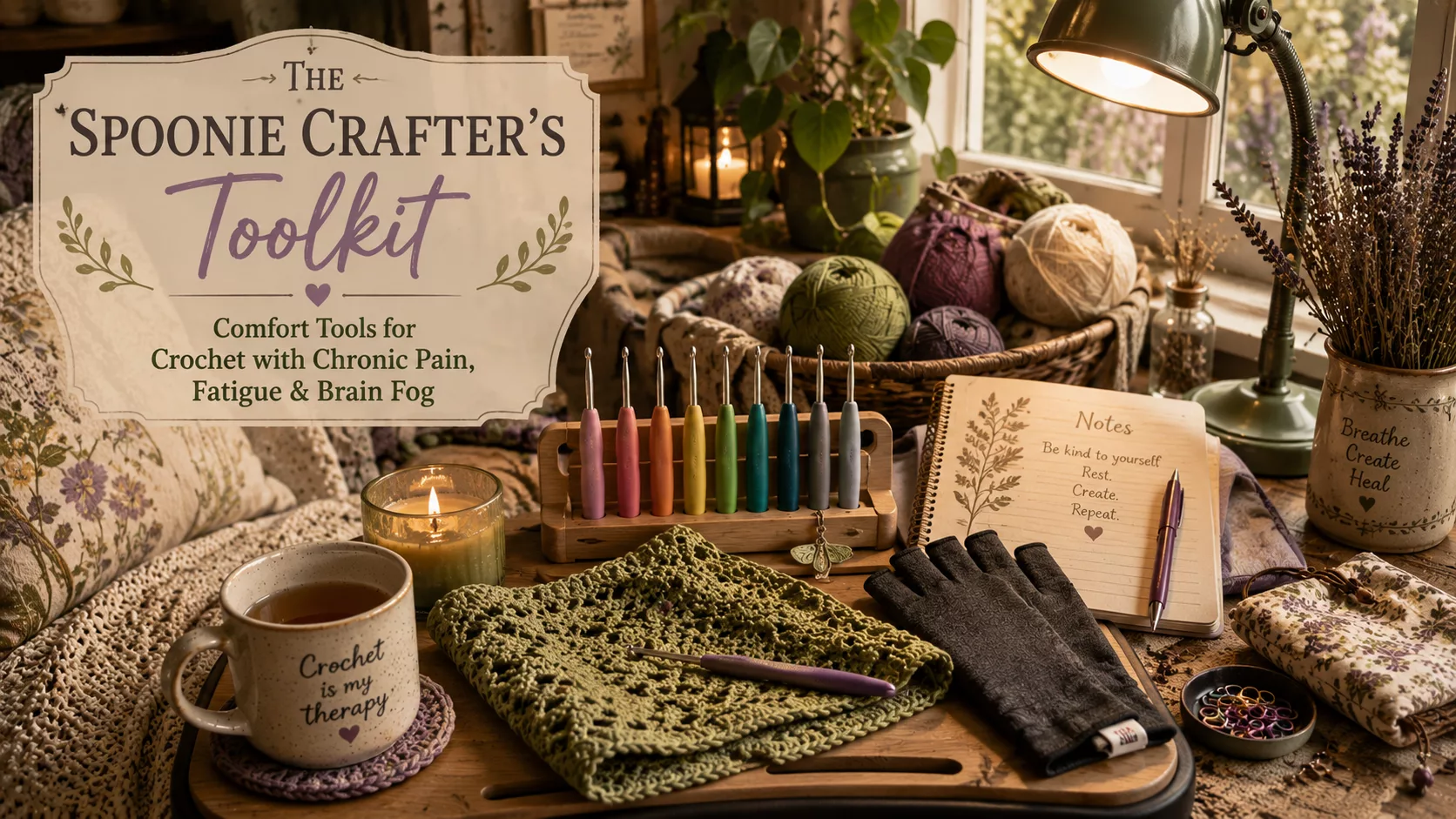
Over time, I discovered that small changes made a remarkable difference. A more comfortable crochet hook. Better lighting. A supportive lap desk. Compression gloves on difficult mornings. A project bag that kept everything together when my energy was low. None of these tools “fixed” my illnesses—but they helped remove unnecessary barriers so I could spend more time enjoying the craft I love.
That’s exactly why I created this guide.
Unlike most crochet supply lists, The Spoonie Crafter’s Toolkit is organized by the problems you’re trying to solve, not by product category. Whether you’re dealing with aching hands, eye strain, chronic fatigue, brain fog, or simply trying to create a more comfortable crafting space, you’ll find practical recommendations designed to make crocheting feel more accessible.
You don’t need to buy everything on this list.
In fact, I encourage you not to.
Instead, start with the challenge that’s making crochet the hardest for you right now. Maybe it’s hand pain. Maybe it’s poor lighting. Maybe it’s constantly losing your place in a pattern on brain fog days. One thoughtful change can often make a much bigger difference than replacing your entire setup.
Inside this guide, we’ll look at ergonomic crochet hooks, hand and wrist support, comfortable crafting setups, lighting solutions, organization tools, and simple ways to build a low-energy crochet space that works with your body instead of against it.
Because crafting isn’t something you have to earn by having a “good” health day.
Everyone deserves to experience the comfort, creativity, and joy that crochet can bring—even when life with chronic illness looks different than it used to.
Why Traditional Crochet Setups Don’t Work for Every Body
If you’ve ever finished a crochet session with aching hands, a stiff neck, tired eyes, or complete exhaustion, you might have wondered whether you were simply doing something wrong.
The truth is, most crochet advice assumes every body works the same way.
Many tutorials are written by people who can crochet for hours without pain, sit comfortably at a table, or push through minor discomfort without paying for it the next day. For those of us living with chronic illness, chronic pain, or fatigue, that advice often falls short.
The goal isn’t to crochet longer by ignoring your body’s signals.
The goal is to make crocheting more sustainable by reducing the physical and mental effort each project requires.
Think of your crafting setup like any other tool. A carpenter chooses the right hammer. A gardener uses ergonomic pruners. Crocheters deserve tools that fit their bodies, too.
Small changes add up.
A crochet hook with a larger handle can reduce the amount of force your fingers need to grip. Better lighting can lessen eye strain before it drains your energy. A supportive lap desk can improve your posture without requiring you to sit at a traditional table. Even something as simple as organizing your supplies so everything is within reach can save valuable energy on days when every movement counts.
None of these changes cure chronic illness.
What they can do is remove unnecessary obstacles so you spend less time fighting your tools and more time enjoying your craft.
The goal isn’t to create the “perfect” crochet space.
It’s to create a space that works for your body, your symptoms, and your energy level.
As you read through this guide, remember that you don’t need everything. Start with the problem that affects you the most. One thoughtful improvement can make a surprising difference, and over time those small changes can transform the way you experience crochet.
Common Challenges Spoonie Crocheters Face
While everyone’s experience is different, these are some of the most common challenges that can make crocheting more difficult:
- Hand pain, stiffness, or reduced grip strength
- Wrist pain or repetitive strain
- Neck, shoulder, and back discomfort
- Eye strain from poor lighting or detailed stitch work
- Brain fog that makes it easy to lose your place in a pattern
- Fatigue that limits how long you can comfortably crochet
- Difficulty sitting at a desk or crafting table for extended periods
If you recognize yourself in one or more of these, you’re not alone—and you don’t have to give up a hobby you love. The rest of this guide focuses on practical ways to adapt your tools and your environment so crochet can remain a source of comfort instead of another drain on your energy.
Hooks That Don’t Hurt: Choosing Ergonomic Crochet Tools
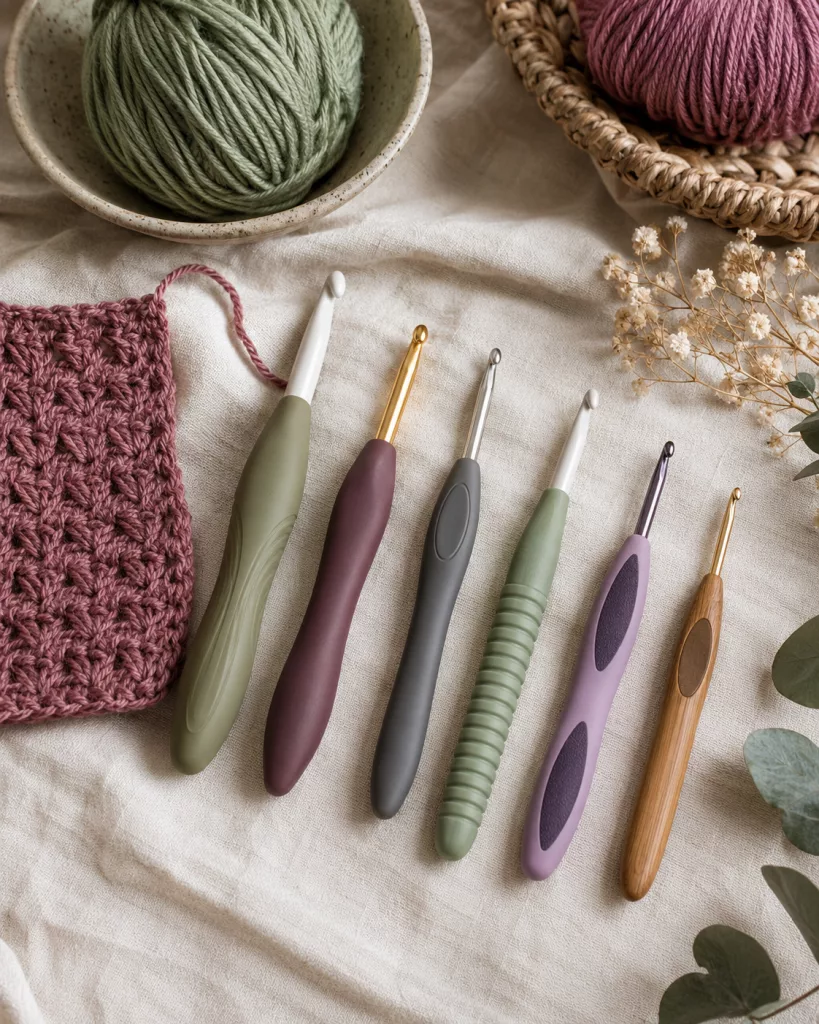
If there’s one tool that’s worth upgrading, it’s your crochet hook.
Every stitch you make starts here. Your hook is in your hand from the first chain to the final weave-in, so even small improvements in comfort can have a noticeable impact over the course of a project.
Traditional aluminum hooks are lightweight and inexpensive, but they were never designed with comfort in mind. Their narrow handles require your fingers to pinch tightly for long periods, which can increase fatigue and place extra strain on your hands and wrists. If you already live with pain, stiffness, or reduced grip strength, that repetitive motion adds up quickly.
Ergonomic hooks take a different approach. By increasing the size of the handle and using softer materials, they reduce the amount of force needed to maintain a comfortable grip. Less gripping means less tension, and less tension often means longer, more enjoyable crochet sessions.
No hook can eliminate chronic pain, but choosing one that works with your hands instead of against them can make a meaningful difference.
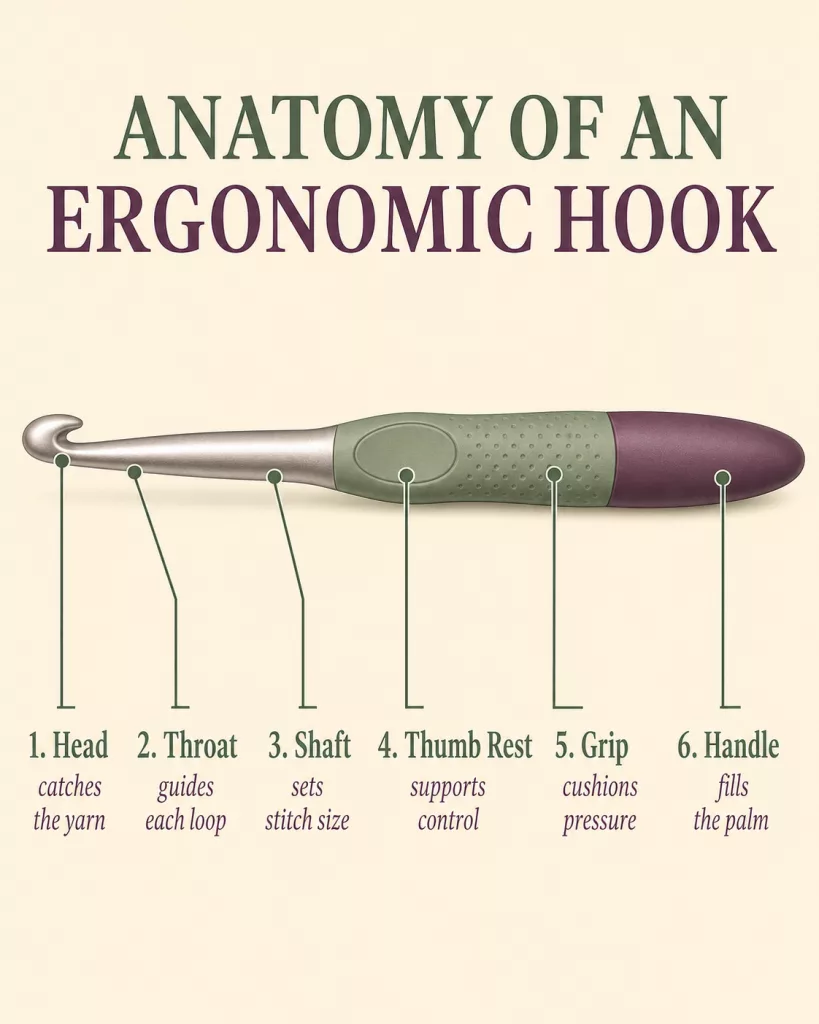
What Makes a Crochet Hook Ergonomic?
Not every hook marketed as “ergonomic” will feel comfortable for every crocheter. The best ergonomic crochet tools depends on your grip style, the amount of support your hands need, and the types of projects you enjoy making.
Here are the features I pay attention to when choosing a hook.
Comfortable Grip Diameter
A thicker handle spreads the work across more of your hand instead of concentrating pressure on your fingertips.
If gripping small objects makes your hands ache or cramp, a larger handle is often the biggest improvement you can make.
Soft Grip Materials
Rubber and silicone grips provide cushioning while helping prevent your fingers from slipping.
Many crocheters find that these materials feel more comfortable during longer crafting sessions than hard plastic or bare aluminum.
Lightweight Construction
A lighter hook means your hands and wrists have less weight to support with every stitch.
That may not sound significant, but over hundreds—or even thousands—of stitches, it can noticeably reduce fatigue.
Smooth Yarn Glide
The hook should move easily through the yarn without catching.
A smoother glide means less pulling, less resistance, and fewer repetitive motions that tire your hands.
Handle Shape
Some hooks have rounded handles while others are flatter or slightly contoured.
Neither is universally better. The right shape is simply the one that allows your hand to relax instead of squeezing tightly.
Inline vs. Tapered Hooks
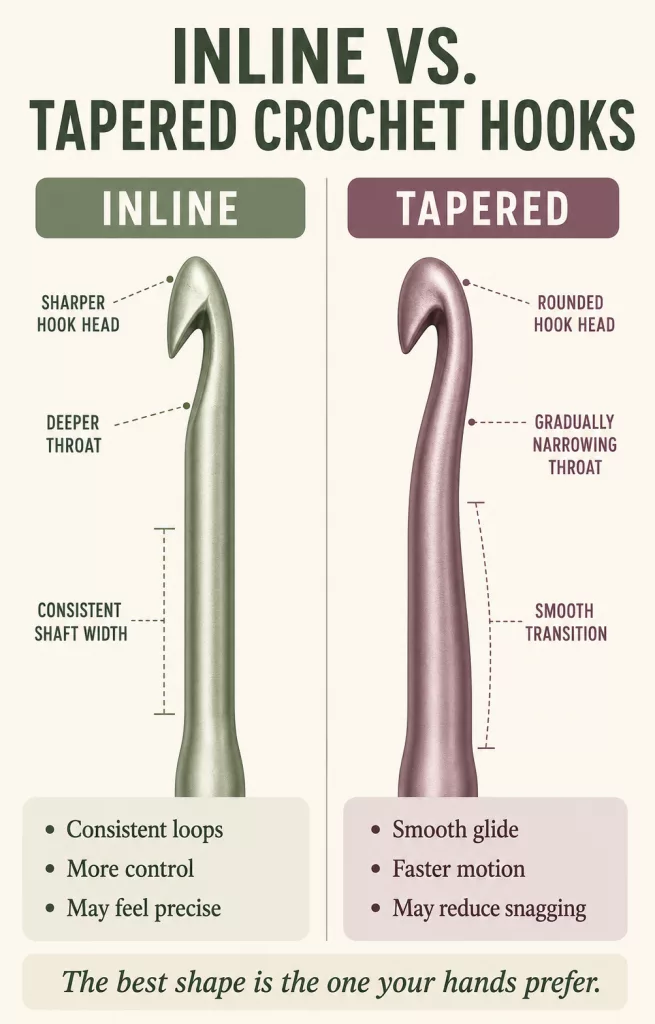
One feature that’s often overlooked is the shape of the hook itself.
Inline Hooks
Inline hooks have a straighter throat with a deeper groove.
Many crocheters feel they provide more control and create slightly more consistent stitch sizes.
Tapered Hooks
Tapered hooks have a smoother transition from the shaft to the hook.
Many people find they glide through stitches more easily and feel faster to work with.
Neither style is objectively better.
If you’ve only ever used one type, it may be worth trying the other. Sometimes a simple change in hook shape feels more comfortable than switching brands altogether.
My Favorite Ergonomic Crochet Hooks
After trying different styles and researching the options available, these are the hooks I recommend most often.
Best Overall: Clover Amour
If you’re only going to buy one ergonomic hook, this is where I’d start.
The soft cushioned handle, lightweight aluminum shaft, and exceptionally smooth glide have made Clover Amour a favorite among crocheters for years. They’re available individually or as a complete set, making them easy to add to your collection over time.
Best Budget Set: BeCraftee Ergonomic Hooks
Comfort doesn’t have to be expensive.
The BeCraftee set offers padded grips across a wide range of hook sizes, making it an excellent option for beginners or anyone who wants to try ergonomic hooks without a large investment.
Best Premium Set: Tulip Etimo Rose
If crochet is your primary hobby and you’re ready to invest in premium tools, the Tulip Etimo Rose hooks offer beautiful craftsmanship and exceptionally comfortable rubber grips.
Many crocheters love them for detailed work and longer projects.
Best for Low-Light Crafting: Jeciran
Lighted crochet hooks can be especially helpful if you enjoy evening crochet sessions or need additional illumination while working with darker yarns.
They combine two helpful tools into one by bringing the light directly to the tip of your hook.
Best Budget Upgrade
Already have hooks you love?
You may not need to replace them at all.
Foam grip tubing—available at many hardware stores—or a custom polymer clay handle can dramatically increase comfort for just a few dollars. It’s one of the most affordable ergonomic upgrades you can make.
Shop My Ergonomic Crochet Hooks
I’ve gathered all of my recommended ergonomic hooks, lighted hooks, and affordable upgrades into one Amazon Idea List so you can compare options in one place.
Hands & Wrist Support: Protect Your Most Important Tools
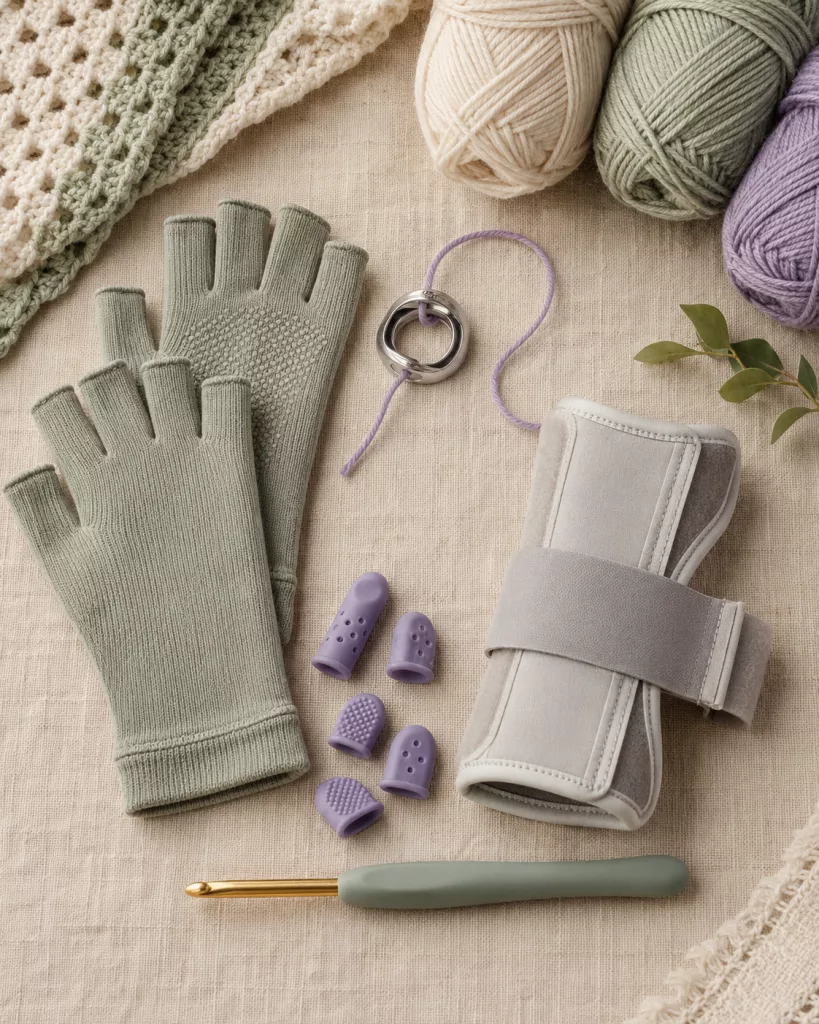
Your hands do an incredible amount of work every time you crochet.
They hold your hook, guide your yarn, maintain tension, and repeat the same small movements hundreds—sometimes thousands—of times during a single project. When you live with chronic pain, joint stiffness, or fatigue, those repetitive motions can quickly turn a relaxing hobby into something physically exhausting.
The good news is that you don’t have to rely on one solution for every problem.
Some days your hands may only need a little extra support. Other days, you might benefit from reducing how much work your fingers do altogether. The goal isn’t to wear every support device all the time—it’s to choose the tool that best matches how your body feels today.
Think of these as options in your comfort toolkit rather than permanent solutions.
Compression Gloves
Compression gloves are one of the simplest ways to add gentle support while crocheting.
They apply light, even pressure to your hands, which many people find helps reduce stiffness and improves comfort during longer crafting sessions. Open-fingertip styles allow you to maintain the dexterity needed to hold your hook and feel your stitches.
Some crocheters prefer lightweight crafting gloves during projects, while others save stronger compression gloves for recovery after they’ve finished crocheting.
If you’re new to compression gloves, start with a lighter level of support. You can always increase compression later if you find you need it.
Yarn Tension Rings
If you’ve never tried a yarn tension ring, this may be one of the biggest surprises in your toolkit.
Instead of wrapping the working yarn tightly around your fingers, the ring helps guide the yarn while maintaining a more consistent tension. That means your fingers don’t have to grip as tightly or work as hard throughout your project.
For crocheters whose index finger or thumb becomes sore from holding tension, a simple ring can noticeably reduce fatigue.
Like any new tool, it takes a little practice, but many crocheters find the adjustment well worth it.
Silicone Finger Sleeves
Sometimes the problem isn’t your whole hand.
It’s one sore spot.
If the yarn repeatedly rubs against the same finger or your hook presses against a particular joint, silicone finger sleeves can add a layer of cushioning without affecting your ability to crochet.
They’re inexpensive, easy to keep in your project bag, and especially useful during flare-ups when your skin or joints feel extra sensitive.
Wrist Braces
When your wrists need more support, a lightweight brace can help reduce unnecessary movement.
Some crocheters wear a brace during short crafting sessions, while others find it more helpful afterward or overnight as part of their recovery routine.
The goal isn’t to completely immobilize your wrist. It’s to provide enough support that repetitive motions don’t become more irritating than they need to be.
If a brace causes discomfort, numbness, or increased pain, it’s a good idea to stop using it and discuss it with your healthcare provider.
Build Support Gradually
One of the biggest mistakes I see is assuming you need every ergonomic accessory before you can crochet comfortably.
Most people don’t.
Instead, think about the symptom that’s bothering you most.
If your fingers get tired from holding yarn, try a tension ring.
If your hands feel stiff, compression gloves might help.
If one finger always becomes sore, silicone sleeves may be enough.
Addressing one problem at a time is usually more affordable—and often more effective—than replacing your entire setup overnight.
Listen to Your Body
No tool works for everyone.
What feels amazing to one crocheter may feel awkward to another, and that’s perfectly normal.
Pay attention to how your hands feel during and after each project. If something reduces strain and helps you crochet more comfortably, it’s doing its job. If it creates new discomfort, it’s okay to try a different approach.
Building an ergonomic crochet toolkit isn’t about finding the “perfect” product.
It’s about discovering the combination of tools that helps your body enjoy crochet for years to come.
Shop My Hand & Wrist Support Collection
I’ve gathered my favorite compression gloves, tension rings, finger sleeves, wrist braces, and other hand-comfort essentials into one Amazon Idea List so you can compare the options that best fit your needs.
Crochet Comfort Beyond Your Hands
When people think about crocheting comfortably, they usually focus on their hook.
While that’s an important place to start, it’s only one piece of the puzzle.
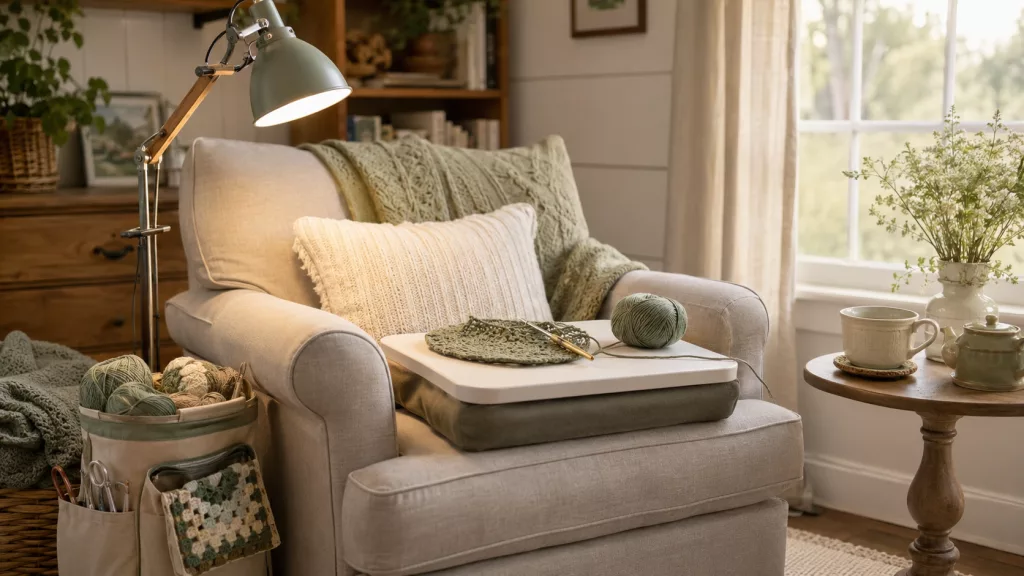
The way you sit, where you crochet, how your arms are supported, and even whether your feet are comfortably planted can all affect how your body feels during and after a project.
If you’ve ever finished crocheting with a sore neck, aching shoulders, or a stiff back, your workspace may be working against you.
The good news is that creating a more comfortable setup doesn’t require a dedicated craft room—or even a traditional desk. Some of the most effective changes are also some of the simplest.
The goal isn’t perfect posture.
It’s reducing unnecessary strain so your body spends less energy supporting itself and more energy enjoying the creative process.
You Don’t Have to Crochet at a Table
One of the biggest myths in crafting is that there’s a “correct” place to crochet.
For many spoonies, sitting upright at a dining table for long periods simply isn’t realistic.
Some days your favorite recliner offers the best support. Other days, the couch, a cozy reading chair, or even your bed may be the most comfortable option.
Your body doesn’t care whether your workspace looks picture-perfect.
It cares whether it’s supported.
Crochet where you feel most comfortable, not where you think you should.
Lap Desks Make a Bigger Difference Than You Might Expect
Holding a project in your lap may seem natural, but over time it can cause you to hunch your shoulders, bend your neck forward, and raise your arms higher than necessary.
A lap desk creates a stable surface that brings your work closer to you.
Many models also make it easier to support your elbows and forearms, reducing strain on your shoulders and wrists.
If you frequently crochet from the couch or bed, a lap desk can be one of the most valuable additions to your crafting space.
Support Your Arms, Not Just Your Back
Many of us instinctively focus on back support, but your arms deserve just as much attention.
When your elbows are unsupported, your shoulder muscles have to work continuously to hold your arms in position. Over time, that extra effort can lead to tension throughout your neck and upper back.
Simple adjustments can help:
- Rest your elbows on pillows.
- Use the arms of your chair for support.
- Bring your project closer instead of reaching down toward it.
- Change positions throughout longer crochet sessions.
Reducing even a small amount of muscle tension can make crafting feel much less tiring.
Warmth Can Be Comforting
If stiffness tends to make crocheting more difficult, gentle warmth may help you feel more comfortable while you work.
Many crocheters enjoy using a heated throw over their lap or legs during cooler weather or on days when their joints feel particularly stiff.
Beyond the physical comfort, creating a warm, cozy crafting environment can make it easier to relax and settle into a project.
Comfort isn’t just about reducing pain—it’s also about making your creative space somewhere you genuinely enjoy spending time.
Build a Space That Fits Your Life
Your crochet space doesn’t need to be elaborate.
In fact, the best setup is often the one that’s easiest to use.
A small basket beside your chair.
A lap desk that folds away when you’re finished.
A lamp positioned exactly where you need it.
A heated throw within easy reach.
When your tools are already in place, it takes less energy to begin—and that’s often the biggest hurdle on difficult days.
Think about what makes it easier for you to sit down and crochet.
The answer will look different for everyone, and that’s okay.
The goal isn’t to recreate someone else’s craft room.
It’s to create a space that supports your body, your energy, and your creativity.
Shop My Comfortable Crochet Setup
I’ve collected my favorite lap desks, heated throws, and comfort-focused crafting accessories into one Amazon Idea List to help you build a crochet space that works for your body.
Lighting & Eye Comfort: See Your Stitches Without Draining Your Energy
Eye strain is one of the most overlooked causes of crafting fatigue.
When your lighting isn’t bright enough—or isn’t positioned correctly—your eyes have to work much harder to distinguish individual stitches, read patterns, and keep track of your progress. That extra effort doesn’t just tire your eyes. It can leave you feeling mentally exhausted long before your hands are ready to stop.
For many spoonie crafters, improving your lighting can make as much difference as upgrading your crochet hook.
The goal isn’t simply to make your project brighter.
It’s to make your stitches easier to see while reducing the effort your eyes have to make every minute you crochet.
Start With Better Light, Not More Light
One common mistake is adding more lamps without thinking about the quality of the light.
A harsh overhead ceiling light can still cast shadows across your work, while a dim bedside lamp may force your eyes to strain even if it’s only a few feet away.
Instead, focus on creating clear, even lighting directly where you’re working.
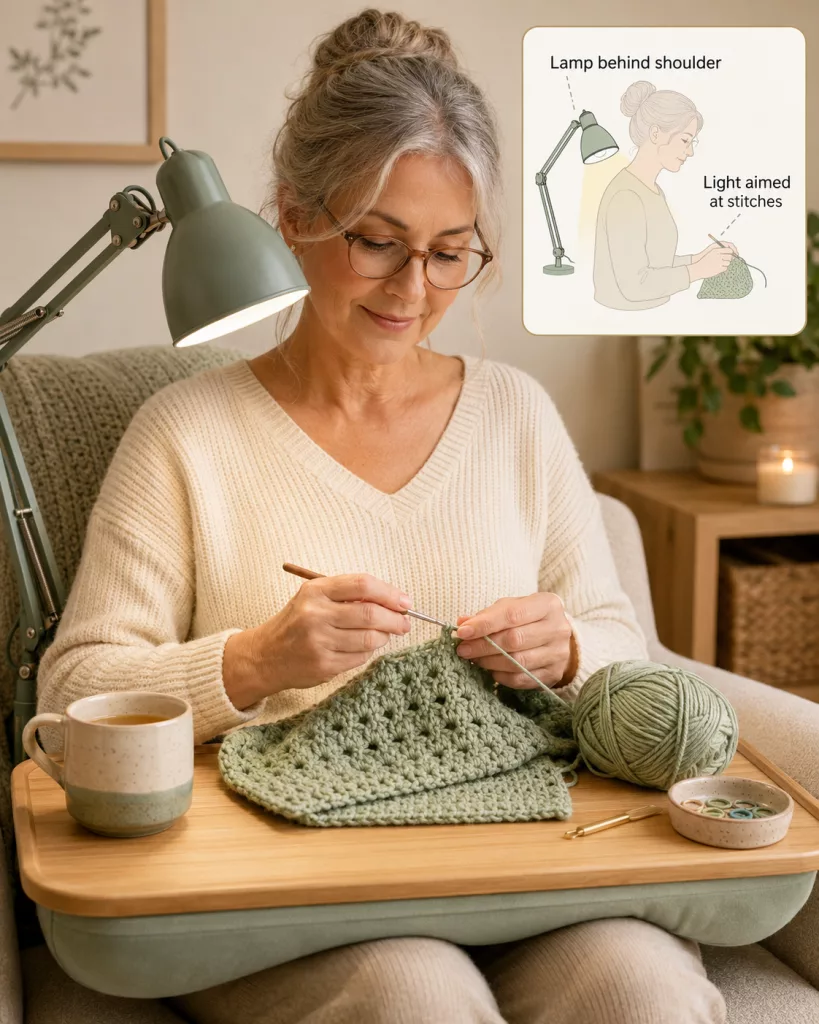
A dedicated task lamp is usually one of the biggest improvements you can make.
Choose the Right Color Temperature
Not all light bulbs produce the same kind of light.
For crochet, daylight-spectrum bulbs—typically between 5000K and 6500K—provide bright, neutral illumination that helps you see stitch definition and yarn color more clearly.
Many crocheters notice that dark yarns become much easier to work with after switching from warm household bulbs to daylight bulbs.
If you’re on a budget, replacing the bulb in an existing lamp can be a surprisingly effective upgrade.
Position Matters More Than Brightness
Even the best lamp won’t help if it’s pointing the wrong way.
For most crocheters, the ideal setup is to place your task light slightly to the side of your dominant hand and angle it toward your work.
This helps reduce the shadows your hands create while crocheting and keeps your stitches evenly illuminated.
A flexible lamp arm also allows you to adjust the light as your position changes throughout the day.
Magnification Can Reduce Eye Fatigue
If you frequently crochet with fine yarn, dark colors, or intricate stitch patterns, magnification may be worth considering.
Magnifying lamps combine bright task lighting with a built-in lens, allowing you to see tiny details without leaning closer to your work.
Many crocheters find that better visibility naturally improves their posture because they’re no longer hunching forward to inspect every stitch.
Lighted Crochet Hooks
Lighted crochet hooks combine two useful tools into one.
By placing the light directly at the tip of the hook, they illuminate the exact area where you’re working. This can be especially helpful when crocheting in the evening, working with darker yarns, or crafting in spaces where additional lighting isn’t practical.
Not everyone enjoys using them, but they’re an option worth exploring if visibility is one of your biggest challenges.
Give Your Eyes Regular Breaks
Even with excellent lighting, your eyes still need opportunities to rest.
A simple habit like looking across the room every few minutes, blinking intentionally, or taking a short break between rows can help reduce fatigue during longer crochet sessions.
Your eyes work hard while you crochet.
Taking care of them is just as important as taking care of your hands.
If You Struggle with Dry Eyes
Dry eyes can make crochet surprisingly exhausting. I try to blink more intentionally while I’m focused on a project, keep water and eye drops nearby, and use good task lighting so my eyes aren’t working harder than they need to. While everyone’s needs are different, reducing eye strain has become just as important to me as reducing hand strain.
Build a Lighting Setup That Works for You
The best lighting setup isn’t necessarily the most expensive.
For many crocheters, a simple combination of a quality task lamp, a daylight bulb, and thoughtful positioning provides everything they need to crochet more comfortably.
Start with the simplest improvement that addresses your biggest challenge. You can always build on your setup over time as your needs change.
Shop My Crochet Lighting & Eye Comfort Collection
I’ve gathered my favorite task lamps, magnifying lights, daylight bulbs, and other lighting essentials into one Amazon Idea List to help you create a more comfortable crafting space.
Low-Spoon Project Planning: Crochet With Your Energy, Not Against It
One of the biggest lessons chronic illness has taught me is that not every day is the right day for every project.
Before I understood that, I’d choose whatever excited me most—a detailed lace shawl, a complex amigurumi, or a pattern with constant counting—and then wonder why I felt so discouraged when I couldn’t finish it.
The problem wasn’t my motivation.
It was that I was asking too much from my body on a low-energy day.
One of the kindest things you can do for yourself is stop choosing projects based only on what you want to make and start considering how much energy they require.
That doesn’t mean giving up challenging projects.
It simply means matching the project to the day you’re having.
Not Every Project Costs the Same Energy
Every crochet project has its own “energy cost.”
Some require constant counting and careful attention.
Others are repetitive and almost meditative.
Some yarns glide effortlessly across your hook, while others catch, split, or require extra concentration with every stitch.
Learning to recognize those differences allows you to make choices that support your body instead of fighting it.
Think in Energy Levels Instead of Skill Levels
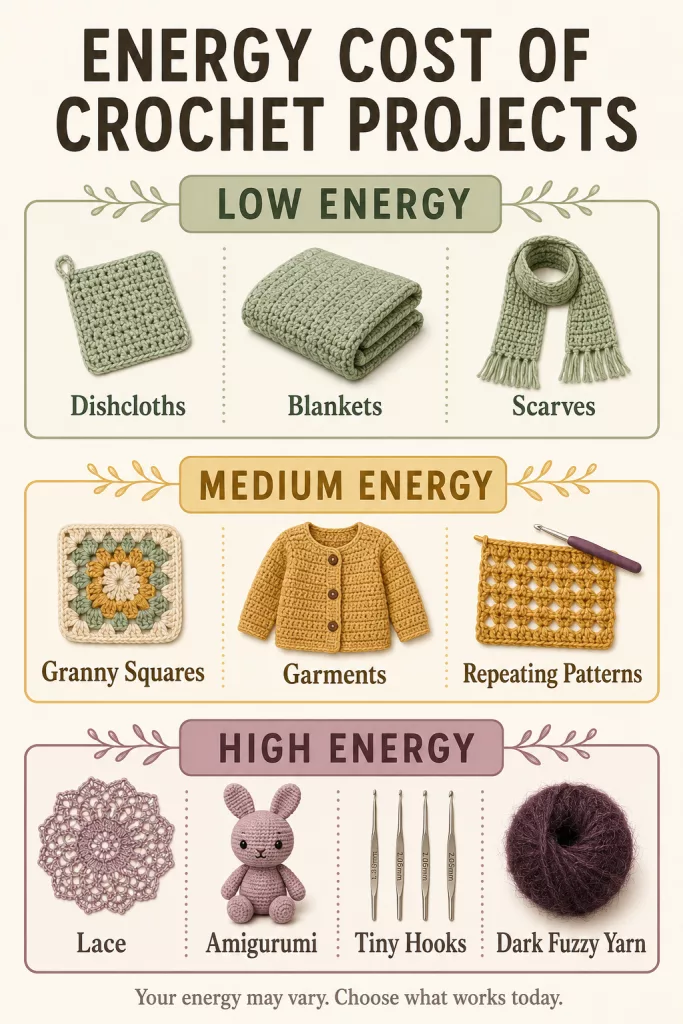
Rather than organizing your projects by beginner, intermediate, or advanced, try thinking about them in terms of how much physical and mental energy they require.
Low Energy Projects
Perfect for flare days or when brain fog is making it difficult to concentrate.
These projects often include:
- Simple stitch repeats
- Large hooks
- Smooth, easy-to-see yarn
- Minimal counting
- Short rows
- Easy stopping points
The goal isn’t productivity.
The goal is enjoying a few peaceful stitches without adding unnecessary stress.
Medium Energy Projects
These are projects that require some focus but don’t demand constant attention.
You might choose them on days when you’re feeling reasonably well but still want to pace yourself.
Examples include:
- Repeating lace patterns
- Simple garments
- Granny square projects
- Repetitive texture stitches
High Energy Projects
Some projects ask a lot from both your body and your mind.
Think intricate lace, amigurumi with frequent shaping, colorwork, tiny hooks, or dark fuzzy yarn that makes every stitch harder to see.
There’s nothing wrong with these projects.
They’re simply better saved for days when you have the energy to enjoy them.
Find the Patterns That Work for You
One of the most valuable things you can do as a spoonie crafter is start paying attention to your own patterns.
You may discover that certain yarns leave your hands feeling better than others. Maybe you can comfortably work with larger hooks for an hour, but tiny hooks become uncomfortable after twenty minutes. Perhaps mornings are your best crafting time, or maybe your energy is highest after an afternoon rest.
Those small observations add up.
Instead of relying on memory—which isn’t always reliable on brain fog days—consider keeping a simple crochet journal. Tracking your projects, energy levels, symptoms, and the tools you used can help you identify what consistently makes crocheting more enjoyable and what tends to trigger discomfort.
Over time, you’ll build a personalized guide that’s far more valuable than any one-size-fits-all recommendation.
Want a simple way to track your projects and energy levels?
I designed the Spoonie Crafter’s Journal to help you plan projects, log symptoms, track comfortable crochet sessions, and discover the patterns that work best for your body. You can find it in my Etsy shop.
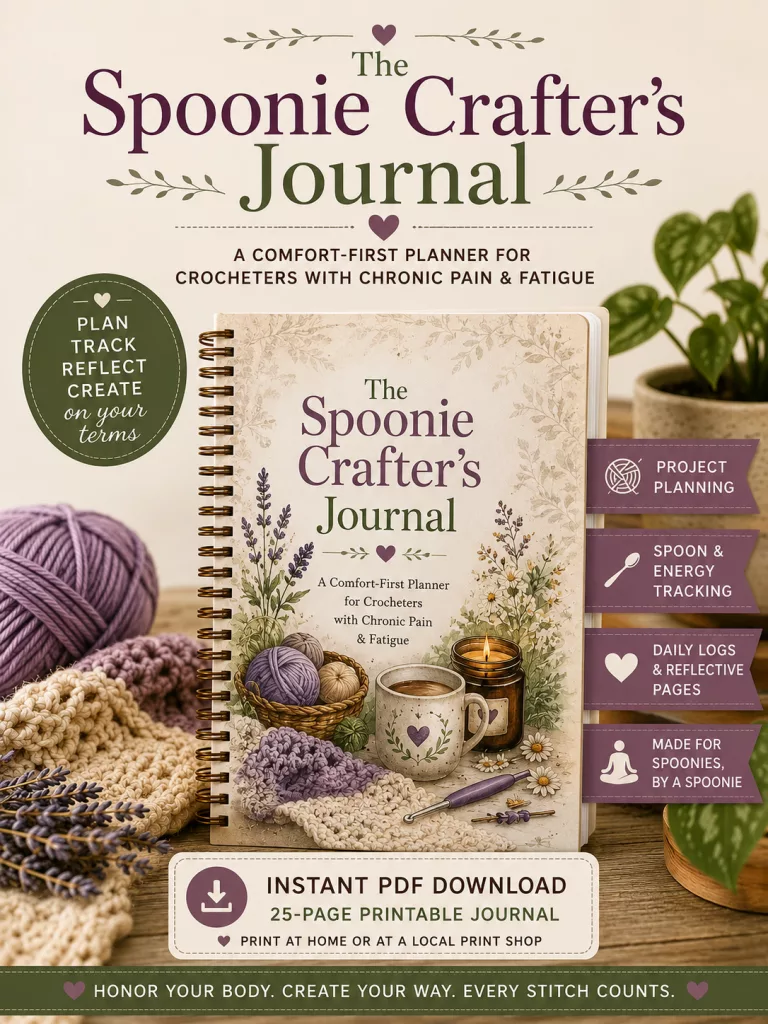
The Spoonie Crafter’s Journal PDF
What’s Included
• 25 printable journal pages
• Instant PDF download
• Energy & spoon tracking
• Crafting body map
• Comfort toolkit inventory
• Project planning pages
• Low-, medium-, and good-day project planners
• Spoon Budget Project Planner
• Daily craft logs
• Monthly reflection pages
• Wins tracker
• Yarn stash tracker
Perfect For
✓ Crocheters with chronic illness
✓ Spoonies and disabled makers
✓ Fibromyalgia, arthritis, Sjögren’s, EDS, lupus, and chronic fatigue
✓ Thoughtful self-care gifts for crafters
Build a “Comfort Project”
One of my favorite habits is always keeping one project that’s easy to pick up.
A simple blanket.
A dishcloth.
A scarf with a relaxing stitch repeat.
Something I can work on without reading instructions every few minutes.
Having a comfort project removes one more decision on difficult days and makes it much easier to keep creating, even if it’s only for ten minutes.
Stay Organized to Save Energy
Every minute spent searching for a crochet hook, untangling yarn, or trying to remember where you put your stitch markers is energy you can’t spend creating.
A little organization goes a long way.
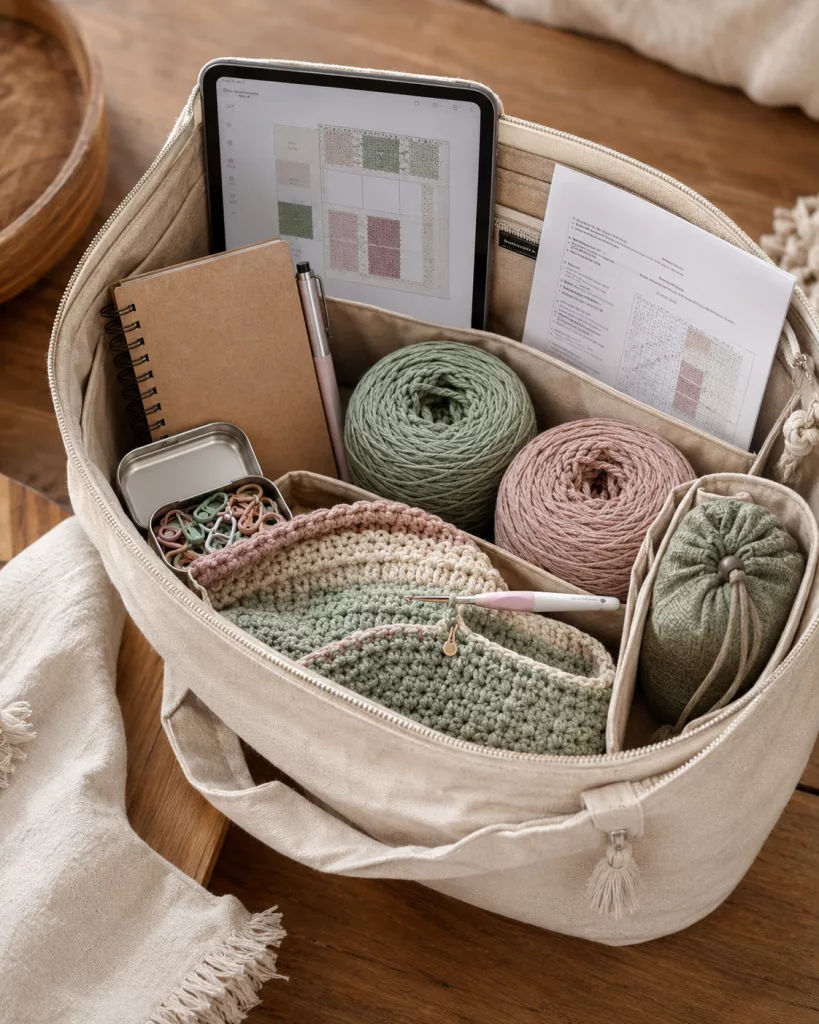
Project bags keep everything together so you can pick up exactly where you left off.
Locking stitch markers are easier to use than traditional split rings and help prevent frustrating mistakes.
Whether you prefer printed patterns in a binder or digital patterns on a tablet, the best system is the one that’s simple enough you’ll actually use it.
Remember, the goal isn’t perfect organization.
It’s removing as many small obstacles as possible between you and your next stitch.
Give Yourself Permission to Change Plans
One of the hardest habits to break is feeling like you have to finish what you planned, even when your body is asking for something different.
It’s okay to set aside a complicated project.
It’s okay to choose a simpler yarn.
It’s okay to crochet for fifteen minutes instead of two hours.
Listening to your body isn’t giving up.
It’s creating a sustainable relationship with the craft you love.
Some days you’ll make incredible progress.
Other days you’ll only finish a few rows.
Both kinds of days count.
Build a Toolkit That Supports Your Energy
The right organizational tools don’t just keep your supplies tidy.
They reduce decision fatigue, save precious energy, and make it easier to enjoy your time with yarn instead of spending it searching for what you need.
Shop My Low-Spoon Crochet Organization Collection
I’ve gathered my favorite project bags, locking stitch markers, pattern organization tools, and other low-energy essentials into one Amazon Idea List to help you spend less time organizing and more time crocheting.
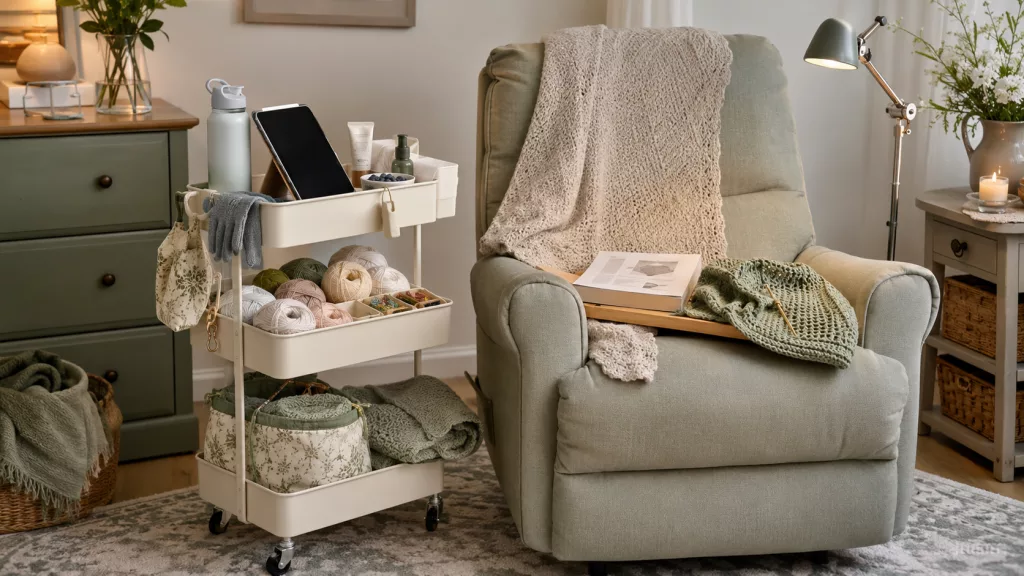
Build a Flare-Day Crochet Station
Some days, simply deciding to crochet can feel like the hardest part.
When you’re dealing with pain, fatigue, brain fog, or a flare-up, every extra decision and every unnecessary trip across the room costs energy. Searching for your hook, untangling yarn, looking for your scissors, or realizing your water bottle is still in the kitchen can quickly become enough to make you give up before you even begin.
That’s why I love the idea of a dedicated flare-day crochet station.
Instead of setting up from scratch every time you want to crochet, you create one comfortable, ready-to-use space that supports you on the days you need it most.
The goal isn’t to build the perfect craft room.
It’s to remove as many barriers as possible between you and the simple joy of making a few stitches.
Keep Everything Within Reach
One of the easiest ways to conserve energy is to eliminate unnecessary trips around the house.
If possible, keep everything you regularly use within arm’s reach.
That might include:
- Your current project
- Your favorite crochet hook
- Locking stitch markers
- Small scissors
- Yarn needle
- Compression gloves
- A notebook or journal
- Pattern or tablet
- Water bottle
- A small snack
- Lip balm or hand lotion
- TV remote or headphones
- Charging cable for your phone or tablet
When everything has a home, it’s much easier to settle in and enjoy your project without interruptions.
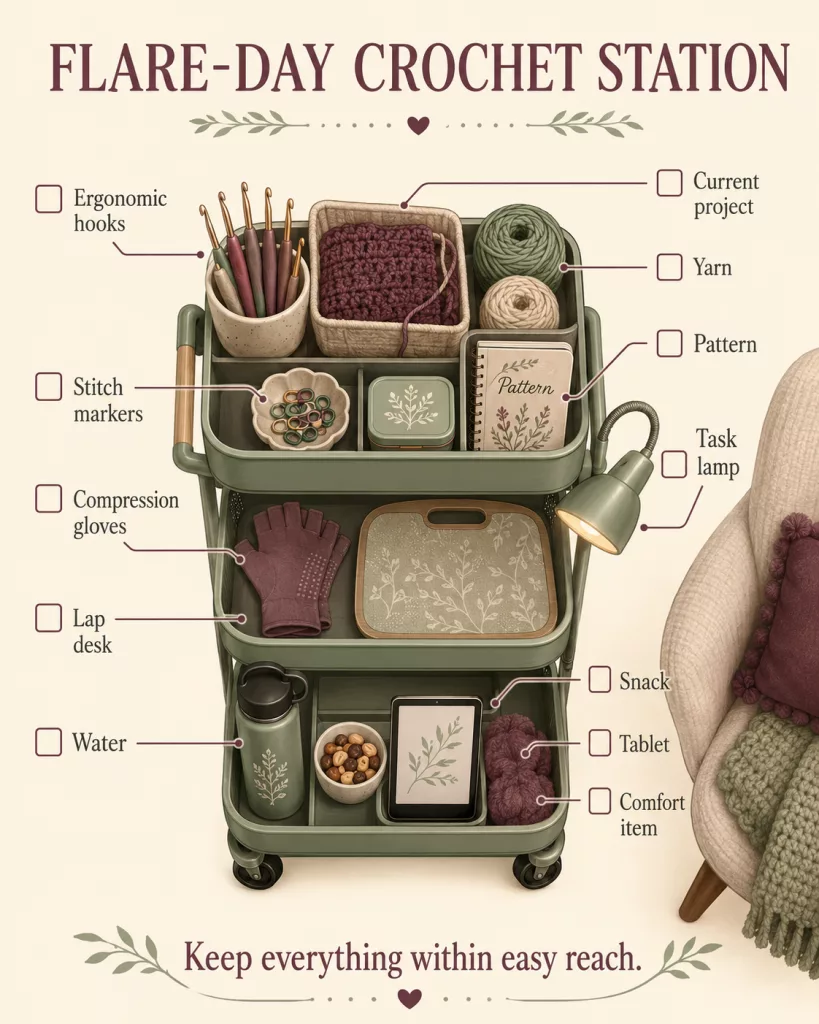
A Rolling Cart Can Become Your Best Friend
One of my favorite low-energy organizing tools is a simple rolling utility cart.
Instead of carrying supplies from room to room, you can keep your crochet essentials together and move the entire station wherever you’re most comfortable that day.
Whether you’re crafting from your favorite chair, the couch, or even your bed, a rolling cart keeps your supplies close without requiring multiple trips back and forth.
It doesn’t have to be elaborate.
A few thoughtfully chosen supplies are often more useful than shelves full of equipment you rarely use.
Prepare for Tomorrow’s Low-Energy Day Today
One of the kindest habits you can build is preparing your next crochet session while you’re still feeling reasonably well.
Before putting your project away, try taking a minute to:
- Insert your hook into your current stitch.
- Return your stitch markers to their pouch.
- Fold your blanket.
- Refill your water bottle.
- Plug in your task lamp.
- Place your compression gloves nearby.
- Put your project bag back on your cart.
These tiny acts take only a minute or two now, but they can make tomorrow’s flare day feel much more manageable.
Think of it as a gift from today’s version of you to tomorrow’s version of you.
Build Your Own Comfort Ritual
A flare-day station isn’t just about tools.
It’s also about creating a space that helps you feel calm and supported.
Maybe that means wrapping yourself in a heated throw.
Maybe it’s making a cup of tea before you begin.
Maybe it’s lighting your favorite candle, putting on an audiobook, or settling into the same cozy chair every time you crochet.
Comfort looks different for everyone.
The important thing is creating an environment that makes it easier to say, “Yes, I can crochet today.”
Give Yourself Permission to Crochet a Little
One of the biggest mental hurdles many spoonies face is feeling like a crochet session has to be productive to be worthwhile.
It doesn’t.
Some days you’ll finish an entire skein.
Other days you’ll crochet for ten minutes before needing to rest.
Both count.
Progress isn’t measured only by finished projects.
Sometimes success is simply picking up your hook when your body is having a difficult day.
Crochet doesn’t have to be all-or-nothing.
It can meet you exactly where you are.
Your Flare-Day Checklist
Before you settle in, ask yourself:
✓ Current project ready to go
✓ Hook already inserted
✓ Pattern within easy reach
✓ Stitch markers nearby
✓ Scissors and yarn needle
✓ Compression gloves (if needed)
✓ Task lamp positioned
✓ Comfortable seating or lap desk
✓ Heated throw or blanket
✓ Water and a snack
✓ Phone, tablet, or remote
✓ Charging cable within reach
If you can check most of these off, you’ve already removed many of the small obstacles that can make crocheting feel overwhelming on difficult days.
Shop My Flare-Day Crochet Essentials
I’ve gathered my favorite rolling carts, lap desks, comfort accessories, and low-energy crafting essentials into one Amazon Idea List to help you build a crochet station that’s always ready when you are.
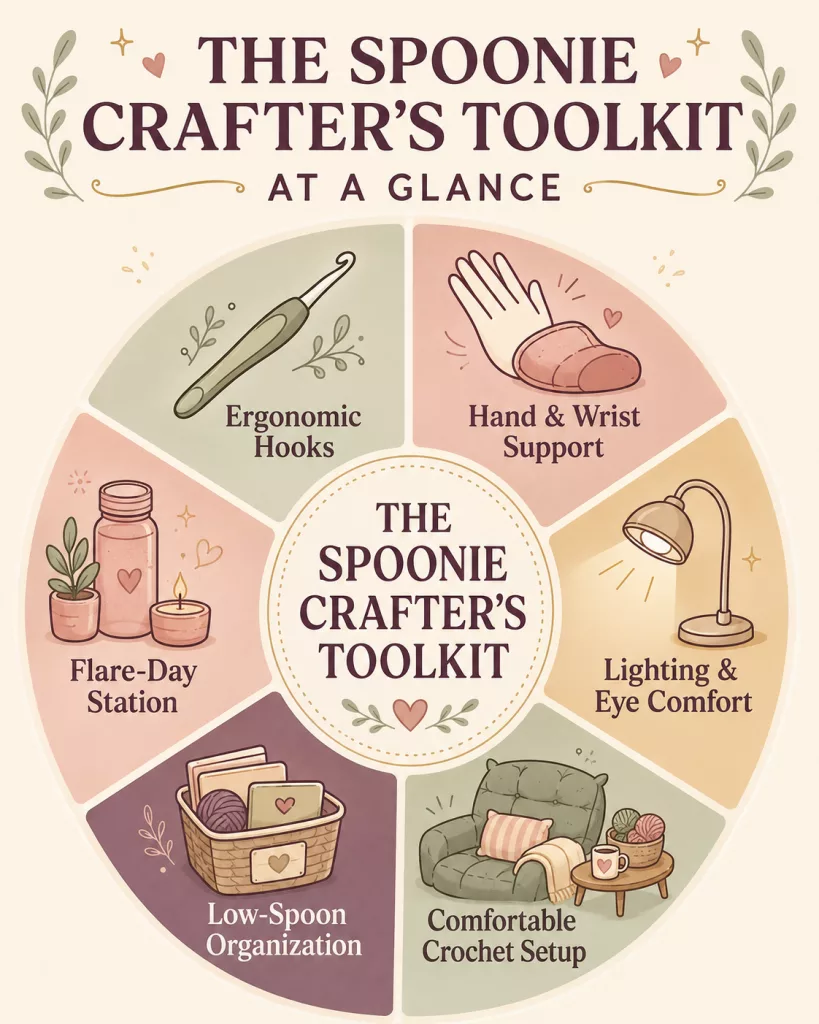
Build Your Spoonie Crafter’s Toolkit
By now, you’ve probably noticed a pattern.
Crocheting more comfortably isn’t about finding one magical product that solves every problem.
It’s about making thoughtful changes that work together.
A more comfortable hook reduces grip fatigue.
Better lighting helps your eyes work less.
A supportive lap desk improves your posture.
Simple organization saves precious mental energy.
Each improvement may seem small on its own, but together they create a crafting experience that feels noticeably easier on your body.
The best part?
You don’t need to build your toolkit all at once.
Start With Your Biggest Challenge
If you’re just beginning, resist the temptation to buy everything at once.
Instead, ask yourself one simple question:
What’s the biggest thing making crochet difficult for me right now?
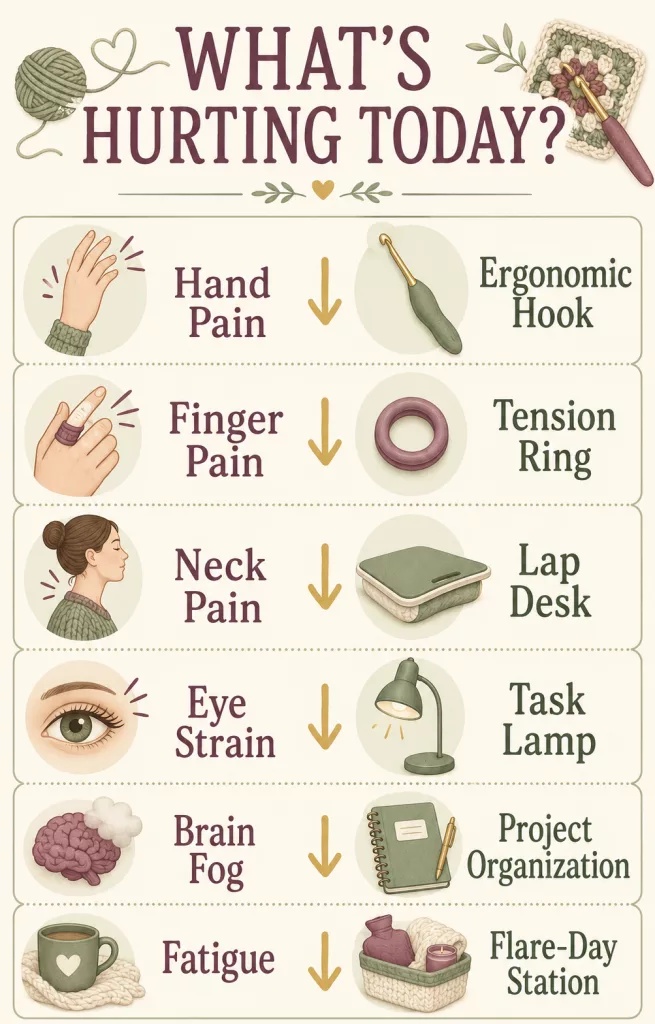
If your hands hurt after twenty minutes, start with an ergonomic hook.
If you’re constantly squinting at dark yarn, improve your lighting.
If your neck and shoulders ache, look at your seating and support.
If brain fog makes every project feel overwhelming, simplify your organization.
Addressing one challenge at a time makes your purchases more intentional and lets you discover what truly helps your body.
Build Your Toolkit Over Time
Think of your toolkit as something that grows with you.
You might begin with one ergonomic hook and a few locking stitch markers.
Later, you may add compression gloves, a lap desk, or a brighter task lamp.
Over time, you’ll discover your own favorite combination of tools and techniques.
There’s no finish line.
The goal isn’t to own every gadget.
The goal is to create a crochet experience that feels welcoming whenever you’re ready to pick up your hook.
Your Body Is the Best Expert
Buying guides—including this one—can only offer recommendations.
The most important information comes from your own experience.
Pay attention to what leaves your hands feeling better.
Notice which projects are easier on your energy.
Experiment with different hooks, yarns, seating positions, and lighting.
What works wonderfully for one crocheter may not work for another, and that’s perfectly okay.
Building a toolkit is a process of learning what helps your body thrive.
Shop the Complete Spoonie Crafter’s Toolkit
To make things easier, I’ve organized all of the products mentioned throughout this guide into curated Amazon Idea Lists.
Whether you’re looking for ergonomic hooks, lighting solutions, organization tools, or comfort-focused accessories, you’ll find them grouped by purpose so you can compare options without spending hours searching.
You’ll also find many of these recommendations in my Walmart storefront whenever comparable products are available, giving you another option to compare prices and availability.
My goal isn’t to convince you to buy more.
It’s to help you spend your money on the things most likely to make crocheting more comfortable and enjoyable.
Continue Your Spoonie Crochet Journey
I hope this guide has shown you that crocheting with chronic illness isn’t about pushing through pain or pretending your body works like everyone else’s.
It’s about finding tools, techniques, and routines that make your favorite hobby more accessible—one small change at a time.
Whether you’re looking for more comfort-first crochet tips, curated shopping recommendations, or practical strategies for crafting with limited energy, there’s plenty more to explore.
🧶 Shop My Amazon Storefront
I’ve organized all of the products featured in this guide into curated Amazon Idea Lists, making it easy to compare ergonomic hooks, hand supports, lighting, organization tools, and flare-day essentials without spending hours searching.
Browse My Curated Amazon Idea Lists
Whether you’re looking for one simple upgrade or building your toolkit over time, you’ll find everything grouped by category to help you shop with confidence.
📖 Keep Track of What Works
One of the best ways to build a sustainable crochet routine is to learn what works for your body.
The Spoonie Crafter’s Journal was designed to help you track projects, energy levels, symptoms, flare days, favorite tools, and personal observations so you can build a crafting routine that supports your health instead of working against it.
📝 More Spoonie Crochet Resources
Looking for more comfort-first crochet inspiration? These articles are a great place to continue your journey:
- 15 Easy Crochet Patterns That Require Zero Counting (Perfect for Brain Fog Days) — Discover relaxing, beginner-friendly projects that are easy to pick up, even on days when concentration is in short supply.
- 4 Science-Backed Benefits of Crochet for Anxiety You Can Feel (+ 5 Easy Steps to Start) — Learn how crochet can support relaxation, reduce stress, and become part of a gentle self-care routine.
I’ll continue adding more comfort-first crochet guides, ergonomic product recommendations, and spoonie-friendly crafting resources, so be sure to check back as this library grows.
Frequently Asked Questions About Crocheting with Chronic Pain
Can I still crochet if I have chronic pain?
Absolutely. Many people continue to crochet while living with chronic pain, arthritis, fibromyalgia, autoimmune conditions, and other health challenges. The key is adapting your tools, your workspace, and your expectations. Using ergonomic equipment, taking breaks, and matching your projects to your energy level can help make crochet more comfortable and sustainable.
What is the best ergonomic crochet hook?
There isn’t one perfect hook for everyone. The best ergonomic crochet hook is the one that feels comfortable in your hand and allows you to crochet with less strain. Look for larger grip handles, lightweight construction, and a smooth hook that glides easily through yarn.
Are ergonomic crochet hooks worth the money?
For many crocheters, yes. If hand fatigue or grip pain is limiting how long you can crochet, an ergonomic hook is often one of the most worthwhile upgrades you can make. If you’re on a budget, adding foam grip tubing to your existing hooks can also improve comfort without replacing your entire collection.
Can I crochet with arthritis?
Many people with arthritis continue to enjoy crochet by making thoughtful adaptations. Larger ergonomic hooks, compression gloves, good lighting, supportive seating, and regular breaks can all help reduce strain. If crochet consistently increases your pain, it’s a good idea to discuss it with your healthcare provider or occupational therapist.
Can crochet make carpal tunnel syndrome worse?
Repetitive hand movements can aggravate existing carpal tunnel symptoms for some people. Paying attention to your posture, avoiding long sessions without breaks, and reducing grip force may help make crocheting more comfortable. If you experience numbness, tingling, or worsening pain, seek medical advice before continuing.
What crochet projects are easiest on sore hands?
Projects with repetitive stitch patterns, larger hooks, smooth yarn, and minimal counting are often easier to manage on low-energy days. Blankets, scarves, washcloths, and simple granny square projects are good examples.
For more ideas, check out my guide to 15 Easy Crochet Patterns That Require Zero Counting (Perfect for Brain Fog Days).
What yarn is easiest to crochet with?
Smooth, medium-weight yarns that glide easily across the hook are usually the most comfortable. Highly textured, fuzzy, or split-prone yarns often require more effort and concentration, making them better suited to higher-energy days.
Should I wear compression gloves while crocheting?
Some crocheters find compression gloves helpful during crochet sessions, while others prefer wearing them afterward or overnight. The best approach depends on what feels most comfortable for your hands and your individual needs.
Are yarn tension rings worth trying?
If holding yarn causes finger fatigue or discomfort, a yarn tension ring can reduce the amount of gripping required and help maintain more consistent tension. Like any new tool, they take a little practice, but many crocheters find they’re well worth the learning curve.
What is the best lighting for crocheting?
A dedicated task lamp with a daylight-spectrum bulb (approximately 5000K–6500K) is often the most effective setup. Position the light slightly to the side of your dominant hand to reduce shadows across your work.
Why do my eyes get tired when I crochet?
Crochet requires constant focus on small details. Poor lighting, dark yarn, and long periods without breaks can all contribute to eye strain. Improving your lighting and giving your eyes regular opportunities to rest may help reduce fatigue.
Can I crochet from bed?
Yes. Many spoonie crafters crochet comfortably from bed using supportive pillows, a lap desk, and a well-organized project setup. The goal is to support your body while keeping your supplies within easy reach.
What is a flare-day crochet station?
A flare-day crochet station is a ready-to-use crafting setup designed for days when pain, fatigue, or brain fog make preparation difficult. Keeping your current project, hook, lighting, water, and other essentials together means you can spend your energy crocheting instead of gathering supplies.
What should I buy first if I’m on a budget?
Start by addressing the challenge that affects you most.
If your hands hurt, begin with an ergonomic hook.
If you’re struggling to see your stitches, improve your lighting.
If organization is your biggest obstacle, invest in a project bag and locking stitch markers.
You don’t need to buy everything at once.
How often should I take breaks while crocheting?
There isn’t a universal schedule that works for everyone. A good rule of thumb is to take a short break before you begin feeling uncomfortable. Stretching your hands, relaxing your shoulders, changing positions, or simply looking away from your work for a few minutes can help reduce fatigue during longer sessions.
Do I need everything in this guide?
Not at all.
This guide isn’t a shopping list—it’s a collection of ideas to help you create a crochet setup that works for your body.
Most people will benefit from choosing one or two improvements that address their biggest challenges and building from there over time.
Final Thoughts
Living with chronic illness often means learning to adapt rather than give up.
Crochet doesn’t have to be all or nothing. Some days you’ll finish a project. Other days you’ll make a few stitches before it’s time to rest. Both are worthwhile.
My hope is that this guide helps you build a crochet routine that feels supportive, sustainable, and full of joy—because everyone deserves the opportunity to create, no matter what their body is asking of them that day.
Take what helps, leave what doesn’t, and remember that the best crochet setup is the one that allows you to keep creating comfortably.