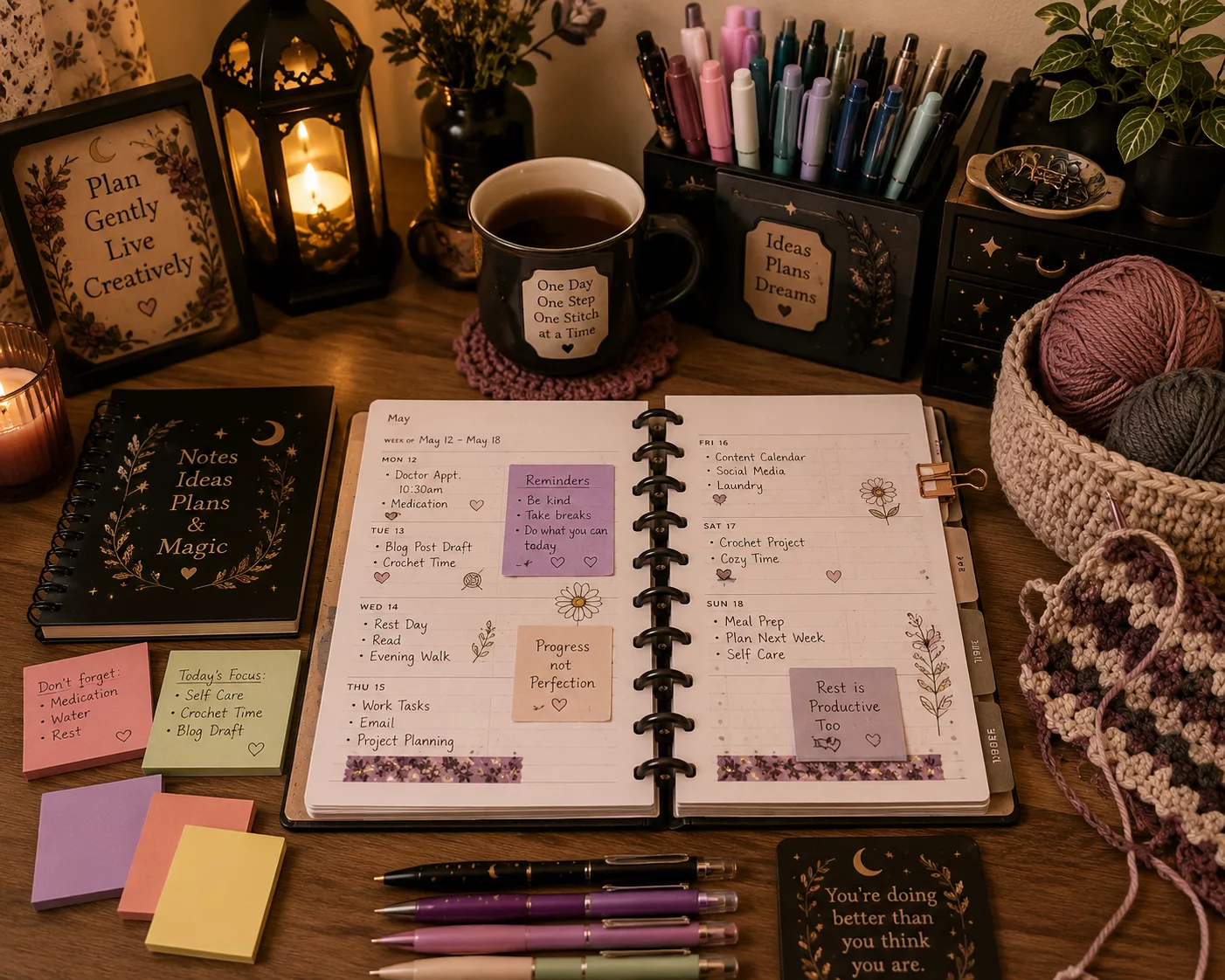
Finding the right planning tools for spoonies, creatives, and neurodivergent minds can completely change how you manage your day.
This post contains affiliate links. As an Amazon Associate and Walmart Creator, I earn from qualifying purchases. I may also earn a commission through other affiliate programs at no extra cost to you. I only share products I genuinely find useful or interesting.
Planning looks different when you live with chronic illness, navigate a neurodivergent brain, or manage creative projects.
Most traditional productivity advice assumes every day starts with the same amount of focus, motivation, and stamina. For many of us, that is not how life works.
A planning system should support your life, not add more pressure to it.
With over 40 years of experience in fiber arts and living as a creative spoonie, I have tested dozens of organizational methods to find what actually works when energy is limited. It is about creating systems that support you where you are.
A good planner, journal, or workspace tool can help reduce mental clutter, keep important information in one place, and make everyday life feel a little more manageable.
That is why I created my Cozy Planning Tools for Spoonies, Creatives & Neurodivergent Minds collection. It brings together planners, journals, sticky notes, pens, desk organizers, and other helpful tools that support gentle productivity and flexible planning.
Why Are Planning Tools Important for Spoonies?
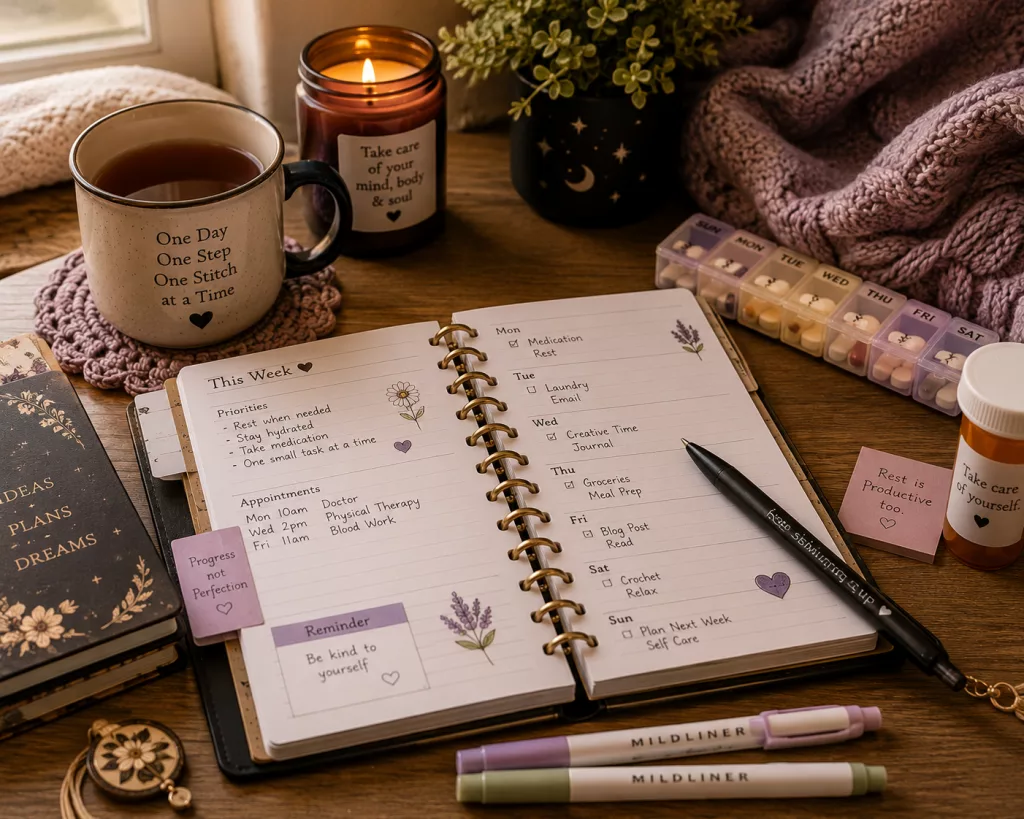
Planning tools are essential for spoonies because they reduce cognitive load, track fluctuating energy levels, and create a centralized, reliable system for daily routines during symptom flares.
When your brain is already trying to remember appointments, projects, routines, ideas, and responsibilities, having a dedicated place to keep that information can make a real difference.
You might use your planner or journal to track:
- Medical appointments
- Medication schedules
- Household tasks
- Creative project ideas
- Crochet patterns and notes
- Blog content plans
- Work deadlines
- Daily routines
- Symptom tracking
Writing things down creates space in your mind for the things that matter most, especially when you are navigating the heavy brain fog that comes with living with Sjögren’s Syndrome.
Instead of trying to remember everything, you can focus on what needs your attention today.
Cozy Planning Tools for Spoonies, Creatives & Neurodivergent Minds
Every item in this collection was chosen with flexibility in mind.
Many people with chronic illness experience changing energy levels from day to day. Neurodivergent minds often benefit from visual organization, simple systems, and tools that can be adapted to individual needs. Creatives frequently balance multiple projects, ideas, and interests at the same time.
The right planning tools can help support all of those realities without making life feel more complicated.
Planners That Support Real Life
Cozy Planning Tools for Spoonies, Creatives & Neurodivergent Minds Begin with a Planner That Fits Your Needs
There is no single planning method that works for everyone.
Some people enjoy detailed daily layouts. Others prefer weekly spreads, simple checklists, or open pages that give them room to adapt as needed.
The collection includes a variety of planner styles, including:
- ADHD friendly planners
- Academic planners
- Daily planners
- Self care journals
- Creative project planners
I have also included my own journals designed with comfort focused planning and gentle organization in mind.
📖 Featured Resource: The Fibro Warrior’s Journey Tracking daily patterns shouldn’t feel like a chore. If you need a gentle, dedicated space to log pain levels, track symptom flares, and manage your daily energy, check out The Fibro Warrior’s Journey. It is designed specifically to help you understand your body’s rhythm without the pressure of a rigid schedule.
The goal is not to schedule every minute of your day.
The goal is to create a system that helps you keep track of what matters while allowing room for rest, flexibility, and real life.
Authentication failed
Check credentials in Settings
Journals for Reflection, Tracking, and Creative Living
Journals can serve many different purposes depending on what you need.
Some people use them for symptom tracking. Others use them for creative writing, project planning, gratitude practices, or daily reflections.
Having a place to capture thoughts before they disappear can be especially helpful when your mind is full of ideas or responsibilities.
🧶 Featured Resource: The Spoonie Crafter’s Journal Balancing shifting energy levels with your creative projects is a delicate art. Designed with comfort-focused planning in mind, The Spoonie Crafter’s Journal gives you a flexible space to organize your crochet patterns, log project notes, and capture your creative ideas before they slip away.
Many neurodivergent individuals find that writing things down reduces the stress of trying to remember everything at once.
Some helpful ways to use a journal include:
- Brain dumps
- Symptom tracking
- Mood tracking
- Creative ideas
- Goal setting
- Daily reflections
The collection includes several journal options, along with my books The Fibro Warrior’s Journey and The Spoonie Crafter’s Journal.
Sticky Notes and Visual Reminders
Sometimes the simplest tools are the ones we use the most.
Sticky notes are a favorite because they are flexible, visible, and easy to move around as priorities change.
They work well for:
- Appointment reminders
- Task lists
- Project planning
- Visual organization
- Temporary notes
For many neurodivergent minds, visual reminders can be far more effective than notifications hidden inside an app.
A sticky note placed where you will actually see it can help keep important information front and center throughout the day.
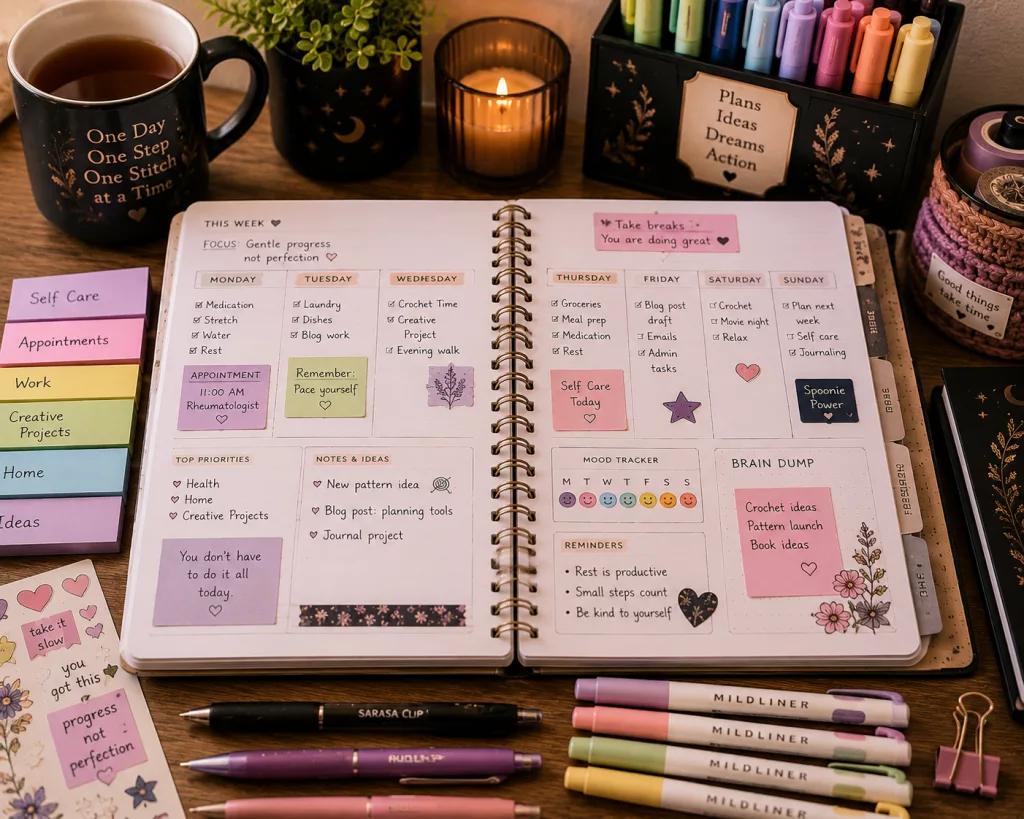
Color coding can also make information easier to sort and recognize at a glance.
Pens and Highlighters That Make Planning Feel More Inviting
Planning does not have to feel like another chore on your to do list.
Something as simple as using a favorite pen can make the process more enjoyable.
The collection includes:
- Gel pens
- Colorful writing pens
- Highlighters
- Refillable pens
Color coding can be a helpful way to organize information visually.
For example:
- Purple for self care
- Green for appointments
- Blue for work tasks
- Pink for creative projects
Simple visual systems can make planners easier to read and quicker to navigate.
Desk Organization for a Calmer Workspace
When your workspace feels cluttered, planning can feel harder than it needs to be.
The good news is that creating an organized workspace does not require expensive furniture or complicated storage systems.
Often, a few simple tools are enough.
Some favorites from the collection include:
- Rotating desk organizers
- Drawer dividers
- Sticky note holders
- Monitor accessories
- Desk storage solutions
Keeping frequently used supplies within easy reach removes small barriers that can make planning feel overwhelming.
Creating a Cozy Workspace
Your planning space does not need to be perfect.
It simply needs to work for you.
Whether you have a dedicated office, a corner of the dining room table, or a favorite chair with a notebook nearby, small touches can make the space feel more welcoming.
Consider adding:
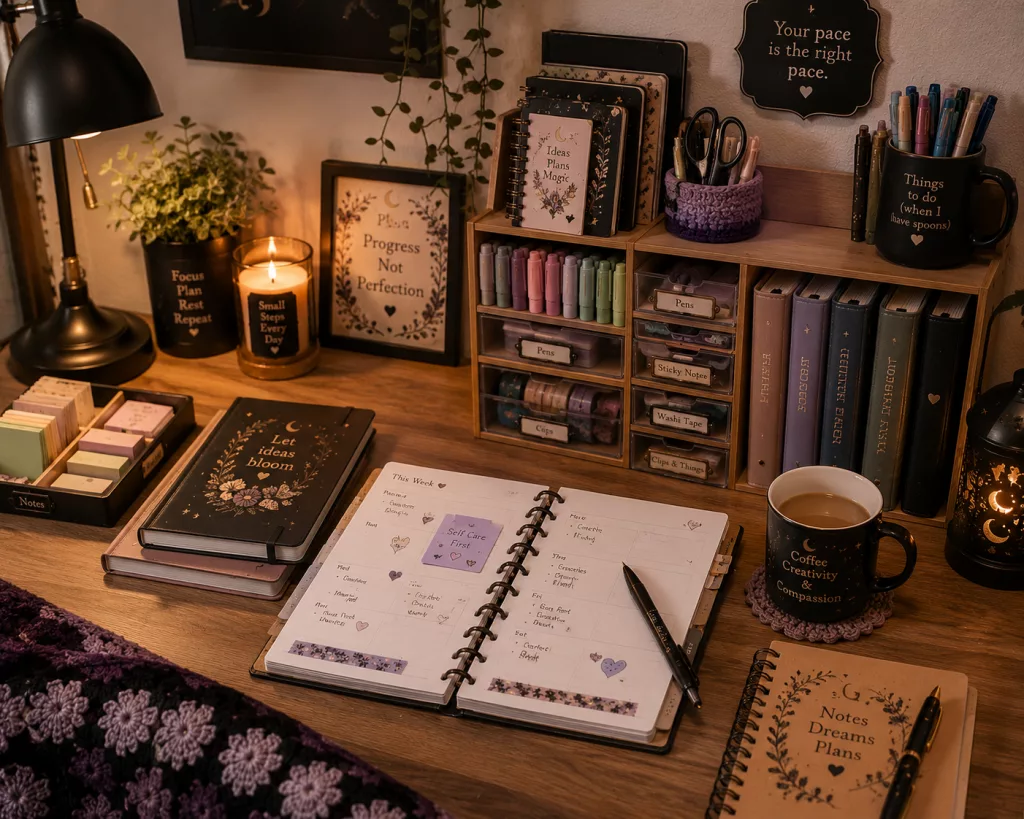
- Comfortable lighting
- Favorite notebooks and pens
- Easy access storage
- Visual organization tools
- Personal items that make you smile
A comfortable workspace can make it easier to return to your planning routine again and again.
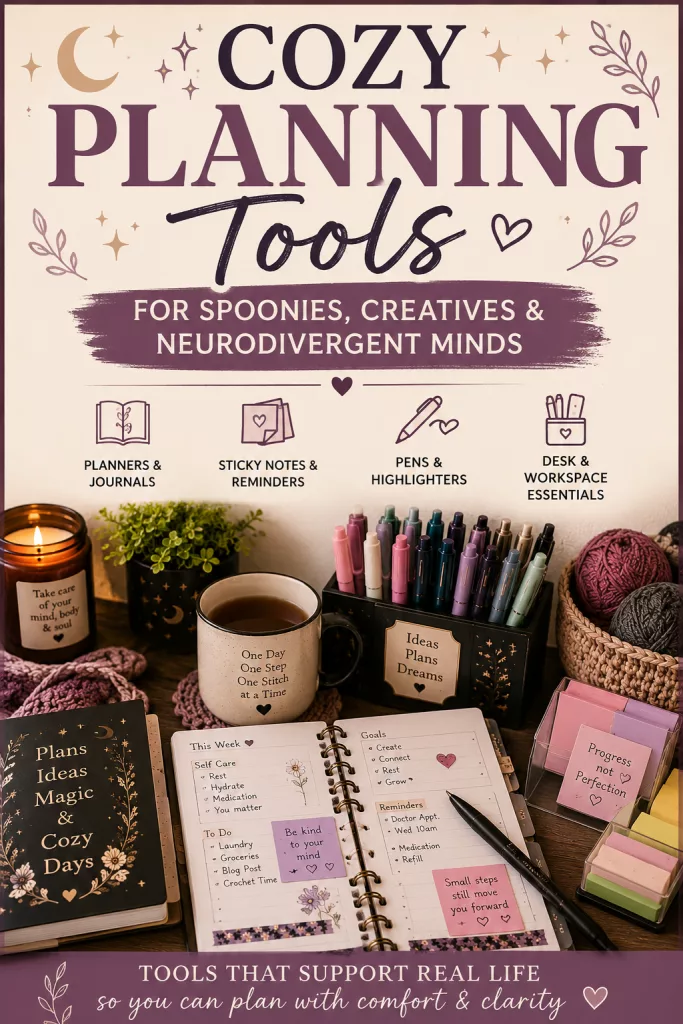
Planning for Progress, Not Perfection
One of the hardest parts of planning as a spoonie or neurodivergent person is letting go of the idea that every day should look the same.
Some weeks are productive.
Some weeks are focused on rest, recovery, or simply getting through the basics.
Both deserve respect.
Your planner is not a measure of your worth.
It is a tool that helps support your life.
The best planner is the one you actually enjoy using.
The best organization system is the one that works for your needs.
And the best planning routine is the one that allows you to move forward at your own pace.
✨ From the Author’s Collection With over 40 years of experience in fiber arts and living as a creative spoonie, I created these dedicated tools to support your unique daily workflow:
- The Fibro Warrior’s Journey: A gentle, practical journal for tracking symptoms, patterns, and daily energy.
- The Spoonie Crafter’s Journal: A flexible organizer built specifically to hold project ideas, notes, and patterns.
Explore the Full Collection
If you are looking for planners, journals, sticky notes, desk organizers, pens, and workspace essentials that support real life, I invite you to explore my Cozy Planning Tools for Spoonies, Creatives & Neurodivergent Minds collection.
Whether you are managing chronic illness, building creative habits, organizing projects, or searching for a gentler approach to planning, I hope you find tools that help make everyday life feel a little calmer, more organized, and more comfortable.
FAQ about Planning Tools for Spoonies
How do you plan your day when you have a chronic illness?
Planning with a chronic illness requires planning for progress, not perfection. Instead of using rigid, hour-by-hour schedules, rely on flexible daily checklists and un-timed layouts. This allows you to easily shift tasks to another day without guilt when an unexpected symptom flare occurs.
What are the best planners for neurodivergent creatives?
The best tools prioritize visual organization over strict timelines. Look for layouts that feature open-ended project pages, space for brain dumps, and plenty of room for color-coding or sticky notes. This structure keeps your ideas organized without forcing your brain into a restrictive box.
How can a journal help manage chronic symptom flares?
A dedicated journal removes the mental burden of trying to remember every health change. Consistently tracking your pain levels, energy reserves, and daily symptoms makes it much easier to identify physical patterns over time and share accurate information with your healthcare team.