
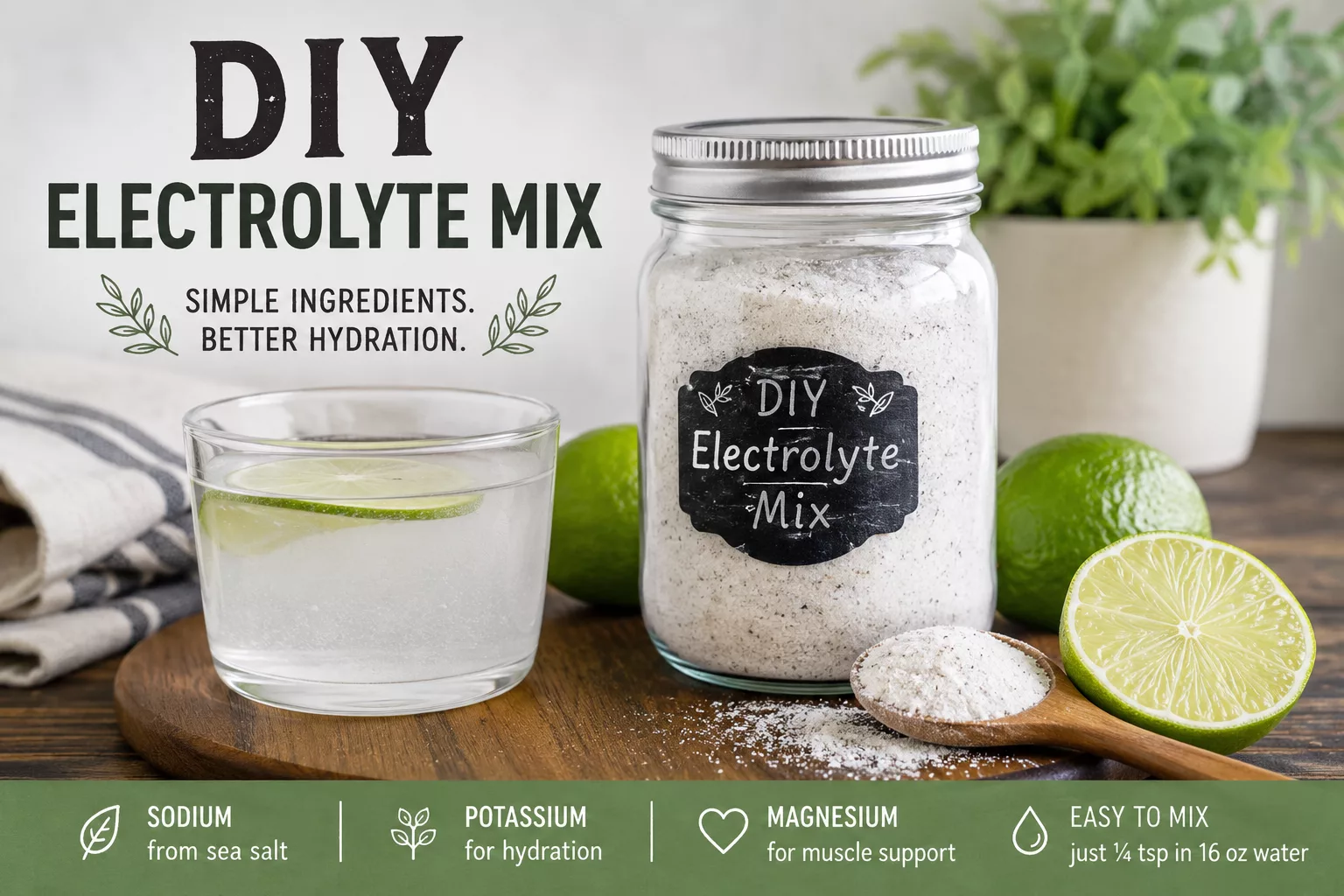
Making your own DIY electrolyte mix at home can save money, reduce artificial ingredients, and give you more control over what goes into your daily hydration routine. Many store bought electrolyte powders contain artificial colors, heavy sweeteners, or ingredient blends that are difficult to adjust. A homemade version keeps things simple while still supporting hydration with sodium, potassium, and magnesium.
This post contains affiliate links. As an Amazon Associate and Walmart Creator, I earn from qualifying purchases. I may also earn a commission through other affiliate programs at no extra cost to you. I only share products I genuinely find useful or interesting.
Living with chronic illnesses like Sjögren’s syndrome and hypermobile Ehlers-Danlos syndrome has changed the way I think about hydration. Plain water often is not enough for me, especially during hot weather, flare days, or periods of physical exhaustion. I can drink plenty of water and still feel dehydrated, fatigued, or lightheaded. Making my own DIY electrolyte mix gives me more control over the balance of sodium, potassium, and magnesium my body seems to respond best to. It also allows me to adjust ingredients depending on what I need that day instead of relying on one fixed commercial formula.
This DIY electrolyte mix uses mineral rich ingredients that dissolve easily in water and store well in the pantry. It is practical for hot summer days, workouts, outdoor projects, long drives, or everyday hydration support.
If you enjoy keeping useful homemade staples around the house, this is one of those recipes that quickly becomes part of a regular routine.
Important Note: I am a creator sharing my personal hydration routine, not a medical professional. Living with chronic illnesses like Sjögren’s syndrome and hypermobile Ehlers-Danlos syndrome means I have to pay close attention to my fluid and mineral balance, but my body is different from yours. High amounts of sodium, potassium, and magnesium can impact blood pressure, kidney function, and interact with specific medications. Always consult your doctor or a qualified healthcare provider before introducing a homemade electrolyte mix into your daily routine.
What Is a DIY Electrolyte Mix?
A DIY electrolyte mix is a homemade mineral powder designed to be added to water. Electrolytes help regulate fluid balance, muscle function, and nerve signaling in the body.
The three primary minerals in this recipe are:
- Sodium
- Potassium
- Magnesium
Each one plays a different role in hydration support.
What Sodium Does
Sodium helps your body retain fluids and replace minerals lost through sweat. Fine sea salt is used in this recipe because it blends smoothly and stores well.
Why Potassium Matters
Potassium works alongside sodium to maintain fluid balance. Potassium chloride powder is commonly sold under names like No Salt or Nu Salt and provides a concentrated source of potassium.
Magnesium Support
Magnesium supports normal muscle function and may help reduce muscle tightness after physical activity. Magnesium malate and magnesium glycinate are both popular options because they tend to be gentler on digestion than some other forms.
Ingredients for This DIY Electrolyte Mix
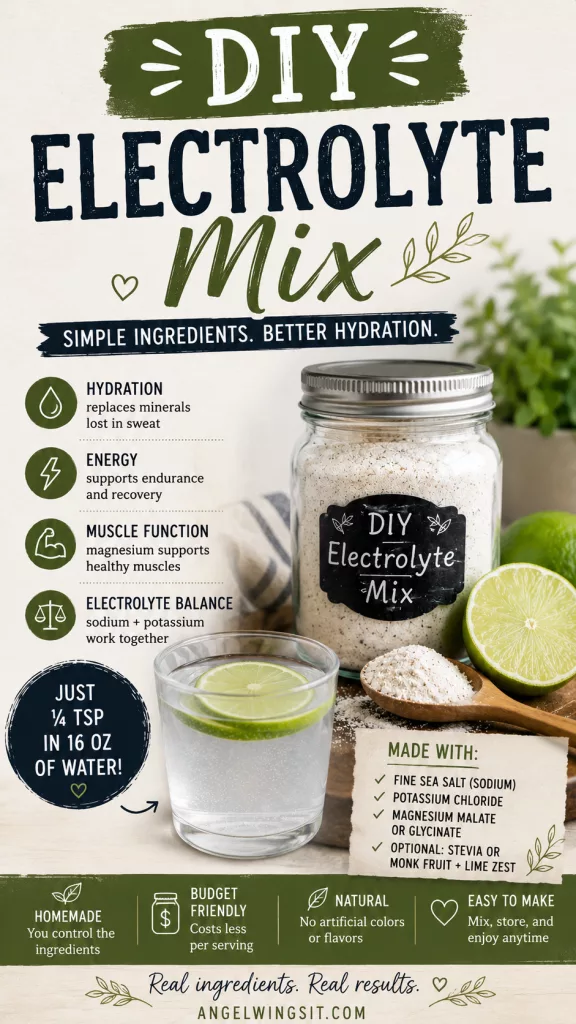
This homemade electrolyte powder recipe creates a concentrated mineral blend you can store in an airtight jar.
DIY Electrolyte Mix Ingredients
- 1/4 cup fine sea salt
- 1/4 cup potassium chloride powder
- 2 tablespoons magnesium malate or glycinate powder
Optional Flavor Boosters
- 1/4 cup powdered stevia or monk fruit sweetener
- Zest of 2 fresh limes
The optional ingredients add brightness and sweetness without relying on artificial flavors.
How to Make a DIY Electrolyte Mix
This recipe comes together in only a few minutes.
Step 1: Combine the Powders
In a small glass bowl, combine:
- Fine sea salt
- Potassium chloride powder
- Magnesium powder
Using a glass bowl helps reduce moisture exposure while mixing.
Step 2: Whisk Thoroughly
Use a small wire whisk to fully combine the powders. Break apart any small clumps so the mixture stays evenly distributed.
This step matters because mineral powders can settle unevenly if not mixed well.
Step 3: Add Optional Flavor Ingredients
If you are using powdered stevia, monk fruit sweetener, or lime zest, stir them in completely at this stage.
The lime zest gives the mixture a fresher flavor, though it can slightly shorten shelf stability because of natural moisture.
Step 4: Store the DIY Electrolyte Mix
Transfer the finished powder into an airtight glass jar.
Store it in:
- A cool pantry
- A dark cabinet
- A dry storage area away from humidity
Proper storage helps prevent clumping and keeps the minerals stable longer.
Should You Add Sweeteners to a DIY Electrolyte Mix?
Sweeteners in a DIY electrolyte mix are completely optional, but they can change both the flavor and how the drink feels during use.
Some people prefer an unsweetened mineral drink, especially for everyday hydration. Others find that a small amount of sweetness makes the mix easier to drink consistently, particularly during workouts, hot weather, or recovery periods.
Why Some DIY Electrolyte Mix Recipes Include Sweeteners
There are a few practical reasons people add sweeteners to homemade electrolyte drinks.
Better Flavor Balance
Potassium chloride has a naturally bitter or metallic taste. Sweeteners can soften that flavor and create a smoother overall drink.
Easier Hydration During Activity
When you are sweating heavily or spending long hours outdoors, lightly sweetened drinks may feel easier to drink consistently than plain salted water.
Faster Energy Support
Small amounts of sugar can provide quick energy during exercise, hiking, or physically demanding work.
When You May Not Want Sweeteners
Not everyone wants sweetness in an electrolyte drink.
You may prefer an unsweetened version if you:
- Want a cleaner mineral taste
- Avoid sugar regularly
- Use electrolytes for general hydration rather than exercise
- Plan to flavor the drink with fruit juice later
- Prefer very light tasting drinks
A plain electrolyte mix also works well as a flexible base recipe because you can customize each serving individually.
Best Sweeteners for a DIY Electrolyte Mix
Different sweeteners create different flavors and textures.
Monk Fruit Sweetener
Monk fruit is one of the easiest options for homemade electrolyte powders because it stores well and blends smoothly.
Best for:
- Sugar free mixes
- Mild sweetness
- Long term pantry storage
Powdered Stevia
Stevia is highly concentrated, so a little goes a long way.
Best for:
- Low carb recipes
- Very small batch adjustments
Some people notice a slightly herbal aftertaste, especially if too much is added.
Honey
Honey works best when added directly to individual drinks rather than the dry powder mix.
Best for:
- Workout recovery
- Smoother flavor
- Quick energy support
Maple Syrup
Maple syrup adds a deeper flavor that pairs well with citrus and mineral salts.
Best for:
- Cold weather hydration
- Citrus based drinks
- Less processed sweetening options
A Simple Approach to Sweetness
If you are unsure where to start, keep the main DIY electrolyte mix unsweetened and add flavor per serving.
That makes it easier to:
- Adjust sweetness gradually
- Experiment with citrus or fruit
- Prevent clumping in storage
- Create different versions for different situations
Some days you may want a plain mineral drink. Other days you may want a lightly sweetened lime version after working outside in the heat. Keeping the base recipe flexible makes both options simple.
| Sweetener | Best Used For | Shelf Stability | Flavor Profile |
| Monk Fruit | Sugar-free bulk powder | High (Stays dry in pantry) | Mild sweetness, zero aftertaste |
| Powdered Stevia | Low-carb bulk powder | High (Stays dry in pantry) | Highly concentrated, slightly herbal |
| Honey | Single liquid servings | Low (Stir into fresh drinks) | Rich flavor, fast energy |
| Maple Syrup | Single liquid servings | Low (Stir into fresh drinks) | Deep flavor, pairs well with lime |
How to Use This DIY Electrolyte Mix
The serving size for this recipe is simple.
Serving Instructions
Mix:
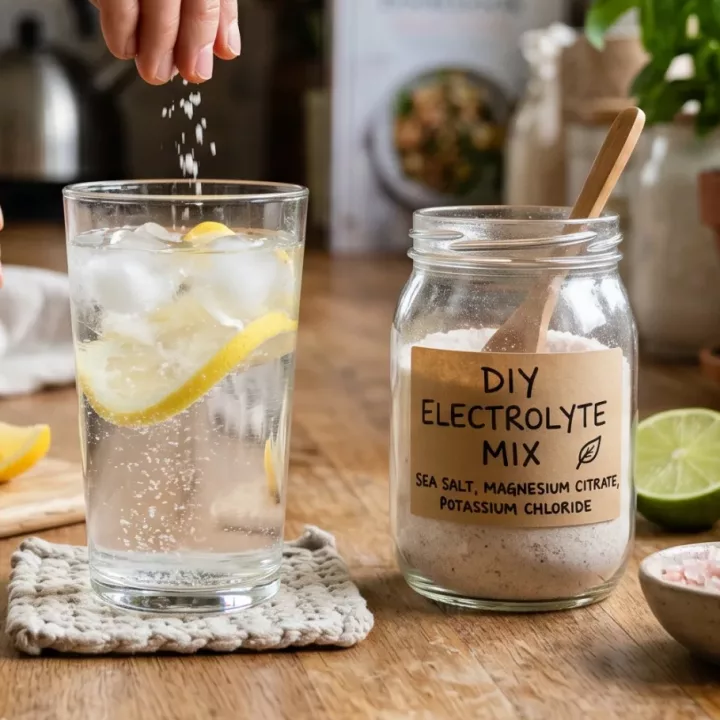
- 1/4 teaspoon electrolyte powder
- 16 ounces cold water
Shake or stir thoroughly until fully dissolved.
Some people prefer using a shaker bottle because potassium chloride can settle slightly at the bottom if left sitting too long.
Flavor Ideas for Homemade Electrolyte Drinks
You can customize each serving with fresh ingredients like:
- Lemon juice
- Lime juice
- Orange slices
- Fresh mint
- Frozen berries
Keeping the base powder unflavored makes it easier to experiment with different combinations.
Pro-Tip: Use a Shaker Bottle Potassium chloride is dense and settles quickly if your drink sits for a few minutes. Use a shaker bottle or give your water a quick swirl before each sip to keep the minerals evenly distributed.
Storage Tips for Homemade Electrolyte Powder
Storage conditions make a big difference with homemade mineral blends.
Keep Moisture Out
A food safe silica gel packet can help absorb moisture and reduce clumping inside the jar.
This is especially useful if you live in a humid climate.
Citrus Zest Tip
Fresh citrus zest adds flavor, but it may introduce small amounts of moisture into the powder blend.
If your mixture starts clumping:
- Shake the jar before use
- Break apart clumps with a spoon
- Consider adding fresh citrus juice directly to your water instead of storing zest in the powder
This small adjustment often improves shelf life.
Storage Tip: Prevent Clumping Pure mineral powders naturally pull moisture from the air, especially if you choose to include fresh lime zest. Drop a food-safe silica gel packet into your airtight storage jar to keep the mix dry and free-flowing.
Why Many People Prefer a DIY Electrolyte Mix
Homemade electrolyte powders appeal to people who want more ingredient control without relying on heavily processed drinks.
Lower Cost Per Serving
Many packaged electrolyte mixes cost several dollars per serving. This homemade version usually costs far less once the ingredients are purchased in bulk.
Ingredient Transparency
You know exactly what is in the jar.
That can feel especially useful if you prefer avoiding:
- Artificial dyes
- Artificial sweeteners
- Preservatives
- Excess sugar
Flexible Flavor Options
Some days you may want a plain mineral drink. Other days you may prefer citrus or berry flavors. A DIY electrolyte mix makes that easy.
Common Questions About DIY Electrolyte Mix Recipes
Can I use table salt instead of sea salt?
Yes, though fine sea salt usually has a smoother flavor and mixes more evenly.
What does potassium chloride taste like?
Potassium chloride can taste slightly bitter on its own. Mixing it with citrus or a small amount of sweetener helps balance the flavor.
Is magnesium glycinate or malate better?
Both are commonly used. Magnesium glycinate is often chosen for a gentler taste and digestion profile, while magnesium malate is sometimes preferred for daytime use.
How long does homemade electrolyte powder last?
When stored in an airtight container away from moisture, the powder can last several months.
DIY Electrolyte Mix
Skip the expensive, sugary store-bought packets. This DIY electrolyte mix uses three simple ingredients to help you stay hydrated during long workouts, hot days, or busy crafting sessions. It dissolves quickly in water and provides essential sodium, potassium, and magnesium without any artificial fillers.
Ingredients
Optional flavor booster:
- ¼ cup Powdered stevia or monk fruit sweetener
- zest of 2 fresh limes
Instructions
- Combine the powders: In a small glass bowl, add the fine sea salt, potassium chloride, and magnesium powder.
- Whisk thoroughly: Use a small wire whisk to blend the ingredients together until the mixture is uniform and free of lumps.
- Add flavor (Optional): If you are using a dry sweetener or citrus zest, stir it in completely at this stage.
- Store securely: Transfer the mixture into an airtight glass jar. Store it in a cool, dark place like your pantry.
- Serving size:Mix 1/4 teaspoon of the bulk electrolyte powder into 16 ounces of cold water.
- Stir or shake until dissolved.
- Optional: Stir in 1 to 2 teaspoons of raw honey or pure maple syrup to sweeten individual servings.
Notes
Recommended Products
As an Amazon Associate and member of other affiliate programs, I earn from qualifying purchases.
-
 Aromasong Potassium Chloride Powder – Natural Low Sodium Salt Substitute & Essential Hydration Electrolyte Supplement– Pure Potassium Powder for Cooking & Mineral Balance – 1 kg (2.2 LB)
 -
 Aromasong 100% Natural Sea Salt From the Dead Sea, Fine Grain Table Salt, Large Bulk 2.43 Lb Resealable Bag, 100% Pure & Natural, Unrefined, Gluten Free, Sea Salt for Daily Cooking
 -
 Vitamatic Magnesium Orotate 1000mg per Serving Supports Muscle, Joint, and Heart Health 250 Grams - 250 Servings
 -
 Taylor Pass Honey Co Manuka Honey UMF 5+ MGO 83+ | Monofloral New Zealand Honey | Sustainable, Non-GMO, Halal, UMF Certified | BPA-Free Jar | 8.83 oz
 -
 Viccoky Organic Stevia Powder 3oz (86g), Pure Stevia Extract Powder, Sugar-Free & 0 Calories, No Additives, Sugar Substitute, Natural Sweetener
 -
 Whole Nature 1lb Monk Fruit Sweetener 1:1 Baking Sugar Substitute Made in the USA – Granulated Blend With Erythritol – Zero Calorie – Keto – Paleo – Non-GMO – Kosher - Natural Alternative – 16 oz Pouch
📌Pin it
Final Thoughts on This DIY Electrolyte Mix
This DIY electrolyte mix is simple to prepare, easy to customize, and practical for daily hydration support. Keeping a jar ready in the pantry makes it easier to mix a quick hydration drink whenever you need one.
Over time, I realized my body does much better with minerals added to my water instead of plain water alone. Living with Sjögren’s syndrome and hypermobile Ehlers-Danlos syndrome means hydration is something I have to pay close attention to daily. Some days I need more sodium. Some days I need gentler flavors or extra magnesium support. Having a homemade DIY electrolyte mix in the pantry makes it easier to adjust things based on how I actually feel instead of trying to force my body into a one size fits all routine.
The recipe also adapts well to different preferences. You can leave it plain, add citrus, adjust sweetness, or experiment with different magnesium forms until you find a version that works best for your routine.
Sometimes the most useful homemade recipes are the ones that quietly fit into everyday life without much effort. This is one of those recipes.






One Comment