If you’ve ever found yourself applying lip balm over and over throughout the day without much relief, you’re not alone. Many commercial lip balms are designed for temporary dryness caused by weather, dehydration, or a few hours spent outdoors.
This post contains affiliate links. As an Amazon Associate and Walmart Creator, I earn from qualifying purchases. I may also earn a commission through other affiliate programs at no extra cost to you. I only share products I genuinely find useful or interesting.
Living with Sjögren’s syndrome means dealing with dryness that goes far beyond occasional seasonal discomfort. Dry eyes, dry mouth, and dry skin can become part of everyday life, and your lips often feel the effects right alongside everything else.
Chronic dryness is different. It often requires a gentler approach and a closer look at the ingredients you’re using repeatedly.For some people with Sjögren’s, certain ingredients commonly found in lip products can create more irritation over time.
- Cooling agents: Menthol and camphor feel soothing initially but can dry out sensitive skin over time.
- Artificial fragrances: These act as common allergens that trigger unnecessary irritation.
- Medicated additives: Phenol or salicylic acid can cause a cycle of constant reapplication.
Why Homemade? When you make your own lip balm, you control every single ingredient. You can keep the formula simple, skip the additives that bother your skin, and adjust the texture until it’s exactly what you need.
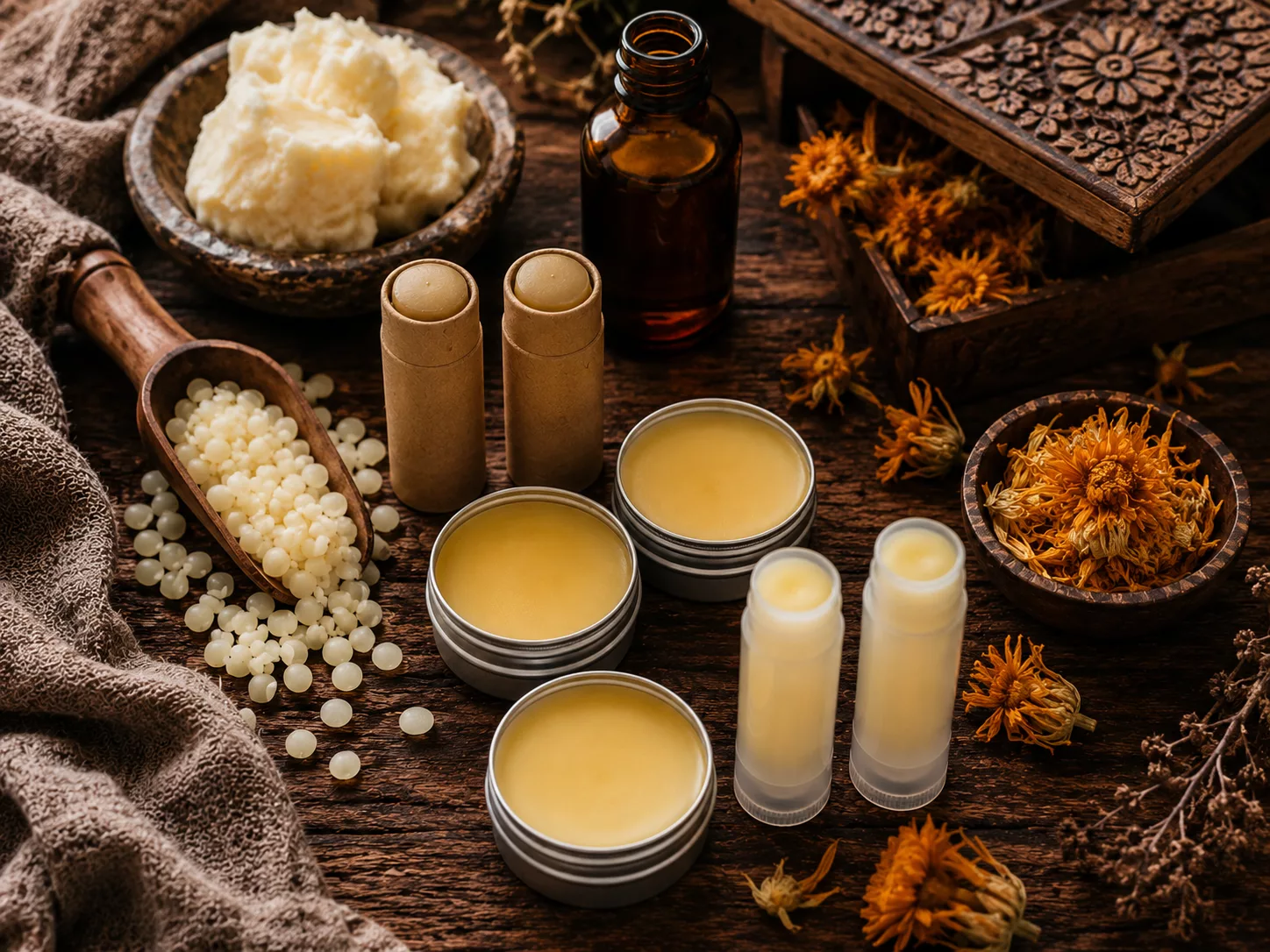
This recipe focuses on a handful of gentle ingredients that help create a protective barrier on the lips. Beeswax helps lock in moisture, shea butter adds softness, and nourishing oils provide a smoother texture without relying on unnecessary additives. The result is a straightforward balm designed for frequent use and sensitive skin.
It’s important to set realistic expectations. No lip balm can treat the underlying cause of Sjögren’s dryness. Chronic dryness is a symptom of a larger autoimmune condition, and topical products can only do so much. What a good lip balm can do is help protect your lips, reduce discomfort, and make daily dryness a little easier to manage.
Before we get to the recipe, let’s take a closer look at which ingredients are best left out of a lip balm for chronic dryness and which ones are worth keeping on hand.
Lip Balm for Mouths That Are Actually Dry
Sjögren’s dry mouth is not the same thing as chapped lips in February. It’s persistent, it’s deeper, and it doesn’t respond to the same products. A lot of commercial lip balms that work fine for most people contain ingredients that dry things out further — phenol, menthol, camphor, salicylic acid. They create a cycle: apply, feel better briefly, feel worse, apply again.
Making your own breaks that cycle because you know exactly what’s in it.
What to leave out
Anything with menthol, camphor, or phenol. These are common in medicated balms and they feel cooling and purposeful, but they’re counterproductive for chronic dryness — they stimulate more than they soothe. Fragrance as a catch-all ingredient is also worth skipping; it’s an allergen category, not a single substance, and a lot of people with autoimmune conditions are reactive without knowing why.
Vitamin E is often listed as a skin-nourishing addition. It can be, but it’s also a contact allergen for some people. Worth testing before you put it in everything.
What to build with instead
Beeswax as a base creates an occlusive seal — it sits on top of the skin and holds moisture in rather than adding it. Shea butter is moisturizing and anti-inflammatory. Jojoba oil mimics the skin’s natural sebum closely enough that it absorbs well and doesn’t tend to cause reactions. Castor oil is thicker and adds slip; a small amount goes a long way.
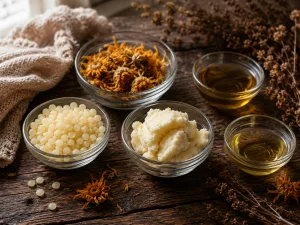
If you want something healing rather than just sealing, a tiny amount of calendula-infused oil works well for inflamed or cracked skin. You can buy it already infused or make it yourself, but that’s a longer project.
Basic ratio
One part beeswax to two or three parts oil, by weight if you have a scale or by volume if you don’t. Shea butter can replace some of the oil — it’s solid at room temperature, so it adds body. Melt gently, stir, pour into tins or tubes, let cool completely before using. It’ll feel firmer than commercial balm because commercial balm uses a lot of emollients and softeners you’re not adding. That’s the point.
A note on reapplication
With Sjögren’s, you’re going to reapply frequently. That means the formula matters more than it would for someone who uses balm twice a day in winter. Ingredients that are fine in small occasional doses can become irritants with constant exposure. Simple formulas hold up better over repeated use, and knowing what’s in yours means you can troubleshoot if something starts to bother you.
Looking for Supplies?
If you’d rather skip the hunt for ingredients and containers, I’ve collected my favorite lip balm and lotion making supplies into one Amazon Idea List. You’ll find beeswax pellets, shea butter, tins, tubes, measuring tools, and other basics that work well for beginner friendly projects.
See the Lip Balm and Lotion Making Supplies List on Amazon.
What it doesn’t fix
It won’t address the systemic dryness. Nothing topical will. But it can stop making things worse, which is a real thing when you’re already managing a condition that requires your attention in a dozen other directions.
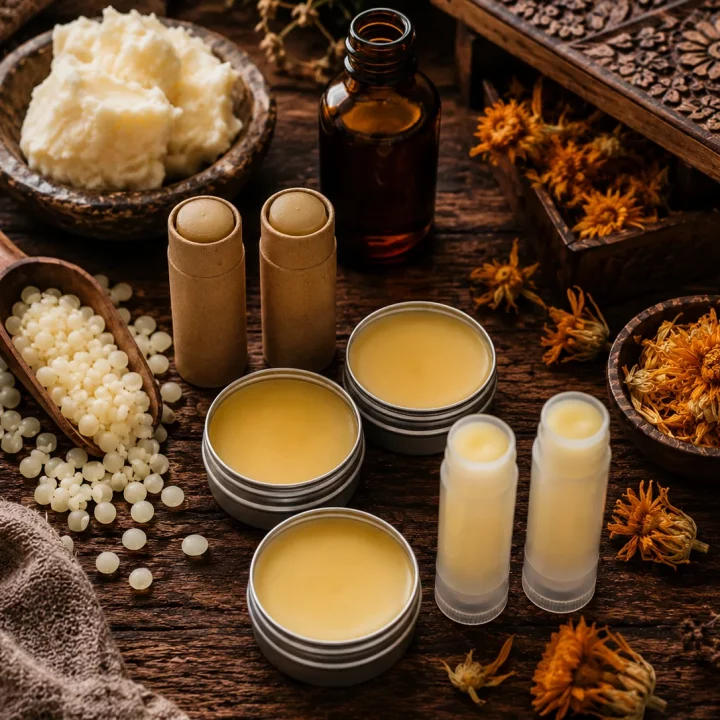
Simple Homemade Lip Balm for Sjögren's Dry Mouth and Chronic Dry Lips
When your lips are dry all the time, a simple lip balm can make a surprising difference. This recipe focuses on a handful of gentle ingredients that help protect and soften dry, sensitive lips without added fragrance, cooling agents, or unnecessary extras.
The goal is not to cure dryness. Sjögren's dryness starts inside the body, and no lip balm can change that. What this recipe can do is create a protective barrier that helps your lips feel more comfortable throughout the day.
Ingredients
Instructions
1. Prepare a double boiler
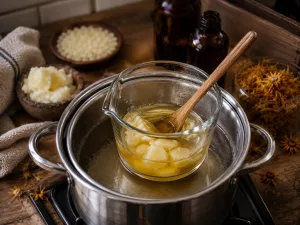
Fill a small saucepan with an inch or two of water. Place a heat safe glass measuring cup or bowl inside the pan and warm it over low heat.
You only need enough heat to melt the ingredients gently.
2. Melt the beeswax and shea butter
Add the beeswax pellets and shea butter to your container.
Stir occasionally as they melt together. This usually takes about five minutes.
3. Add the oils
Once the beeswax and shea butter are fully melted, stir in the jojoba oil and castor oil.
If you are using calendula infused oil, add it now and reduce the jojoba oil by the same amount.
Stir until everything is completely combined.
4. Pour into containers
Carefully pour the liquid balm into lip balm tubes or small tins.
A glass measuring cup with a pouring spout makes this step easier, but any heat safe container will work.
5. Let the balm cool
Allow the balm to cool completely at room temperature before using it.
Avoid placing it in the refrigerator. Rapid cooling can create small pits or uneven spots on the surface.
Notes
Notes
Sourcing: Beeswax pellets and jojoba oil are easy to find on Amazon or in natural food stores. Shea butter is sold in bulk fairly cheaply. Calendula-infused oil can be found also be found online if you don't want to make your own or have a local herb shop.
Yield: Makes approximately 6 standard lip balm tubes or 3–4 small tins. Doubles easily.
Shelf Life: Roughly 12 months without vitamin E, longer if you add it. However, given that it's going on compromised skin repeatedly, making smaller batches more often is reasonable.
Testing: If you want to test a formula before committing to a full batch, halve everything. The ratios hold at any scale.