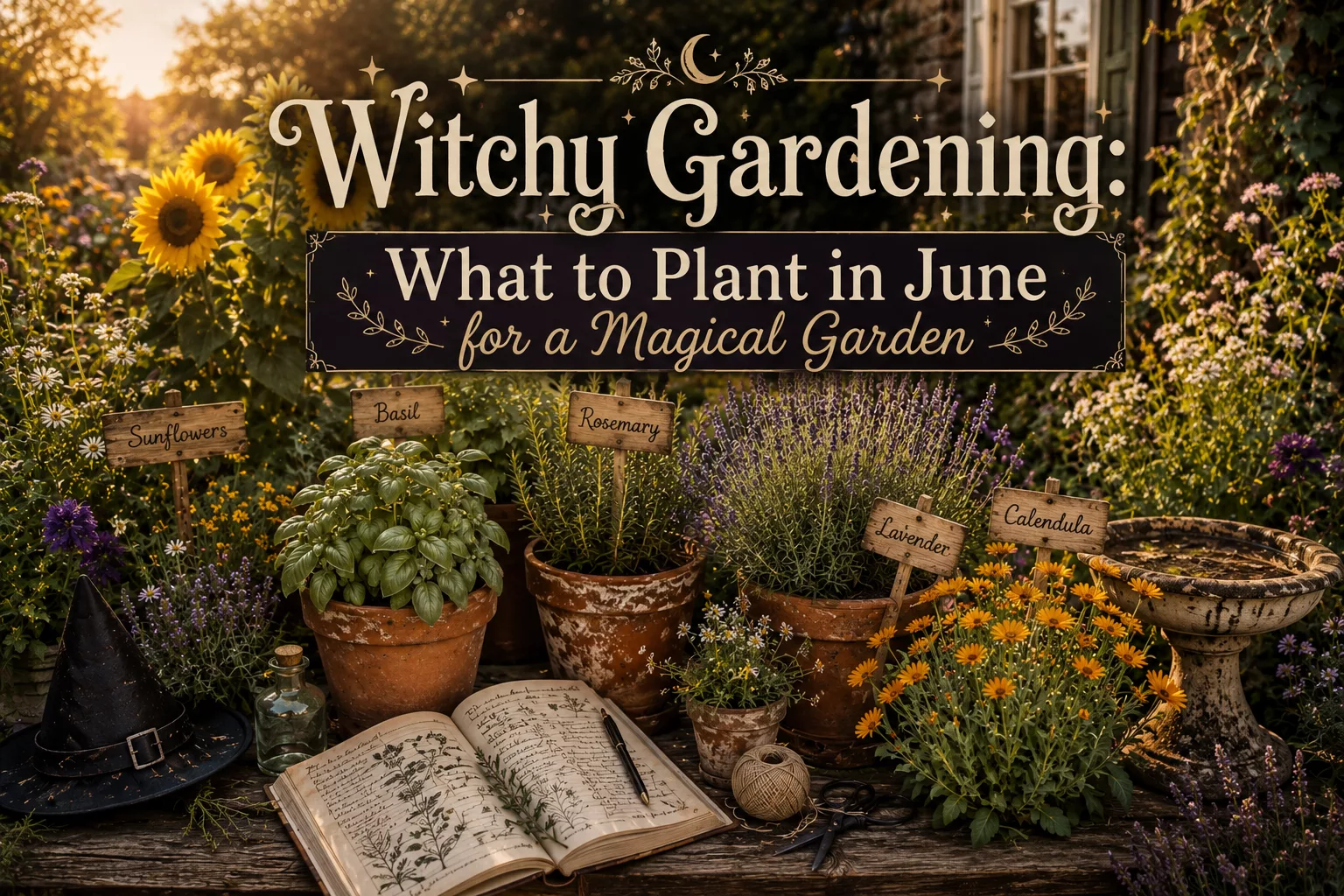
June is one of the most rewarding months for witchy gardening. The days are longer, the soil is warm, and many herbs and flowers are ready to take off with surprisingly little effort. If you have been thinking about starting a witchy garden but feel like you missed your chance in spring, June still offers plenty of opportunities to grow something meaningful.
This post contains affiliate links. As an Amazon Associate and Walmart Creator, I earn from qualifying purchases. I may also earn a commission through other affiliate programs at no extra cost to you. I only share products I genuinely find useful or interesting.
Witchy gardening does not require a large backyard or years of experience. A few containers on a porch, balcony, or sunny windowsill can provide herbs and flowers that bring beauty, creativity, and purpose to your daily routine. Many traditional witchy garden plants are also practical choices for cooking, tea making, pollinator support, and simple seasonal decorating.
In this guide, we will look at what to plant in June for a witchy garden, including beginner friendly herbs, magical flowers, and simple ways to create a garden that feels both useful and personal.
Why June Is a Great Month for Witchy Gardening
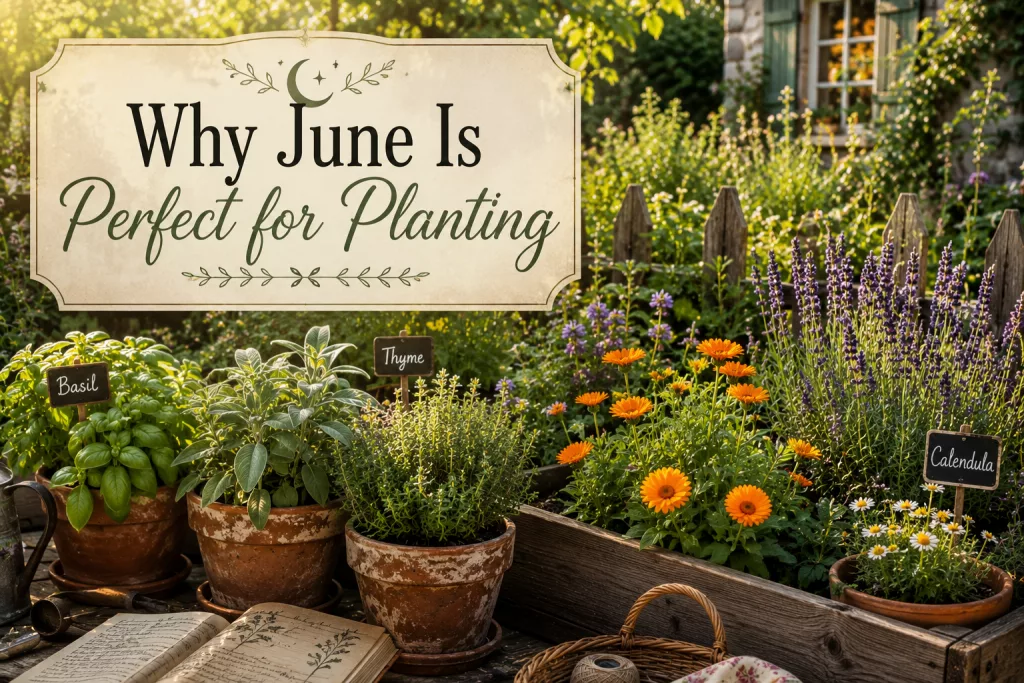
Many gardeners begin planting in early spring, but that does not mean you have missed your chance to create a thriving witchy garden. June offers warm soil, longer days, and steady growing conditions that help many herbs and flowers establish themselves quickly.
For beginner gardeners, June can actually feel less stressful than early spring. The risk of frost has usually passed, seeds germinate faster, and young plants often settle into the garden with less effort. You can spend more time enjoying your garden and less time worrying about sudden temperature changes.
Witchy gardening in June also aligns beautifully with the season’s energy. Gardens are full of growth, pollinators are active, and many plants are entering a period of abundance. Whether you are growing herbs for tea, flowers for seasonal decorations, or simply creating a peaceful outdoor space, June provides plenty of opportunities to start.
Another benefit of June planting is flexibility. You can grow many witchy garden favorites in raised beds, containers, window boxes, or small backyard spaces. Even a few pots of herbs on a sunny porch can become a meaningful part of your daily routine.
If you are new to witchy gardening, start with a handful of plants that interest you and fit your available space. A small garden that receives regular care is often more enjoyable and successful than a larger garden that feels overwhelming.
Witchy Herbs to Plant in June
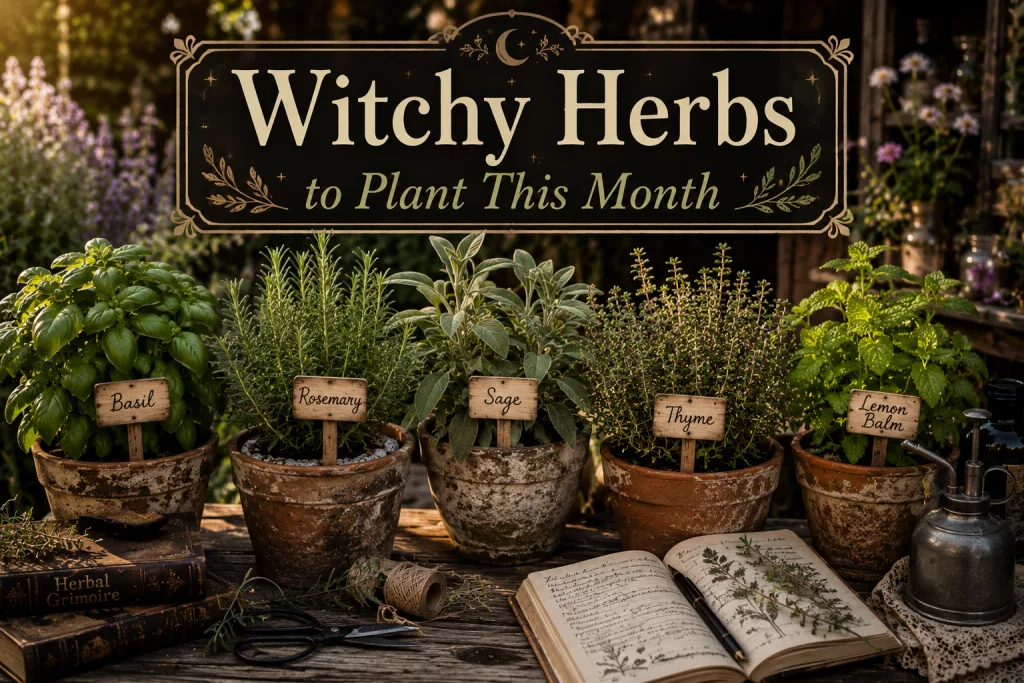
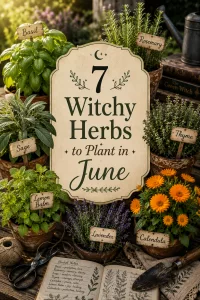
Herbs are often the heart of a witchy garden. Many are easy to grow, useful in everyday life, and well suited to containers or small garden spaces. If you are wondering what to plant in June, these herbs are excellent choices for beginners and experienced gardeners alike.
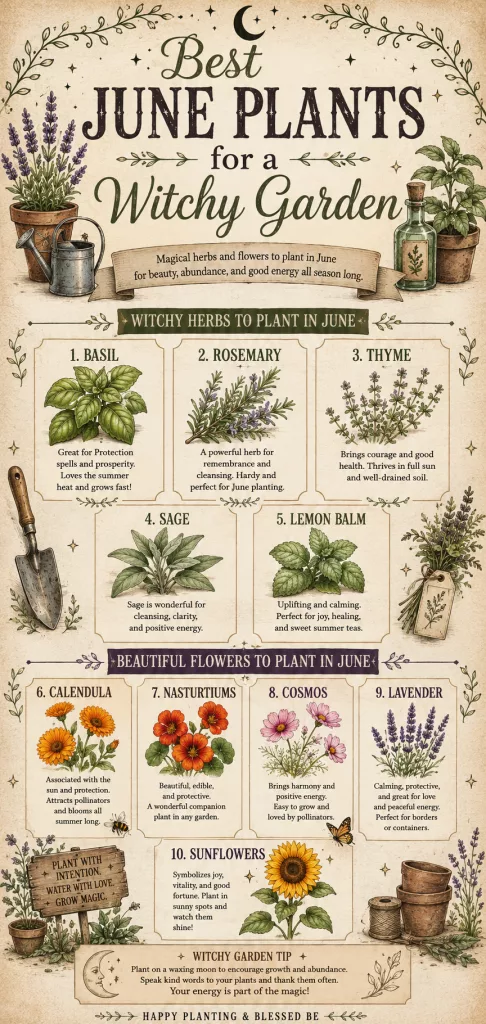
Basil
Basil is one of the easiest herbs to grow during warm weather. It thrives in full sun and can be grown successfully in containers, raised beds, or traditional garden plots.
In many traditions, basil is associated with prosperity, protection, and abundance. Even if you are simply growing it for cooking, it brings both beauty and usefulness to the garden.
Regular harvesting encourages the plant to produce more leaves throughout the season. Fresh basil can be used in sauces, salads, infused oils, and herbal arrangements.
Lemon Balm
Lemon balm is a cheerful herb with a fresh citrus scent and a reputation for attracting bees and other pollinators. It grows quickly once established and is often a favorite among herbal tea enthusiasts.
Traditionally, lemon balm has been connected with peace, comfort, and emotional balance. Its bright green leaves add texture to a witchy garden while providing a practical harvest for homemade teas.
Because lemon balm can spread easily, many gardeners prefer growing it in containers where it can be managed more easily.
Sage
Sage is a reliable perennial herb that returns year after year in many growing zones. Its soft gray green leaves provide visual interest throughout the season and pair well with flowers in a witchy garden.
Many people associate sage with cleansing and protection traditions. In the kitchen, it is also a useful culinary herb that can be added to soups, roasted vegetables, and savory dishes.
Sage prefers well drained soil and plenty of sunlight. Once established, it requires relatively little maintenance.
Thyme
Thyme is an excellent choice for gardeners who want a hardy herb that does not demand constant attention. Its low growing habit makes it useful along pathways, in containers, or tucked between other plants.
Traditional folklore often connects thyme with courage, strength, and confidence. Its small leaves carry a pleasant fragrance and can be harvested throughout the growing season.
Thyme also attracts pollinators when allowed to flower, making it a practical addition to wildlife friendly gardens.
Rosemary
If your climate allows, rosemary is another wonderful herb to add to a witchy garden in June. Its evergreen foliage provides year round interest in warmer regions and can be grown in containers elsewhere.
Rosemary has long been associated with memory, remembrance, and protection. The fragrant stems can be used in cooking, wreath making, dried arrangements, and seasonal decorations.
Give rosemary plenty of sunlight and avoid overly wet soil. With proper care, it can become one of the most dependable plants in your garden.
Magical Flowers to Plant in June
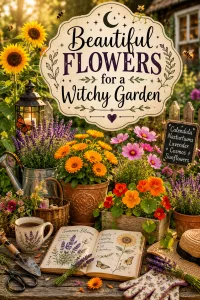
Flowers bring color, texture, and pollinator activity to a witchy garden. Many can be started or transplanted in June and will provide blooms throughout the summer. If you are looking for what to plant in June, these flowers offer a beautiful balance of practicality and traditional symbolism.
Calendula
Calendula is one of the most useful flowers a gardener can grow. Its bright golden blooms add cheerful color to garden beds and containers while attracting pollinators throughout the growing season.
Traditionally, calendula has been associated with the sun, protection, and positive energy. The petals are also edible and can be used in teas, salads, infused oils, and homemade skincare projects.
Calendula prefers full sun and regular watering. Deadheading spent flowers often encourages additional blooms.
Nasturtiums
Nasturtiums are a favorite among beginner gardeners because they grow quickly and require very little maintenance. Their round leaves and vibrant flowers create a charming cottage garden appearance that fits beautifully within a witchy garden.
In folklore, nasturtiums have been linked with strength and resilience. They also attract pollinators and can help bring more beneficial insects into your growing space.
Both the flowers and leaves are edible, making nasturtiums a practical addition to kitchen gardens.
Gardener’s Note
Many of the flowers and herbs commonly found in witchy gardens also support bees, butterflies, and other important pollinators. According to the USDA, pollinator friendly habitats can increase biodiversity and help create healthier garden ecosystems.
If you would like to learn more about creating a pollinator friendly garden, visit the USDA’s guide on pollinator habitats:
USDA: The Importance of Pollinators
Adding pollinator friendly plants such as calendula, cosmos, lavender, and sunflowers can help create a garden that is both beautiful and beneficial to local wildlife.
Cosmos
Cosmos produce delicate blooms that sway gently in summer breezes and attract a variety of pollinators. They are easy to grow from seed and continue flowering for much of the season.
Many gardeners appreciate cosmos for the sense of calm and beauty they bring to outdoor spaces. Their soft appearance pairs well with herbs and other flowers, creating a garden that feels relaxed and welcoming.
Cosmos thrive in full sun and generally perform well even in less than perfect soil conditions.
Sunflowers
Sunflowers make a dramatic addition to any witchy garden. Their tall stems and large blooms create natural focal points while providing food for pollinators and birds.
Traditionally, sunflowers have been connected with protection, vitality, and abundance. They also bring height and structure to garden beds, making smaller plants stand out even more.
Choose varieties that fit your available space. Some compact sunflowers grow well in containers, while larger varieties can become impressive centerpieces in backyard gardens.
Lavender
Lavender is a classic choice for gardeners who want beauty, fragrance, and practical uses all in one plant. Its purple flowers attract bees and can be harvested for sachets, dried arrangements, and homemade crafts.
Many traditions associate lavender with peace, rest, and purification. Its calming scent makes it a natural fit for cozy outdoor spaces designed for relaxation and reflection.
Lavender prefers full sun and well drained soil. Once established, it can be surprisingly drought tolerant.
📌Pin It
Creating a Small Witchy Garden in Containers
You do not need a large backyard to enjoy witchy gardening. Many herbs and flowers grow beautifully in containers, making it possible to create a magical garden on a porch, balcony, patio, or even a sunny windowsill.
Starting with containers can actually make gardening easier. Pots allow you to control soil quality, move plants when needed, and keep maintenance manageable. For beginners, a small container garden often feels less overwhelming than filling an entire garden bed.
Plant Your Witchy Garden
Feeling inspired to start planting?
I’ve gathered many of the herbs and flowers featured in this guide into easy shopping collections so you can begin building your own witchy garden without spending hours searching for supplies.
Inside you’ll find favorites like basil, lavender, rosemary, calendula, thyme, sage, cosmos, nasturtiums, and sunflowers, along with a few gardening essentials to help you get started.
Amazon Idea List:
Walmart Collection:Start small, choose the plants that excite you most, and enjoy watching your garden grow throughout the season.
If you are just getting started, consider choosing three to five plants that you know you will enjoy using throughout the season. A simple combination of herbs and flowers can create a garden that is both practical and beautiful.
Some beginner friendly container combinations include:
- Basil, calendula, and thyme
- Sage, lavender, and nasturtiums
- Lemon balm, cosmos, and calendula
- Rosemary, thyme, and lavender
Choosing Your Pots and Sunlight
When selecting containers, make sure they have drainage holes to prevent excess water from collecting around the roots. Most herbs and flowers also perform best in a location that receives at least six hours of sunlight each day.
You can add personal touches that reflect your style and interests. Vintage containers, handmade plant markers, thrifted pots, and small decorative accents can help create a garden space that feels welcoming and uniquely yours.
A witchy garden does not need to be elaborate. A few healthy plants growing in containers can provide fresh herbs, beautiful flowers, and a daily reminder to spend a few quiet moments outdoors.
Simple June Gardening Rituals
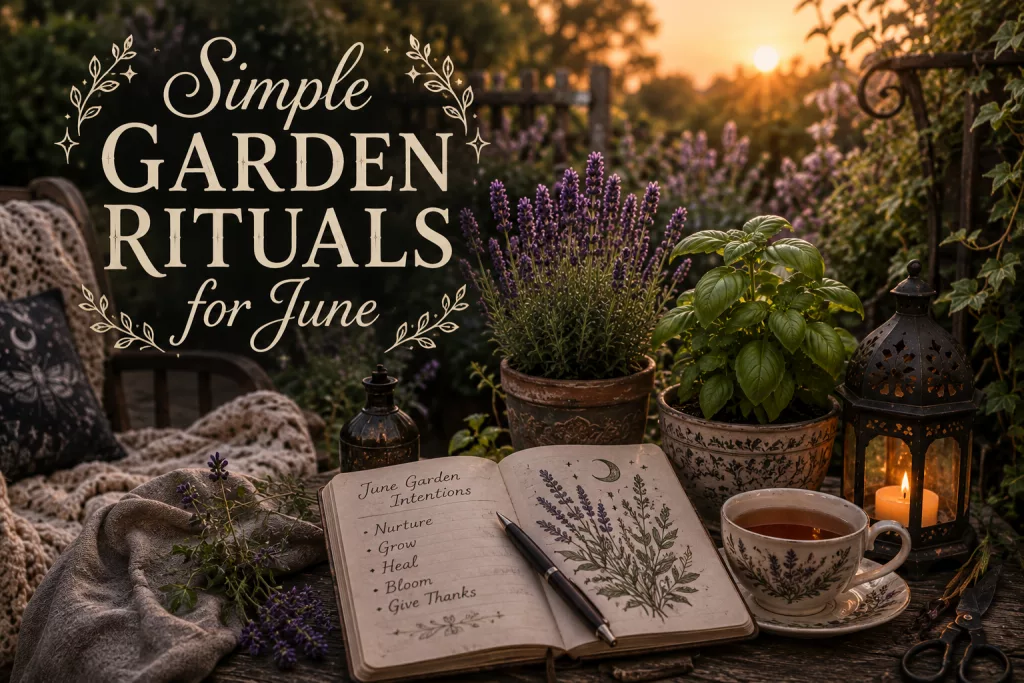
One of the joys of witchy gardening is creating small seasonal habits that help you stay connected to your garden. These practices do not need to be complicated. Often, a few quiet minutes spent caring for your plants can become a meaningful part of your daily routine.
Keep a Garden Journal
A garden journal is one of the most useful tools a gardener can have. Record what you planted, when seeds emerged, which flowers bloomed first, and any challenges you notice along the way.
Over time, these notes become a valuable resource that helps you make better gardening decisions each season.
Practice Mindful Watering
Instead of rushing through garden tasks, slow down and pay attention while watering your plants. Notice new growth, developing buds, visiting pollinators, and changes in the weather.
This simple practice helps you catch potential problems early while also encouraging a deeper appreciation for your garden.
Spend Time in the Evening Garden
June evenings often provide a comfortable time to enjoy the garden after the heat of the day has passed. A short walk through your growing space can become a relaxing daily ritual.
Take note of which flowers are blooming, listen for birds and insects, and observe how your garden changes throughout the season.
Express Gratitude for Each Harvest
Whether you harvest a handful of basil leaves or a basket of flowers, take a moment to appreciate what your garden has produced.
Many gardeners find that acknowledging even small harvests helps strengthen their connection to the growing season and encourages more intentional use of what they grow.
Observe the Natural Rhythms of Your Garden
Gardens are constantly changing. Seeds sprout, flowers bloom, pollinators visit, and plants mature at their own pace.
Spending a few moments observing these changes can become a simple seasonal practice that encourages patience and helps you better understand the needs of your plants.
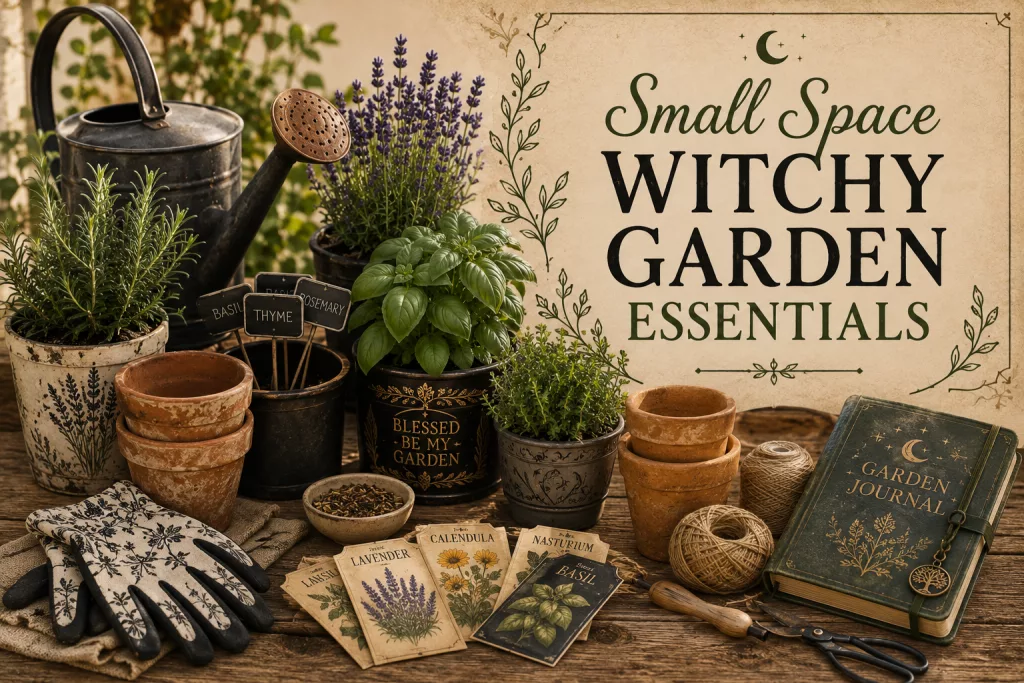
Cozy Witchy Garden Starter Collection
Starting a witchy garden does not require a large backyard or expensive equipment. Many of my favorite herbs and flowers thrive in simple containers and small outdoor spaces.
To make planning easier, I’ve put together a collection of containers, gardening tools, plant markers, and other supplies that work well for balconies, patios, porches, and small gardens.
Amazon Idea List:
Walmart Collection:
Whether you’re planting basil in a sunny window or creating a container garden filled with calendula and lavender, these are the supplies I recommend for getting started.
Witchy Gardening Tips for Beginners
Starting a witchy garden does not require special tools, extensive knowledge, or a large growing space. The most successful gardens often begin with a few carefully chosen plants and a willingness to learn as the season unfolds.
Start Small
It can be tempting to plant everything that catches your attention, especially when browsing seed packets or garden centers. However, a smaller garden is usually easier to maintain and more enjoyable for beginners.
Choose a handful of herbs and flowers that genuinely interest you. As your confidence grows, you can always expand your garden in future seasons.
Grow Plants You Will Use
When deciding what to plant in June, focus on herbs and flowers that fit your lifestyle. If you enjoy cooking, herbs such as basil, thyme, and rosemary may be excellent choices. If you enjoy crafting or decorating, flowers like lavender and calendula can provide plenty of inspiration.
Growing plants that serve a purpose in your daily life often makes gardening feel more rewarding.
Learn One Season at a Time
Gardening is a skill that develops through observation and experience. Rather than trying to master everything at once, focus on learning what works during the current growing season.
Pay attention to how your plants respond to sunlight, watering, and weather conditions. These observations often teach more than any gardening guide.
Do Not Worry About Perfection
Every gardener experiences setbacks. Seeds fail to sprout, plants struggle, and unexpected weather can create challenges.
A successful witchy garden is not defined by perfection. It is built through consistent care, curiosity, and a willingness to adapt when things do not go as planned.
Make Time to Enjoy the Process
It is easy to focus entirely on results, but gardening offers value long before harvest time. Watching seeds emerge, noticing the first flower bud, and observing pollinators at work are all rewarding parts of the experience.
Allow yourself time to enjoy these moments. They are often what make gardening such a meaningful and lasting hobby.
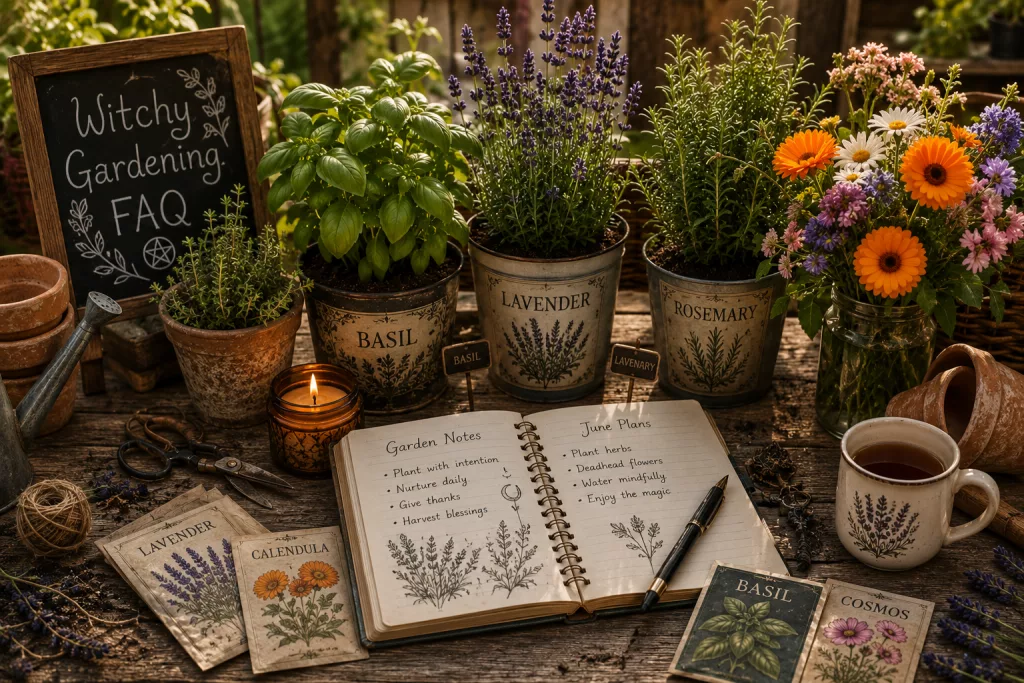
Frequently Asked Questions About Witchy Gardening
Can I start a witchy garden in June?
Yes. June is still a great time to start a witchy garden in many regions. Warm soil and longer days help herbs and flowers establish themselves quickly. Many popular witchy garden plants, including basil, calendula, nasturtiums, and cosmos, can be planted successfully in June.
Do I need a large yard for witchy gardening?
No. Witchy gardening can be done in containers, raised beds, small patios, balconies, or even sunny windowsills. Many herbs and flowers thrive in pots, making this hobby accessible to gardeners with limited space.
What are the easiest herbs for a beginner witchy garden?
Basil, thyme, sage, lemon balm, and rosemary are all beginner friendly options. They are relatively easy to grow, have practical uses in everyday life, and are commonly included in witchy garden spaces.
What flowers should I plant in June for a witchy garden?
Calendula, nasturtiums, cosmos, sunflowers, and lavender are all excellent choices. These flowers provide color, attract pollinators, and have long standing associations with traditional gardening and folklore.
Can I create a witchy garden without following a specific spiritual practice?
Absolutely. Many people enjoy witchy gardening because they appreciate the herbs, flowers, seasonal routines, and cozy atmosphere it creates. You can approach it as a creative gardening style without incorporating any spiritual practices.
How much sunlight does a witchy garden need?
Most herbs and flowering plants grow best with at least six hours of sunlight each day. Before choosing plants, check the growing requirements for your specific location and available garden space.
What is the best plant to start with if I am new to witchy gardening?
Basil is often one of the easiest plants for beginners. It grows quickly during warm weather, works well in containers, and can be used regularly in cooking. Calendula is another beginner friendly option that provides beautiful blooms throughout the season.
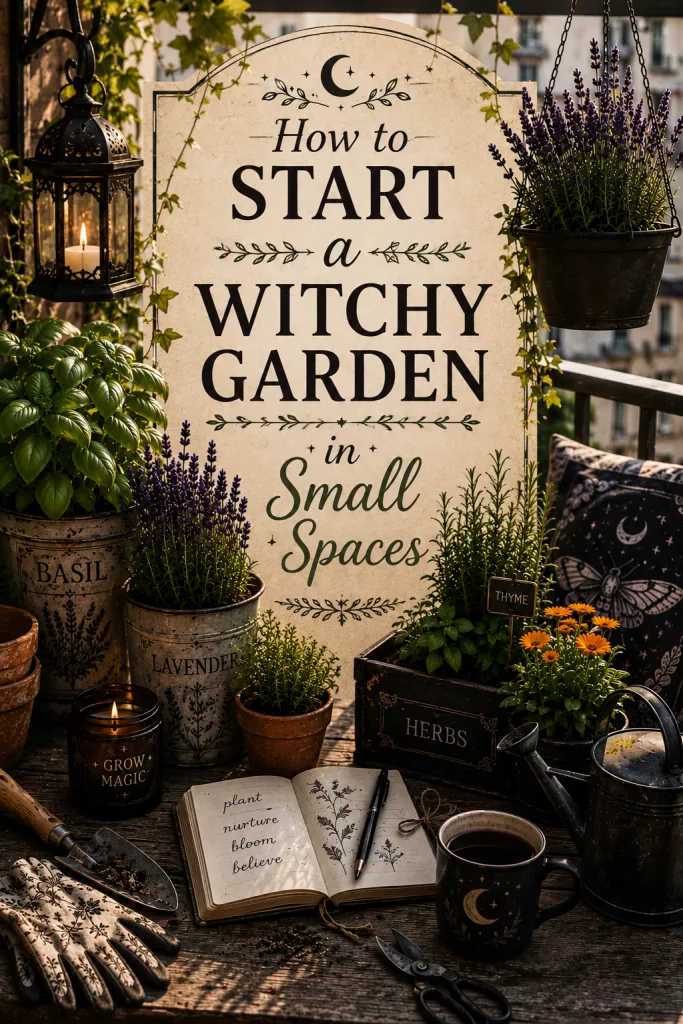
Final Thoughts
June is a wonderful time to begin witchy gardening, whether you have a spacious backyard, a small patio, or just a few containers in a sunny corner. With warm weather, longer days, and plenty of beginner friendly herbs and flowers to choose from, there is still ample opportunity to create a garden that feels both beautiful and useful.
The best witchy garden is not the largest or most elaborate. It is the one that fits your space, your interests, and your daily life. A few pots of basil, lavender, or calendula can provide fresh ingredients, colorful blooms, and quiet moments of connection throughout the growing season.
If you have been wondering what to plant in June, consider starting with one or two herbs and a favorite flower. Small beginnings often lead to the most enjoyable gardening experiences.
What are you planting in your witchy garden this month? Share your favorite herbs, flowers, and gardening traditions in the comments below.