
Long before I knew anyone called them simmer pots, my Nana almost always seemed to have something fragrant bubbling away on the stove.
This post contains affiliate links. As an Amazon Associate and Walmart Creator, I earn from qualifying purchases. I may also earn a commission through other affiliate programs at no extra cost to you. I only share products I genuinely find useful or interesting.
I wish I could give you “Nana’s simmer pot recipe,” but there wasn’t one. It changed with the season, what she had in the kitchen, and apparently whatever struck her fancy that day.
Nana wasn’t what most people picture today when they hear the word witch. There was no altar, no collection of crystals, no carefully prescribed set of rituals. What she had was quieter than that—a little folk knowledge, an understanding of herbs and home remedies, and what I can only describe as a knowing.
She had learned some of that from her mother and grandmother before she went into an orphanage. Her mother had been born in Wales and brought to America as a baby, and her grandmother came from a mining family that moved between Wales and Somerset, England.
How much of what Nana knew came directly through those women, I can’t say. Family traditions don’t arrive with footnotes attached. I just know that some things were passed down.
And Nana knew things.
Most memorably, she always seemed to know when I was coming to visit. I could live hours away, decide to surprise her and tell no one I was coming—and somehow she was expecting me anyway.
So when I think about simmer pots, I don’t think first about Pinterest-perfect dried orange slices or assigning a magical meaning to every cinnamon stick.
I think about Nana’s stove.
A little water. Whatever was in season or on hand. Something good simmering away and making the whole house smell like home.
That’s the spirit behind these recipes.
What Is a Simmer Pot?
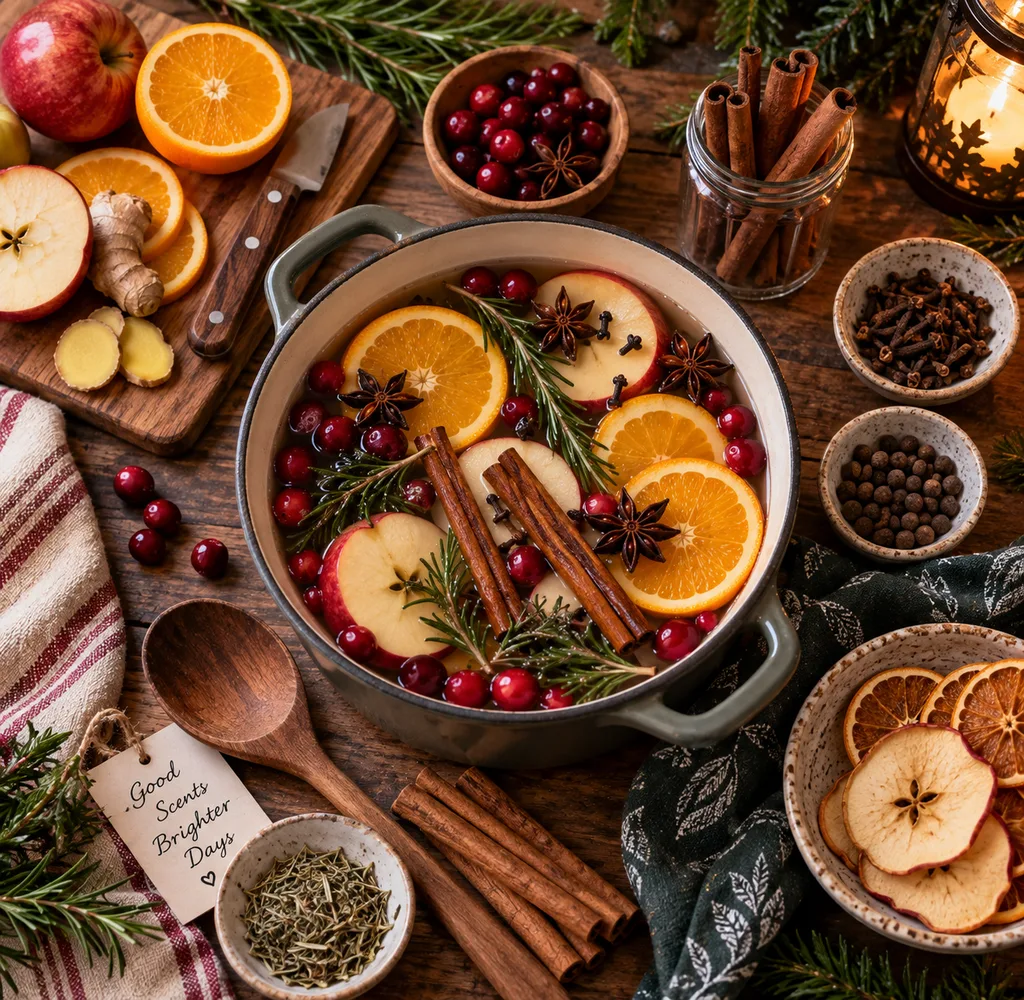
A simmer pot—sometimes called stovetop potpourri—is simply a pot of water filled with fragrant ingredients and kept at a very gentle simmer.
As the water warms, ingredients such as citrus peels, apples, herbs and whole spices release their fragrance into the air.
There’s no need to make it complicated, and you certainly don’t need every ingredient listed in a recipe. If you have an orange peel left from breakfast, half an apple that’s getting wrinkly, a few cinnamon sticks or some rosemary that needs to be used, you already have the beginnings of a simmer pot.
That, to me, is part of the magic.
Want more cozy kitchen inspiration? My Dream Cottage Kitchen Upgrades are all about making the kitchen feel warmer, more useful and more like a place you actually want to spend time—whether something is simmering on the stove or not.
How to Make a Simmer Pot
Add your ingredients to a saucepan or small pot and cover them generously with water.
Bring the water just to a boil, then immediately reduce the heat to the lowest setting that will maintain a very gentle simmer.
Leave the pot uncovered and add more water as it evaporates.
That’s it.
You can increase or decrease nearly any of the ingredients below according to what you have and which scents you prefer. These are recipes, but they’re forgiving ones.
A Quick Simmer Pot Safety Note
A simmer pot still involves a hot stove and a pot of water that is gradually evaporating.
Never leave a stovetop simmer pot unattended. Check the water level regularly and add more before it gets low. Turn off the burner if you’re leaving the kitchen for an extended period, leaving the house or going to bed.
Also remember that “natural” doesn’t automatically mean safe for every person or pet. If someone in your household is sensitive to fragrances, herbs or spices, choose ingredients accordingly.
And if you’re using gathered greenery rather than culinary herbs, positively identify the plant first rather than putting an unknown branch into your simmer pot.
Want to make your own simmer pots? I put together my favorite simmer-pot basics—from whole spices and jars to the little kitchen tools that make it easier—in my Cozy Simmer Pot Essentials list. You probably already have plenty of what you need, so check your pantry first!
1. Nana’s Use-What-You’ve-Got Simmer Pot
This one isn’t really a recipe.
That’s rather the point.
Start with something fruity:
- Orange, lemon or apple peels
- Apple or pear slices
- A handful of cranberries
Then see what you’ve got:
- 1–2 cinnamon sticks
- A few whole cloves
- A sprig of rosemary
- A little vanilla
- A piece of fresh ginger
- A few whole spices from the cupboard
Put a few things together, cover them with water and see what happens.
You do not need to throw half the spice cabinet into the pot. Start small. You can always add something else.
This is the simmer pot that feels most like Nana to me—not because I remember these exact ingredients, but because there wasn’t an exact recipe.
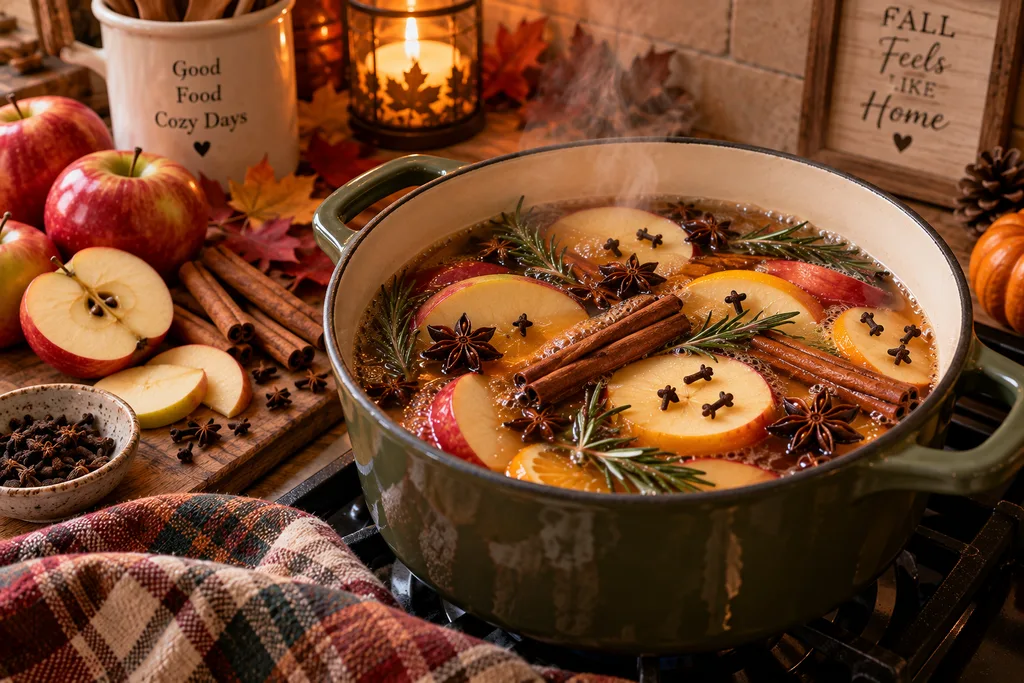
2. Apple Cinnamon Autumn Simmer Pot
This is the one for the first day when opening the window makes you think, Oh. Fall really is coming.
Add to your pot:
- 1 apple, sliced
- 2 cinnamon sticks
- 1 teaspoon whole cloves
- A few strips of orange peel
- Water to cover generously
The apple makes this softer and sweeter than a citrus-heavy simmer pot, while the orange peel keeps it from becoming nothing but cinnamon.
It’s a good one for September and October when I’m ready for fall but not quite ready for my house to smell like Christmas.
3. Orange & Spice Simmer Pot
This is probably what most people imagine when they hear “stovetop potpourri.”
You’ll need:
- 1 orange, sliced
- 2 cinnamon sticks
- 1 teaspoon whole cloves
- 2–3 whole star anise
- Water
Warm, citrusy, spicy and uncomplicated.
If you don’t have star anise, leave it out. Your house will survive.
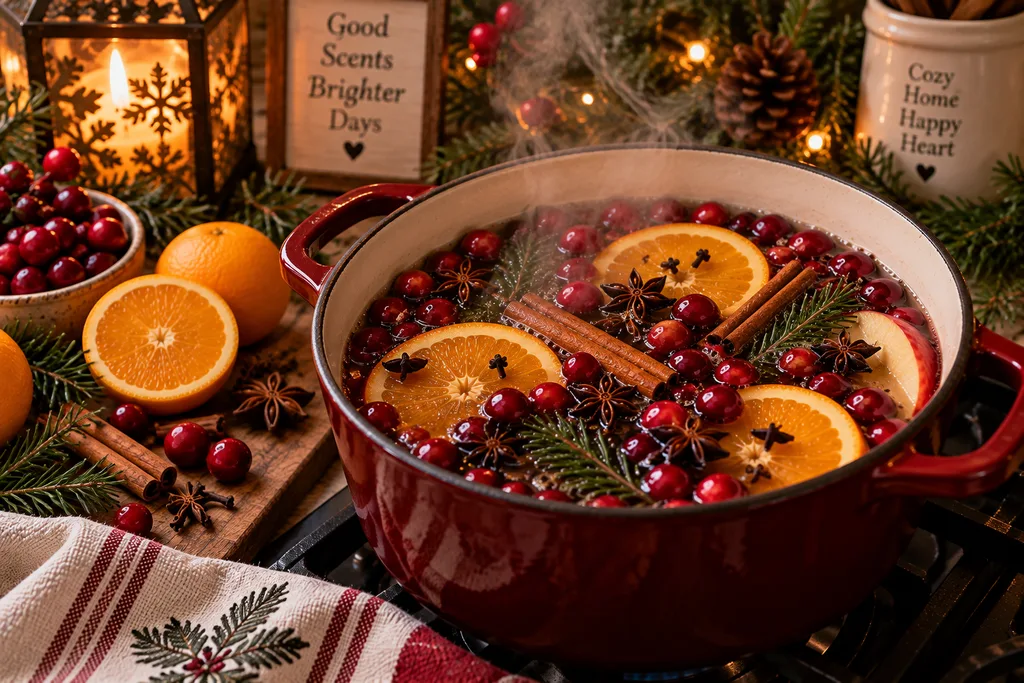
4. Cranberry Orange Christmas Simmer Pot
This one is as pretty in the pot as it smells.
Add:
- 1 orange, sliced
- 1 cup fresh or frozen cranberries
- 2 cinnamon sticks
- 1 teaspoon whole cloves
- 2 whole star anise
- Water
The cranberries and orange make this particularly good for Thanksgiving through Christmas—and it happens to look gorgeous bubbling away on the stove.
This would also be an easy one to prepare when company is coming.
Settling in for a handmade Christmas? I’ve also gathered 20+ Free Christmas Crochet Patterns for ornaments, gifts, cozy decor and little projects to make while the house smells like Christmas.
5. Christmas Tree Simmer Pot
If you love that fresh evergreen smell but don’t necessarily have a real Christmas tree, this one’s for you.
Add:
- A few small sprigs of positively identified, suitable evergreen
- 1 orange, sliced
- 2 cinnamon sticks
- 1 teaspoon whole cloves
- Water
If you don’t have an appropriate evergreen available, use rosemary instead. It won’t smell exactly like a Christmas tree, obviously, but it still gives you that fresh green note alongside the orange and spices.
6. Winter Woodland Simmer Pot
This one moves away from the sweeter bakery scents and into something greener and fresher.
Add:
- 2–3 sprigs fresh rosemary
- Several strips of lemon or orange peel
- 1 cinnamon stick
- A few whole cloves
- Water
You can keep this simple or add another culinary herb you enjoy.
I especially like the idea of this one after the holidays, when I’m still very much in winter mode but don’t necessarily want the house smelling like Christmas morning anymore.
7. Vanilla Chai Simmer Pot
For the people who want their house to smell like they should be curled up under a blanket holding an enormous mug.
Add:
- 2 cinnamon sticks
- 4–6 whole cardamom pods, lightly crushed
- 1 teaspoon whole cloves
- Several slices fresh ginger
- 1 teaspoon vanilla extract
- Water
Add the vanilla after you’ve reduced the pot to a gentle simmer.
You can also toss in a strip or two of orange peel if you’d like a little brightness.
And if you’re going all-in on the enormous cozy mug situation, my Holly Berry Mug Cozy is a quick 9-row Christmas crochet project that feels right at home here.
8. Gingerbread Kitchen Simmer Pot
This one leans fully into holiday baking territory without requiring you to actually bake anything.
Add:
- Several slices fresh ginger
- 2 cinnamon sticks
- 1 teaspoon whole cloves
- ¼ teaspoon whole allspice berries
- 1 teaspoon vanilla extract
- A few strips of orange peel
- Water
It’s warm, spicy and particularly good for those days when you’d like the atmosphere of Christmas baking but perhaps don’t have the spoons for actual Christmas baking.
I consider that a perfectly legitimate shortcut.
9. Bright Winter Citrus Simmer Pot
Not every winter scent needs cinnamon to be the main character.
Add:
- 1 lemon, sliced
- ½ orange, sliced
- 2–3 sprigs fresh rosemary
- Several slices fresh ginger
- Water
This one is lighter and fresher than the others, making it a nice choice after several weeks of heavy holiday scents.
I’d use this from January straight through early spring.
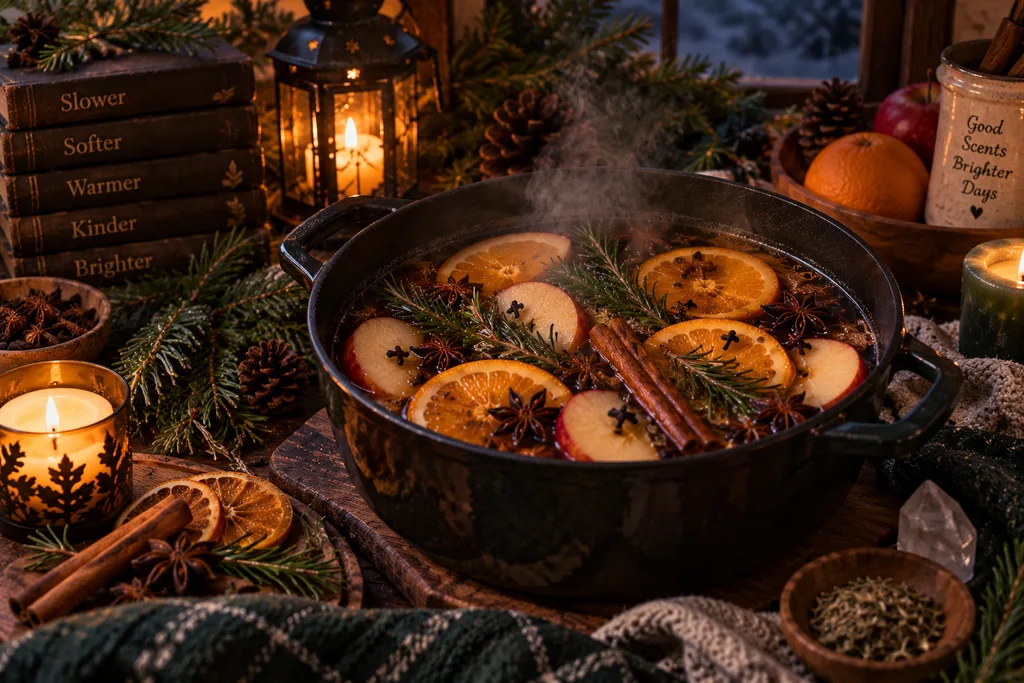
10. Winter Solstice Simmer Pot
This is the one where I let my witchier side come out to play.
Add:
- ½ orange, sliced
- ½ apple, sliced
- A small handful of cranberries
- 2 cinnamon sticks
- 2–3 whole star anise
- A sprig of rosemary or suitable evergreen
- Water
You can make it simply because it smells wonderful.
Or you can make preparing it part of marking the Winter Solstice.
Evergreens have long been associated with life persisting through winter, while the return of light after the year’s longest night has inspired midwinter traditions across cultures for centuries. If symbolism matters to you, choose ingredients that carry meaning for you rather than worrying about whether you’ve assembled the internet’s officially approved witchy ingredient list.
Put the pot on.
Turn the lights down.
Light a candle or lantern if you’d like.
And take a moment to notice the season changing.
Sometimes that’s enough.
If marking the seasons usually involves yarn around here too, my Free Seasonal Crochet Patterns collection has projects for making your way through the year one season at a time.
Simmer Pot FAQ
Can You Reuse a Simmer Pot?
Usually, yes—for a short period.
When you’re finished for the day, let everything cool and refrigerate the pot and its contents promptly in a covered container. You can reheat it later and see whether there’s enough fragrance left for another round.
Use your judgment with perishable ingredients. If the mixture looks or smells questionable, discard it.
Eventually the ingredients simply stop giving you much fragrance. At that point, they’ve done their job.
Can I Make a Simmer Pot in a Slow Cooker?
Yes. A small slow cooker can work nicely when you don’t want to keep a burner going.
Add your ingredients and water, heat until everything is hot, then leave the lid off or partially open so the fragrance can escape.
You’ll still need to monitor the water level and follow the safety instructions for your particular appliance.
This is one place where a little countertop slow cooker can be especially handy—and, conveniently, doesn’t require sacrificing the pot you were planning to use for dinner.
What Can I Put in a Simmer Pot?
Once you understand the basic idea, you don’t really need recipes.
Some of my favorite things to experiment with are citrus peels, apples, pears, cranberries, fresh ginger, rosemary, cinnamon sticks, whole cloves, cardamom, star anise and vanilla.
The kitchen scraps are often just as useful as the pretty ingredients.
Save the orange peel.
Use the apple that’s past its prime.
Grab that last sprig of rosemary.
You aren’t styling a photograph. You’re making your house smell good.
A Little Everyday Kitchen Magic
Maybe that’s what I inherited from Nana more than any particular recipe.
Not a spell book.
Not a rigid collection of practices.
Just the idea that ordinary things can have a little more meaning if you pay attention to them.
Herbs can be useful. Seasons matter. Homes have rhythms. Sometimes you know things you can’t quite explain.
And sometimes you put a pot of water on the stove with whatever you happen to have around, and the whole house feels a little cozier.
I think Nana would have understood that perfectly.