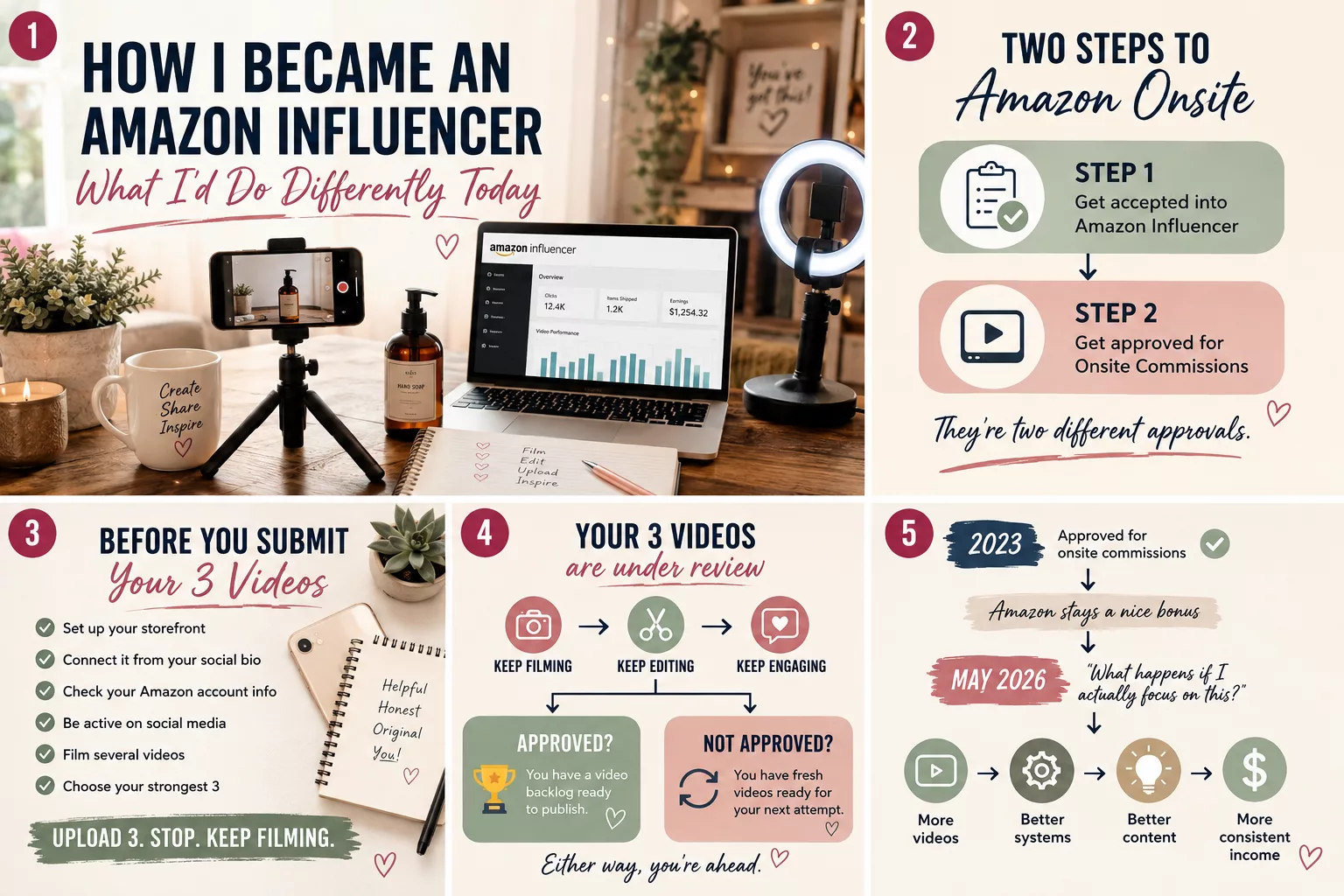
My real experience getting into the Amazon Influencer Program, getting approved for onsite commissions, and what I think new creators should know before submitting those first three videos.
This post contains affiliate links. As an Amazon Associate and Walmart Creator, I earn from qualifying purchases. I may also earn a commission through other affiliate programs at no extra cost to you. I only share products I genuinely find useful or interesting.
I became an Amazon Influencer in August 2023.
I wish I could tell you that I had carefully researched the program, developed a strategy, selected the perfect social account and confidently submitted my application.
I did not.
In fact, I don’t even remember where I first heard about the Amazon Influencer Program.
It could have been an email. It could have been YouTube or Instagram. I may have stumbled across it while doing something completely unrelated.
What I do know is that I applied, got accepted into the program, eventually got approved for onsite commissions—and then spent almost three years treating it as a nice little bonus instead of realizing what I actually had.
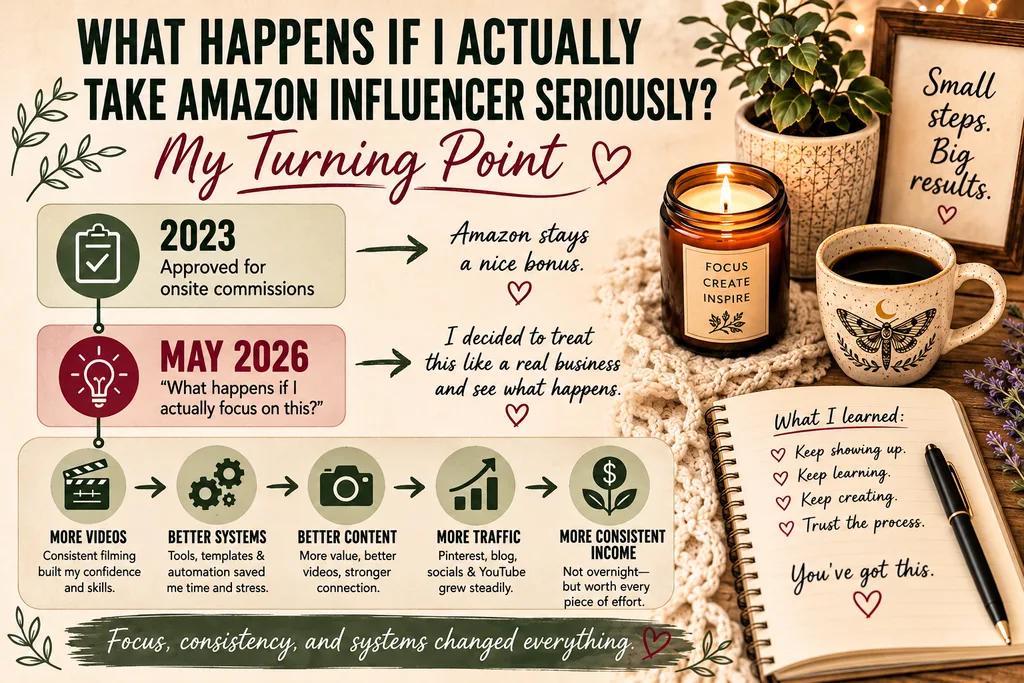
It wasn’t until May 2026 that I decided to find out what would happen if I took Amazon Influencer seriously.
A lot has changed since then.
So if you’re considering applying—or you’ve already been accepted and are staring nervously at those first three videos—here’s what my experience looked like, what I’ve learned since, and what I would do differently if I were starting today.
Amazon Influencer Onsite Approval at a Glance
Getting into the Amazon Influencer Program and getting approved for onsite commissions are two separate steps.
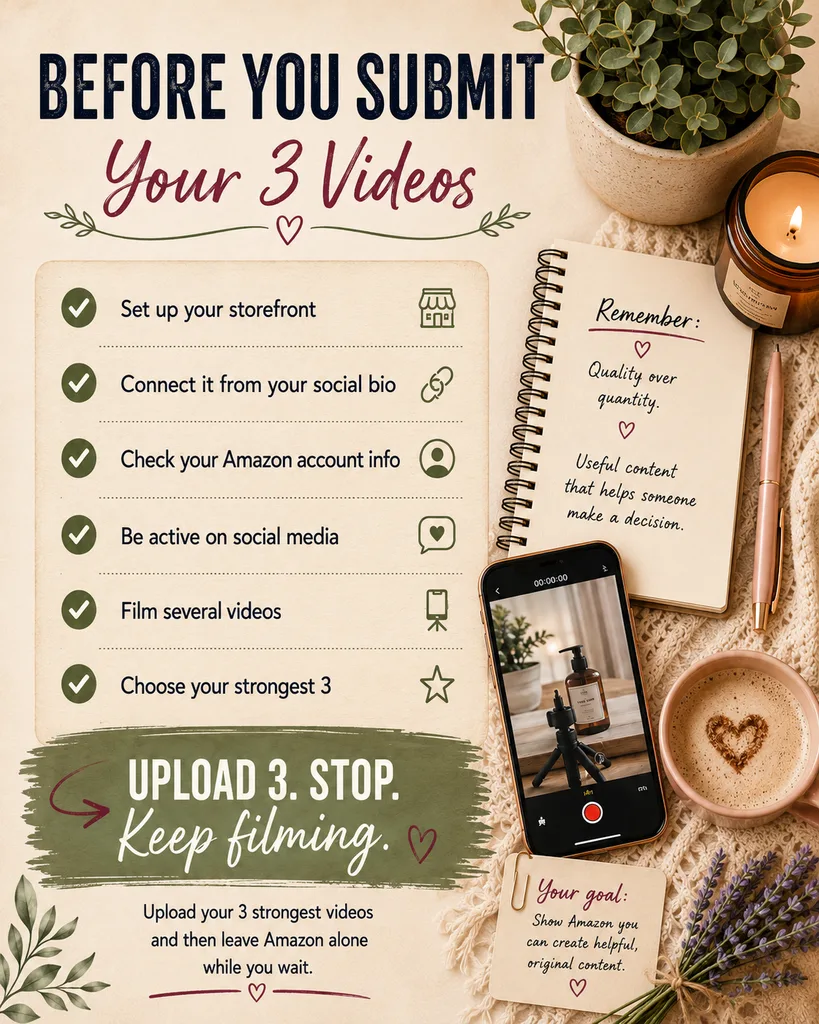
- Connect your Storefront to your social presence. Put it directly in your bio or prominently on your link-in-bio page.
- Stay active and engaged on social media. This is based on my experience and patterns I’ve observed in the creator community—not an Amazon-stated onsite requirement.
- Film several videos, then choose your strongest three.
- Upload those three and stop. Current creator experience still uses three videos for the initial onsite review.
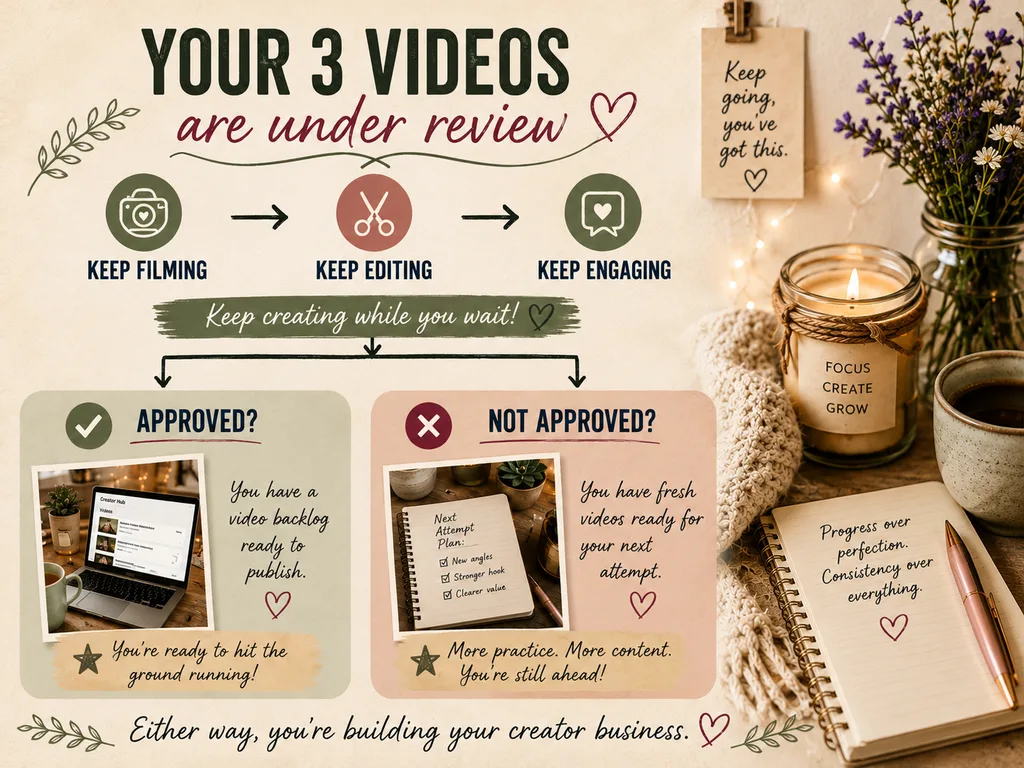
- Keep creating while you wait. Film and edit more videos, but save them locally until you receive your decision.
- Approved? You already have a backlog ready to publish. Not approved? You have fresh videos ready for another attempt.
- Always check Amazon’s current rules. The program changes, and Amazon’s official information is spread across several different resources.
The short version: Connect. Engage. Film. Choose your best three. Submit. Stop uploading—but keep creating.
A quick note before we start: Amazon changes the Influencer Program regularly, and its public documentation doesn’t always describe the experience creators are currently seeing inside Creator Hub particularly clearly. Throughout this article, I’ll distinguish between what Amazon documents, what happened to me personally, what I’ve observed repeatedly in the creator community, and what I recommend based on those things.
First: What Is the Amazon Influencer Program?
The Amazon Influencer Program is an extension of Amazon Associates designed for creators with an established social media presence.
Accepted creators receive an Amazon storefront where they can curate and recommend products to their audience. Amazon currently describes the program as giving creators their own presence on Amazon and a vanity URL they can share with followers.
But there’s another piece of the program that interested me much more:
onsite commissions.
If you’re eligible for onsite earnings, Amazon can choose to display your shoppable content—including videos—to shoppers who are already browsing Amazon.
Instead of you having to send that shopper to Amazon through an affiliate link, Amazon puts your content in front of its own shoppers.
If someone interacts with your qualifying content and makes a qualifying purchase, you can earn an onsite commission. Amazon tracks those earnings separately from the commissions you earn from traffic you personally send to Amazon.
That distinction is important:
Getting accepted into the Amazon Influencer Program and getting your content approved for onsite placement are not the same thing.
I learned that part next.
How I Got Into the Amazon Influencer Program
I actually had a head start.
I’d been an Amazon Associate since my old Hot Mom Tips blogging days, long before Angel Wings It existed.
Back then I blogged about giveaways, tested products, worked with brands and even made some very early YouTube product reviews.
Years later, when I started Angel Wings It and began crocheting seriously again, I came across the Amazon Influencer Program and applied.
Amazon currently says participation requires creators to meet qualitative and quantitative thresholds and provide access to information about their social media presence during registration.
Here’s the funny part:
I don’t actually know which social account got me approved.
My best guess is my professional Facebook profile.
When my Amazon Storefront was first created, the name associated with it was Davryanna, which is still my Facebook username, and Facebook has historically been my most engaged social platform.
Amazon says its vanity URL is generated based on the social-media handle that qualified you for the program, which makes that clue somewhat more compelling—but I still can’t prove it.
So I’m going to call it what it is:
my best guess.
Getting Accepted Wasn’t the Hard Part
Once I was in AIP, I wanted to unlock onsite commissions.
That meant submitting videos for review.
And I didn’t pass the first time.
My first three videos were rejected.
Like many creators, I was left trying to figure out exactly what I’d done wrong.
I tried again.
And the second time, I was approved.
Here’s where my experience gets interesting.
My Videos Weren’t Dramatically Better the Second Time
Of course I paid attention to the videos themselves.
You should.
But I can’t honestly tell you that there was some enormous leap in production quality between my first and second attempts.
What did change substantially was my social-media activity.
Because I didn’t know which account Amazon had originally used to approve me for the Influencer Program, I started engaging like crazy across my social accounts.
I posted.
I interacted.
I responded.
I made sure I looked like what I was applying to be:
an active content creator with an engaged social presence.
Then I submitted again.
I was approved.
Can I prove that increasing my social engagement is what got me through onsite approval?
No.
Amazon does not publicly tell creators that social engagement determines whether those first videos pass onsite review.
But I’ve watched the Amazon Influencer community ever since, and I’ve repeatedly seen versions of the same story: creators are rejected, increase their social activity and engagement, try again and get approved—sometimes without substantially changing the videos.
That doesn’t prove causation either.
But combined with my own experience, it’s enough that I would absolutely change my behavior if I were applying today.
My Recommendation: Don’t Go Quiet on Social Media While You’re Waiting
This is my recommendation based on my experience and patterns I’ve observed in the creator community, not an Amazon-stated onsite requirement.
If I were applying today, I would make sure the social account connected to my creator identity looked alive.
I’d post useful content.
I’d respond to comments.
I’d interact naturally with my audience.
I’d continue creating.
I wouldn’t suddenly spam my followers or manufacture meaningless engagement just to make numbers move.
I’d simply make sure that if someone looked at my account and asked, “Is this person actively creating content and interacting with an audience?”, the answer was obviously yes.
And I’d start doing that before submitting my three videos—not after getting rejected.
Insider Tip: Engagement isn’t only about people engaging with your content. One of the easiest things to overlook is your side of the conversation. Don’t just post and wait for people to come to you—actively engage with other people’s content too. Leave meaningful comments (I aim for more than five words), save posts you genuinely find useful, and share content that’s worth passing along. Simply scrolling through and tapping Like isn’t the same kind of meaningful interaction. If you’re trying to build an active, engaged social presence, participate in the community instead of only broadcasting to it.
This is my practical social-media advice, not an Amazon-stated requirement for onsite approval. I can’t tell you that Amazon measures any particular type of social interaction during onsite review. What I can tell you is that meaningful two-way engagement was part of what I deliberately increased before my successful attempt.
Before You Submit: Connect Your Social Presence to Amazon
This is another step I think is incredibly easy to overlook.
Make your Amazon Storefront easy to find from the social profile you’re using as a creator.
Amazon’s own Influencer guidance tells Instagram creators to put their Influencer Page link in their bio. Its guidance for Facebook and YouTube similarly recommends linking the Influencer Page from the profile/channel.
So do it.
If your storefront is your primary link, put it directly in your bio.
If you use a link-in-bio page because you have multiple destinations, make sure your Amazon Storefront is clearly visible there.
Don’t bury it six clicks deep.
This is useful for your audience anyway. If you’re recommending products on social media, people should be able to find the place where you collect those recommendations.
It’s also one more way of making the relationship between your social presence and Amazon presence clear.
Also Check Your Amazon Account Information
Make sure the websites and social properties you’re using with Amazon are correctly represented in your Associates account, and make sure you’re following Amazon’s current disclosure requirements.
Amazon’s Influencer Program is part of the broader Associates Program, so being accepted as an Influencer doesn’t make the Associates Operating Agreement disappear.
And Amazon does update those policies.
For example, its April 2026 changes included a new definition of original content requiring commentary, analysis or transformation that adds value, along with changes to how onsite qualifying purchases are calculated.
Don’t rely on a three-year-old YouTube tutorial for current compliance rules.
Check Amazon’s current policies.
Bookmark This: Amazon’s Rules Aren’t All in One Place
One of the frustrating things about Amazon Influencer and Associates is that there isn’t one single page containing everything you need to know. When I’m checking a rule, these are the official Amazon places I’d look:
- Associates Program Operating Agreement — the overarching agreement governing participation in Amazon Associates.
- Associates Program Policies — this is the hub for the Participation Requirements, Commission Income Statement, Trademark Guidelines, IP/content rules, Amazon Influencer Program Policy, and other program-specific policies.
- Amazon Influencer Program Policy — the rules specifically governing participation as an Influencer. Remember that Influencers are also Associates, so this does not replace the broader Associates rules.
- Associates Central Help — Amazon’s practical help articles for things such as Influencer Program questions, storefronts, video uploads, disclosures, account reviews, commissions and other how-to questions.
- Creator University / Creator Hub — check the education and guidance Amazon provides inside your creator account too, especially for current content and video guidance.
- Amazon Community Guidelines — content you publish directly on Amazon also has to follow Amazon’s Community Guidelines in addition to the Associates and Influencer rules.
My rule of thumb: If someone in a Facebook group, Reddit thread, YouTube video—or even this blog—tells you “Amazon’s rules say…”, go find the current Amazon source before treating it as a rule. Community experience can be incredibly useful for figuring out how the program works in practice, but Amazon’s own current agreements and policies are what govern your account. Amazon changes them, so bookmark the official pages and check them periodically.
Now Let’s Talk About Those Three Videos
This is where Amazon’s current public documentation can be confusing.
Amazon’s help documentation currently says that after you’ve uploaded 10 videos approved by moderation and completed signup for onsite commissions, your videos may be discovered on relevant product-detail pages.
That’s not the same thing as the initial three-video onsite approval process creators currently encounter.
The current creator experience continues to revolve around submitting three videos for that initial onsite review.
So here’s the advice I would give someone going through it now:
Upload Your Three Strongest Videos—and Stop
Do not keep uploading more videos while those first three are being evaluated for onsite approval.
This advice comes from current creator experience and community practice rather than clear language in Amazon’s public help documentation.
Anything you’ve uploaded can potentially become part of what Amazon evaluates.
You don’t gain anything by throwing another seven videos into the pile while you’re waiting.
Submit three.
Then leave Amazon alone.
What Should Those First Three Videos Be?
I wouldn’t try to make cinematic masterpieces.
I’d concentrate on being useful.
Choose products:
- you actually own and have used;
- you understand well enough to discuss naturally;
- you can demonstrate clearly;
- that give you something meaningful to say.
Then make technically solid videos.
The product should be easy to see.
Your audio should be understandable.
Your lighting should be sufficient to see what you’re demonstrating.
And your commentary should help someone make a purchasing decision.
Don’t make three commercials.
Make three useful product reviews.
Don’t overthink the editing. Most of the time, my editing process is surprisingly simple. After I finish filming, I open CapCut on my phone, use Isolate Voice to clean up background noise, then use the transcript editing tools to remove long pauses, filler words and obvious mistakes. Then I export. That’s it. You do not need elaborate transitions, effects or hours of editing to make a useful Amazon product video. I’ll eventually put together a full walkthrough of how I edit my Amazon videos, but for your first three, clear, concise and easy to watch is enough.
There will be plenty of time to experiment with formats later.
Your first goal is simply to demonstrate that you can create useful, original shoppable content.
Then Stop Uploading—But Don’t Stop Filming
This is probably my favorite piece of advice for the waiting period.
Once your three videos are submitted:
Keep making videos.
Just don’t upload them to Amazon yet.
Film another product.
Then another.
Edit them.
Finish them.
Keep them organized somewhere on your computer.
Why?
Because there are only two likely outcomes.
If You’re Approved…
Congratulations.
Now instead of staring at your empty Creator Hub wondering what to make next, you already have a catalog of finished videos ready to upload.
You can hit the ground running.
If You’re Not Approved…
That stings.
But you’re also not starting from zero.
You’ve spent the waiting period practicing. You have fresh videos available. You’ve probably gotten more comfortable on camera and learned something from everything you’ve filmed.
Choose your next three strongest candidates, address anything you think may have hurt the previous submission and try again.
Either way:
you’re ahead.
What I Would Do If I Were Applying Today
If I had to start over tomorrow, this would be my process:
1. Get accepted into the Amazon Influencer Program.
2. Set up my Storefront properly.
3. Put my Storefront directly in my social bio or prominently on the link-in-bio page connected to that profile.
4. Make sure my Amazon account information, social properties and disclosures are current and compliant.
5. Become consistently active on my social media—not fake engagement, just genuinely posting and interacting with my audience.
6. Film several Amazon product videos.
7. Choose my three strongest videos rather than automatically using the first three I filmed.
8. Upload exactly those three for the initial onsite review.
9. Stop uploading to Amazon while I wait.
10. Keep posting and engaging on social media.
11. Keep filming and editing Amazon videos locally.
Then:
Approved? Start publishing the catalog I’ve already created.
Rejected? Learn what I can, choose three fresh strong videos and try again.
I can’t promise that following those steps will get anyone approved.
Nobody outside Amazon can.
But knowing what I know now, that’s exactly how I would approach it.
Getting Approved Is Not the Finish Line
Here’s something I wish I’d understood better in 2023:
Getting approved doesn’t make the Amazon Influencer Program profitable.
It gives you an opportunity.
What you do with that opportunity matters.
I got approved for onsite placement—and then barely used it.
From 2023 through spring 2026, crochet was my primary focus.
Amazon Influencer was a nice bonus.
I’d make a few videos here and there. Sometimes Amazon would run a promotion that motivated me to create more. During Q4 I’d post deals like mad.
But I wasn’t consistent.
I wasn’t treating it like a meaningful part of my business.
Then in May 2026, things changed.
What Happens If I Actually Take Amazon Influencer Seriously?
I’d reached the point where I couldn’t keep solving our budget by finding another place to cut expenses.
There was only so far I could make the money we already had stretch.
I needed to increase what was coming in.
But I didn’t want to invent an entirely new business.
I was already an Amazon Influencer.
I had products in my house.
I had a phone.
I knew how to create content.
So I decided to see what would happen if I stopped treating onsite videos like bonus income and started creating them intentionally and consistently.
I made more videos.
I got better at making them.
Then I made more.
And my income started increasing along with the consistency.
But something else happened that I think was just as valuable.
Amazon Influencer Made Me a Better Content Creator
Making product videos consistently improved my content everywhere.
I got better at talking about products.
I got faster at filming.
My editing improved.
I learned how to batch content.
I became better at identifying the useful part of a product instead of trying to say everything about it.
And I started realizing that one piece of work didn’t have to produce only one piece of content.
An Amazon product video could become a Short.
A Short could become a social post.
Several related products could become a blog article.
That article could become Pinterest content.
Products I genuinely liked could go into Idea Lists and other recommendation content.
Instead of constantly asking:
“What should I make today?”
I started asking:
“How many useful things can I make from work I’ve already done?”
That has fundamentally changed how I approach content creation.
Consistency Works—but You Don’t Have to Do Everything Manually
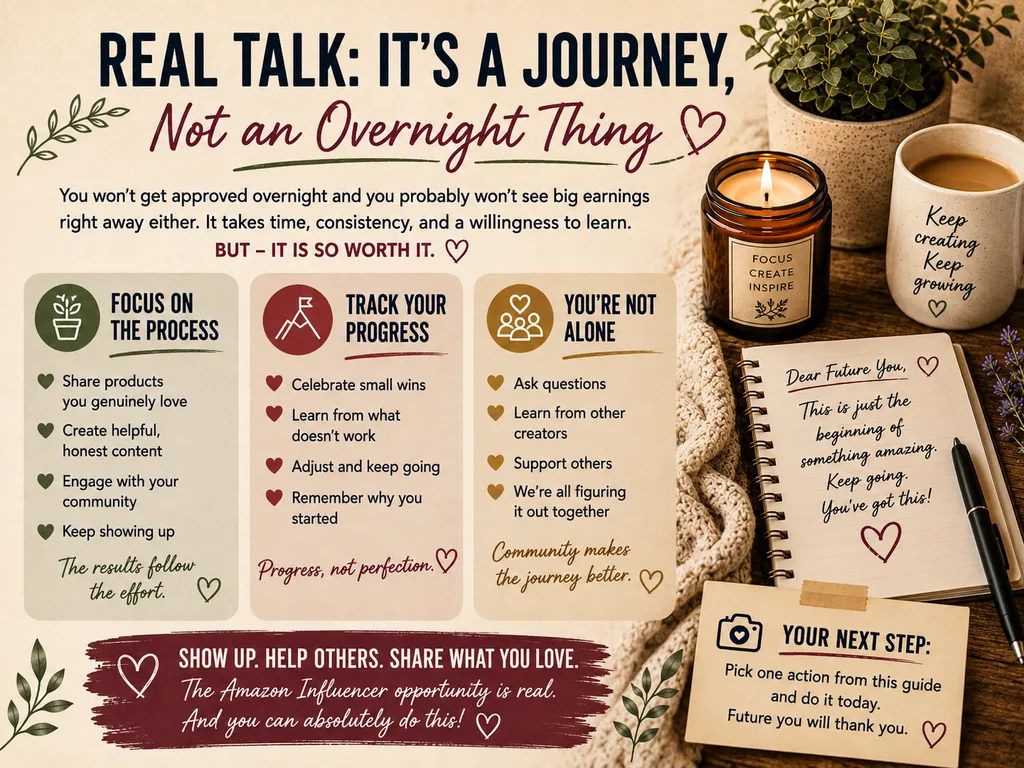
There’s one obvious problem with discovering that consistency pays:
you have to somehow remain consistent.
I don’t want a business that requires me to operate at full capacity every single day.
So as Amazon Influencer became a bigger part of what I was doing, I started looking harder at systems, batching, scheduling, repurposing and automation.
That’s where tools became increasingly important.
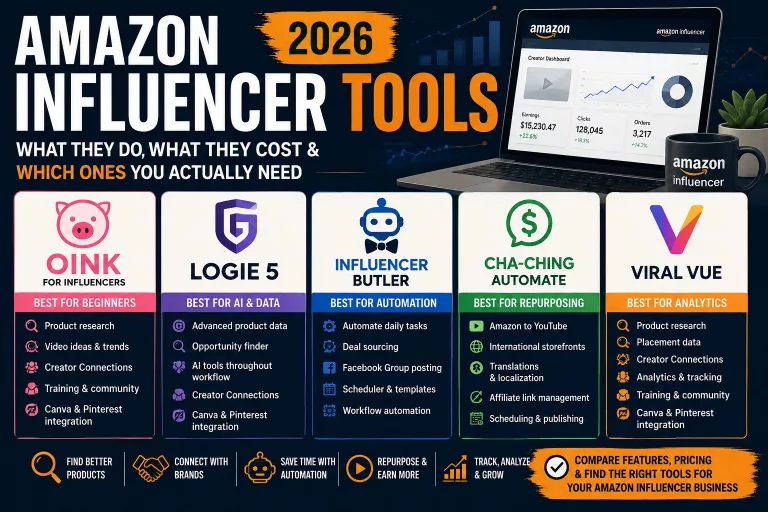
Today I use several tools in my creator workflow, including Oink, Cha-Ching, Influencer Butler, Canva and CapCut.
None does everything.
And despite what software marketing sometimes suggests, I haven’t found one magical application that runs an entire Amazon Influencer business for me.
Influencer Butler is actively adding functionality that overlaps with some of the other tools I use, but it hasn’t replaced all of them for me.
That’s okay.
I’m much more interested in whether a tool saves enough time, work or attention to justify its place in my workflow.
I’ve put together a separate guide to the Amazon Influencer tools I actually use, including where I think each is strongest and which ones I’d consider paying for.
→ Read: My Amazon Influencer Tools & Resources
Should You Become an Amazon Influencer?
I can’t answer that for you.
And I definitely wouldn’t tell you that Amazon Influencer is effortless passive income.
It isn’t.
You have to create the content first.
Amazon decides whether and where to surface onsite content, and its rules, placements and commission structures can change. In April 2026, for example, Amazon changed onsite commission attribution so that qualifying onsite purchases are limited to the same ASIN variant connected to the content/product-detail-page interaction.
So I wouldn’t build a financial plan around the assumption that today’s Amazon Influencer Program will remain exactly the same forever.
But I also wouldn’t dismiss it because you aren’t trying to become a full-time influencer.
That was never my goal.
My goal was much simpler:
Take things I’m already doing—or things I genuinely want to do—and find ways for them to contribute financially.
Amazon Influencer fits that surprisingly well for me.
I’m already buying and using products.
I’m already creating content.
I’m already talking about things I like, things that disappointed me and things that solved annoying little problems.
Now some of that work can earn money too.
And after spending nearly three years treating Amazon Influencer as a nice little bonus, I finally learned something embarrassingly simple:
An opportunity can only do so much sitting there waiting for you to use it.
I got approved in 2023.
In May 2026, I finally decided to see what would happen if I actually showed up consistently.
I’m still running that experiment.
So far?
Consistency pays.
Amazon Influencer Program FAQ
Do You Need a Large Following to Become an Amazon Influencer?
Amazon doesn’t publish a magic follower number that guarantees acceptance. It says Influencer Program participation is based on qualitative and quantitative thresholds and evaluates your social media presence as part of the application.
So I wouldn’t get hung up on reaching a particular follower count before applying. An active account with original content and genuine engagement may matter more than chasing an arbitrary number Amazon hasn’t actually promised will get you accepted.
Is Getting Accepted Into the Amazon Influencer Program the Same as Getting Approved for Onsite Commissions?
No. These are two separate steps.
Getting accepted into the Amazon Influencer Program gives you access to your Amazon Storefront and Influencer features. Onsite approval is a separate hurdle that allows your qualifying shoppable content to potentially be surfaced by Amazon to shoppers already browsing the site.
That’s why someone can truthfully say, “I’m an Amazon Influencer,” while still waiting to unlock onsite commissions.
How Many Videos Should I Submit for Onsite Approval?
My advice is to submit your three strongest videos and then stop uploading while they’re under review.
This is based on the current Creator Hub experience, my own approval experience and what creators continue to report—not clear language in Amazon’s public help documentation. Amazon currently has public documentation referring to 10 moderation-approved videos in connection with potential product-detail-page discovery, which is a different threshold and makes this unnecessarily confusing.
For the initial onsite review, I would upload three and wait.
Should I Keep Uploading Amazon Videos While I’m Waiting for Onsite Approval?
I wouldn’t.
Stop uploading, but don’t stop creating. Keep filming and editing videos and save them locally while your three are under review.
If you’re approved, you’ll have a backlog ready to publish. If you’re rejected, you’ll have more practice under your belt and fresh videos available when you’re choosing your next three. Either way, the waiting period hasn’t been wasted.
Does Social Media Engagement Matter for Onsite Approval?
Amazon does not publicly say that social engagement determines whether your three videos pass onsite review, so I cannot tell you that it is an official approval factor.
What I can tell you is that my video quality didn’t change dramatically between my unsuccessful and successful attempts, while my social engagement did. Before my second attempt, I deliberately became much more active across my social accounts—and I passed.
I’ve also repeatedly seen creators report similar experiences in the Amazon Influencer community, including people who were eventually approved after increasing their social activity without substantially changing their videos.
That’s correlation, not proof. But if I were applying again, I would absolutely stay active: post, respond to people, leave meaningful comments on other creators’ content, save useful posts and share things worth sharing. I wouldn’t manufacture engagement, but I wouldn’t disappear while Amazon was evaluating me either.
Do I Need to Put My Amazon Storefront in My Social Media Bio?
Amazon’s own Influencer guidance tells creators to make their Influencer Page accessible from their social presence—for example, by placing the storefront link in an Instagram bio and linking it from Facebook or YouTube.
My recommendation is to make this connection obvious before you submit your onsite videos. Put your Storefront directly in your bio or make it prominent on the link-in-bio page linked from your profile.
Also make sure the websites and social properties where you use Amazon links are correctly represented in your Amazon account and that you’re following Amazon’s current disclosure requirements.
What If My First Three Videos Are Rejected?
Mine were.
Don’t assume that means you’re permanently locked out of onsite commissions. Look critically at the videos, check Amazon’s current content requirements, make sure your social presence and Storefront are properly connected, stay active on social media and prepare another strong set.
This is also why I recommend continuing to film while you wait. If you need another attempt, you aren’t starting from scratch.
I was approved on my second try.
How Much Can You Make With the Amazon Influencer Program?
There isn’t a useful universal number.
Earnings can vary based on the products you cover, commission categories, how much qualifying content you have, whether Amazon surfaces that content, shopper behavior, seasonality and changes Amazon makes to the program itself.
My own experience is a good example of why I wouldn’t treat approval as an income promise. I had onsite access for years while treating it as occasional bonus income. It wasn’t until I began creating videos intentionally and consistently in May 2026 that I started seeing what the program could actually contribute.
So I wouldn’t ask, “How much does an Amazon Influencer make?” as though there’s a salary attached to the title.
I’d ask a more useful question:
“Is this an income stream that fits the content I’m already willing and able to create?”
For me, the answer has been yes.
Quick Start: My Amazon Influencer Onsite Approval Advice
If you remember nothing else from this article:
Before submitting: Make sure your Amazon Storefront and social presence are clearly connected and your account information is current.
Social media: Stay genuinely active and engaged. Amazon doesn’t tell us this determines onsite approval, but my own experience and patterns I’ve observed in the creator community make it something I would take seriously.
Videos: Film several, choose your three strongest and submit only those three for the initial onsite review.
While waiting: Stop uploading to Amazon, but keep filming and editing.
If approved: You’ve already built a catalog to start publishing.
If rejected: You’ve got fresh videos, more practice and another three candidates ready to go.
Most importantly:
Separate Amazon’s documented requirements from creator advice—including mine.
Programs change.
Experiences differ.
And nobody outside Amazon can guarantee approval.
All I can tell you is what Amazon currently documents, what happened to me, what I’ve repeatedly observed since—and what I would do if I had to start over today.
And that’s exactly what I intend to keep doing here.