
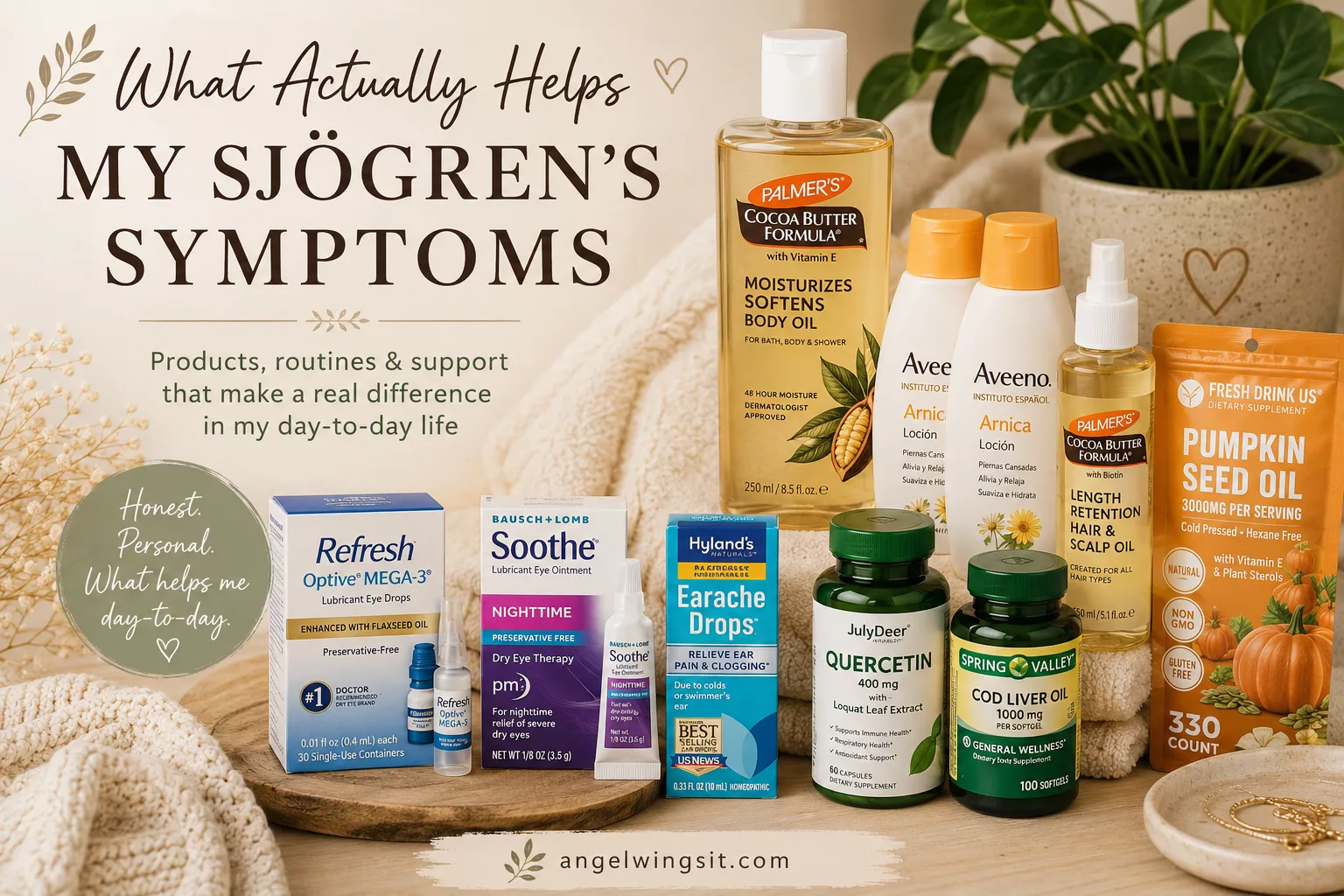
10 Effective Sjögren’s Syndrome: Products That Actually Help
This post contains affiliate links, which means I may earn a small commission if you shop through them—at no extra cost to you. I’m partnered with Amazon, Walmart, and other brands through programs like Collective Voice and Mavely. I only share products I truly love or think you’ll find helpful.
Table of Contents
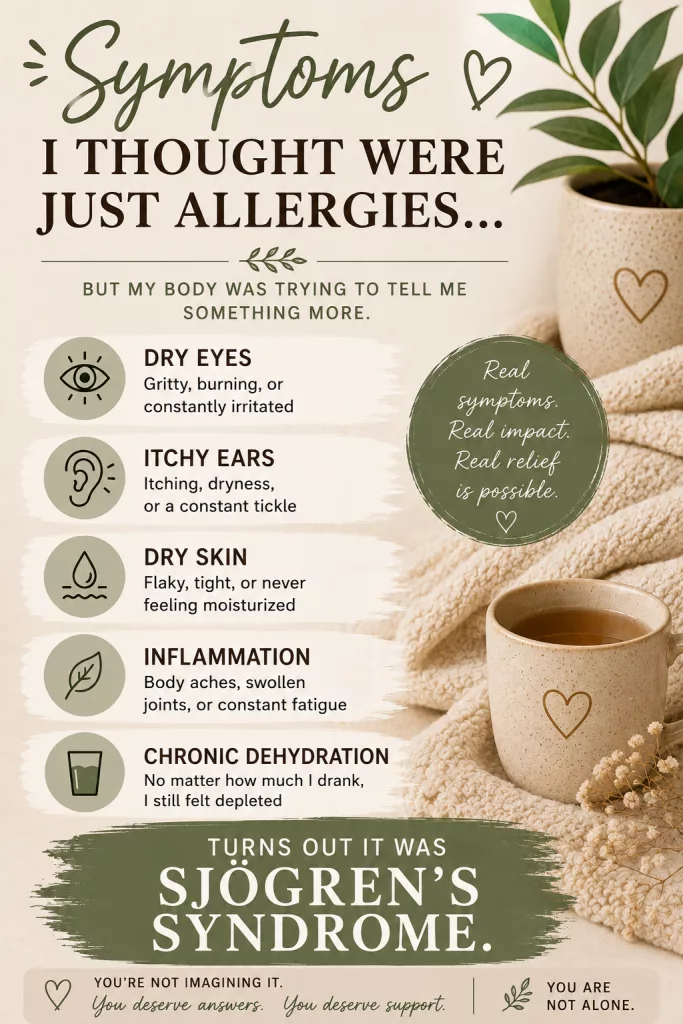
For most of my life, I thought my symptoms were “just allergies.”
The dry eyes. The itchy ears. The skin that always seemed thirsty no matter how much lotion I used. The constant feeling that my body was somehow dried out from the inside. Because I also deal with MCAS and hEDS, it was easy to assume everything connected back to allergies, inflammation, or simply having a sensitive body.
Looking back now, I can see the signs of Sjögren’s syndrome were probably there all along.
In fact, the combination of hEDS and untreated dryness even led to multiple ear surgeries over the years — surgeries that never truly solved the problem because no one realized dryness itself was part of what was happening.
Oddly enough, the thing that finally pushed me toward answers was a conversation about eye drops.
I was talking with my eye doctor about preservative-free eye drops and mentioned that I assumed my dry eyes were caused by allergies. She looked at me and said something that completely changed how I understood my symptoms:
“Allergies usually cause watery eyes.”
I remember telling her that I only really tear up when I yawn, get very angry, or cry. Otherwise, my eyes constantly felt dry, gritty, and exhausted. She explained that she could actually see the dryness and recommended I get checked for Sjögren’s syndrome.
That conversation led to a rheumatology appointment, multiple rounds of bloodwork, and eventually a positive Sjögren’s test.
Since then, I’ve been slowly learning how to untangle which symptoms connect to what — and more importantly, how to make my body more comfortable day-to-day.
None of the products in this post are cures, and this isn’t medical advice. These are simply the things that have personally made the biggest difference for me when it comes to dryness, irritation, inflammation, and everyday comfort living with Sjögren’s syndrome, MCAS, and hEDS.
Some are small things. Some took trial and error. Some were frustratingly expensive compared to the alternatives.
But these are the things I keep repurchasing because they genuinely help.
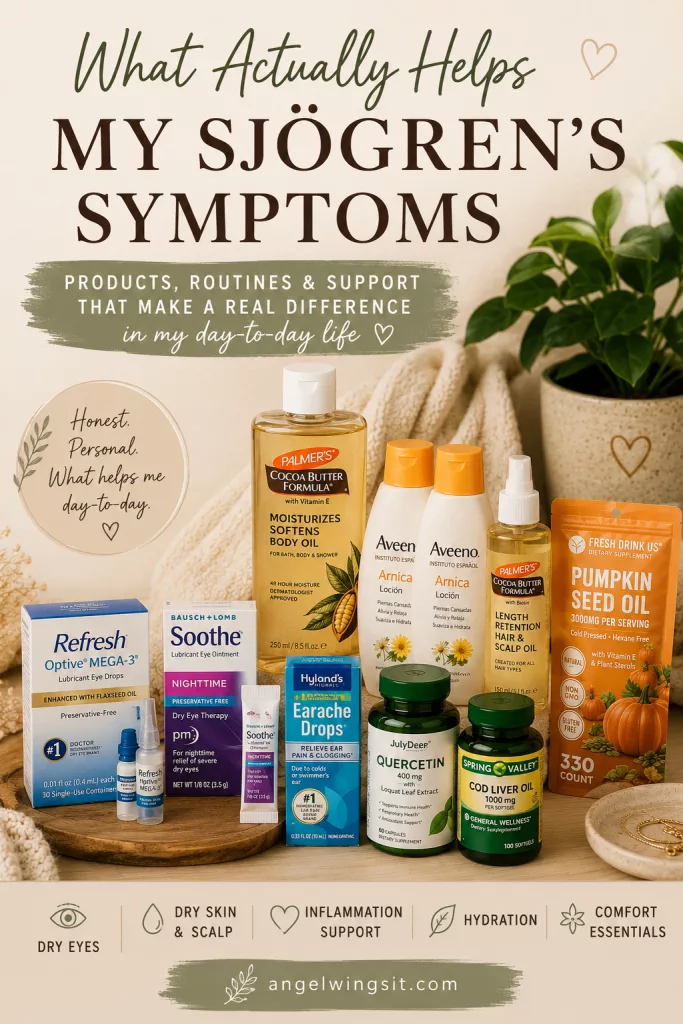
Sjögren’s Syndrome Products That Help Me the Most
| Symptom | What Helps Me |
|---|
| Dry eyes | Refresh Optive Mega-3 PF + nighttime ointment |
| Dry skin | Palmer’s Body Oil + Avena Arnica Lotion |
| Dry scalp | Palmer’s Hair & Scalp Oil |
| Ear dryness | Hyland’s Earache Drops |
| Hydration | Homemade electrolyte mix |
My Sjögren’s Comfort Essentials
If you’d like to browse all of the products mentioned in this post in one place, I put together an Amazon idea list with the eye drops, skincare, supplements, hydration support, and other products that personally help me manage Sjögren’s symptoms day-to-day.
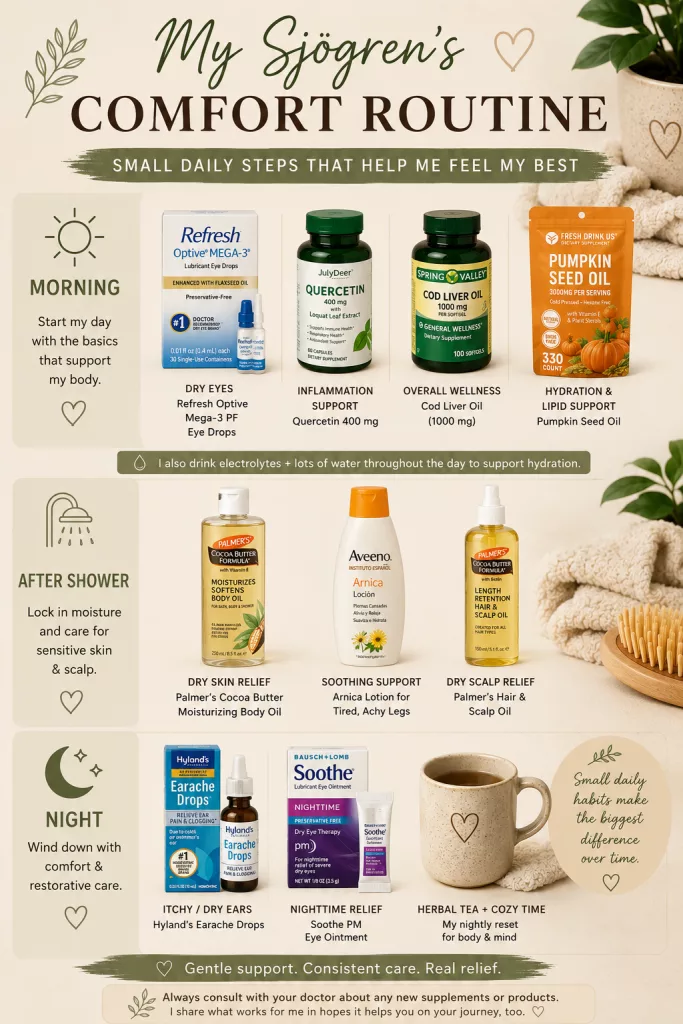
The Eye Care Products That Made the Biggest Difference for Me
Dry eyes have probably been one of my most persistent Sjögren’s symptoms, even long before I knew what Sjögren’s actually was.
For years, I cycled through countless eye drops trying to find something that would help. I kept buying the regular drops with preservatives because they were cheaper and easier to find, and I convinced myself they were “good enough.”
They weren’t.
Not only did they not help much, but over time they actually seemed to make the dryness worse. My eyes would feel briefly relieved and then even more irritated afterward — dry, gritty, burning, and exhausted by the end of the day.
The biggest change for me was finally switching to preservative-free eye products.
Refresh Optive Mega-3 Preservative-Free Eye Drops
The eye drops I keep coming back to are Refresh Optive Mega-3 Preservative-Free Lubricant Eye Drops.
These feel noticeably more soothing than most drops I’ve tried, and they don’t leave my eyes feeling even drier an hour later the way preserved drops often did. For me, they feel more moisturizing instead of just temporarily wetting the surface of my eyes.
I especially notice the difference on high inflammation days or when my allergies and MCAS are flaring alongside my Sjögren’s symptoms.
One thing I didn’t fully understand before diagnosis is that severe dryness can sometimes feel similar to allergy irritation. I kept assuming my eyes were reacting to allergens when really they were chronically dry.
Once I switched to preservative-free drops consistently, the difference became impossible to ignore.
My Nighttime Routine: Eye Ointment Before Bed
At night, I use Bausch + Lomb Soothe Lubricant Eye Ointment right before going to sleep.
The first time I used it, honestly, I hated the feeling for about five minutes.
It’s thick. Your vision gets blurry. It feels strange at first if you aren’t used to ointments near your eyes.
But the next morning, my eyes didn’t feel nearly as dry and sandy as usual, and that completely sold me on it.
Now it’s part of my nightly routine.
Right before bed, I take off my glasses, apply the ointment, put on my scalp oil, and then close my eyes for the night. It’s become one of those small chronic illness rituals that genuinely helps my body settle down.
The only downside for me is that if I wake up before the ointment fully absorbs, my vision can still be a little blurry for a while.
Still absolutely worth it for the relief.
What Didn’t Work for Me
The biggest thing that didn’t work for me was eye drops with preservatives.
Not only did they not help much, but over time they actually seemed to make both the dryness and my allergy symptoms worse. My eyes would feel briefly relieved and then increasingly irritated afterward — dry, gritty, burning, itchy, and exhausted by the end of the day.
For a long time, I didn’t realize the eye drops themselves were part of the problem because I dealt with allergy symptoms constantly anyway. I would go into sneezing fits multiple times a day and assumed it was just my allergies or MCAS flaring.
Ironically, I only finally connected the dots after starting quercetin. Once the constant sneezing improved, I noticed I was still having sneezing fits almost every time I used regular eye drops.
That was the moment I realized the drops themselves were likely triggering irritation and allergy symptoms on top of the Sjögren’s dryness.
The biggest change for me was finally switching to preservative-free eye products.
Obviously everyone’s body is different, but once I switched to preservative-free products, I realized how irritated my eyes had actually been before.
Skin, Scalp & Body Care That Help Me Feel Comfortable
One of the hardest parts of Sjögren’s syndrome for me is how everything can feel dry at once.
Not just dry skin in the normal sense, but the uncomfortable feeling that your skin, scalp, eyes, and even ears are constantly struggling to hold onto moisture. Before diagnosis, I spent years assuming I just had “sensitive skin” or bad allergies.
Now I realize a lot of what I was dealing with was dryness and inflammation layered together.
Over time, I’ve learned that my skin tends to do best with products that are:
- deeply hydrating
- low fragrance or fragrance-free
- soothing instead of “active”
- oil-based without feeling heavy or greasy
And honestly, avoiding irritation has become just as important as adding moisture.
My After-Shower Routine
One of the biggest things that helps me is applying oil immediately after showering while my skin is still slightly damp.
That one small habit makes a much bigger difference for me than simply putting lotion on dry skin later.
The body oil I keep repurchasing is Palmer’s Cocoa Butter Formula Moisturizing Body Oil.
It gives me the extra hydration my skin seems to constantly need without leaving me feeling greasy or sticky afterward. A lot of heavier oils either sit on top of my skin or make me feel overheated, but this one absorbs well enough that I can actually use it consistently.
For my legs specifically, I also love Avena Arnica Lotion.
There’s something especially soothing about it on days when my legs feel dry, irritated, or achy. It’s become one of those products I instinctively reach for because my skin just feels more comfortable afterward.
What Didn’t Work for Me
Fragranced lotions are one of the biggest things I’ve had to avoid.
For me, heavily fragranced skincare often turns into a cycle where my skin feels hydrated for a few minutes and then even more irritated afterward. Sometimes it’s dryness, sometimes itching, sometimes just that inflamed “my skin is angry” feeling.
Once I started paying attention to how often fragrance triggered irritation, it became much easier to narrow down products that actually helped.
Scalp Dryness & Hair Oil
Scalp dryness was another symptom I didn’t fully connect to Sjögren’s for a long time.
I kept treating it like a completely separate issue instead of realizing it was part of the same overall dryness problem.
One product that’s helped a lot is Palmer’s Cocoa Butter Formula Moisturizing Hair & Scalp Oil.
I apply it after showering while my hair is still damp, usually right after using my body oil. Over time, I’ve realized my skin and scalp both do much better when I lock moisture in immediately instead of waiting until everything already feels dry and irritated.
What I like most is that it helps hydrate my scalp without making my hair feel heavy or coated. A lot of scalp products I tried before either irritated my skin, felt overly greasy, or contained fragrances that made everything worse.
This one feels soothing instead of overwhelming, which honestly matters a lot when you’re already dealing with sensory overload from chronic illness symptoms.
Ear Care, Dryness & the Symptoms I Misunderstood for Years
One of the stranger parts of finally getting diagnosed with Sjögren’s syndrome was realizing how many symptoms I had normalized over the years.
Dry eyes made sense once someone pointed them out to me. Dry skin eventually clicked too.
But itchy ears?
That was something I had always blamed entirely on allergies.
Because I also deal with MCAS, I assumed the itching was just another allergic reaction trigger. Sometimes certain foods absolutely did make it worse, so that explanation seemed to fit.
What I didn’t understand at the time was that dryness itself can also cause irritation and itching.
Looking back now, so many things make more sense.
The combination of hEDS, chronic dryness, inflammation, and years of symptoms eventually led to multiple ear surgeries that never fully solved the problem because we still didn’t understand the underlying cause.
Once I finally started approaching the issue as both dryness and irritation instead of only allergies, things started improving much more consistently.
What I Use for Ear Dryness & Irritation
One thing that’s helped me a lot is Hyland’s Earache Drops.
For me, they feel soothing and hydrating instead of harsh or overly medicated. I mostly use them when my ears start feeling dry, itchy, irritated, or “off” in that hard-to-explain sensory way that chronic illness symptoms sometimes create.
They’ve become one of those products I like keeping nearby because once the irritation starts, it can quickly become distracting and overstimulating.
Learning to Separate “Allergies” From Dryness
One of the biggest ongoing lessons for me with Sjögren’s, MCAS, and hEDS has been learning that not every symptom comes from the same place.
For years, I lumped everything together as “allergies” because allergies were part of the picture. But now I’m slowly learning to recognize the difference between:
- inflammation
- allergic reactions
- dryness
- irritation caused by damaged moisture barriers
- and symptoms that overlap between all three
That process has honestly taken a lot of trial and error.
But understanding the difference has helped me build routines that actually make my body more comfortable instead of accidentally making symptoms worse.
Supplements That Have Helped Me the Most
I want to be very clear that supplements are incredibly personal, especially when you’re dealing with autoimmune issues, MCAS, chronic inflammation, or connective tissue disorders.
These are not cures, and I’m definitely not saying everyone with Sjögren’s syndrome will respond the same way I have.
But these are the supplements that have personally made the biggest noticeable difference for me.
Quercetin: The Biggest Difference for My Inflammation & MCAS Symptoms
Out of everything I currently take, quercetin has probably been the most dramatic change for me personally.
Right now I’m using JulyDeer Quercetin, although the brand has varied over time.
Originally, I started taking quercetin more for MCAS and allergy support.
What surprised me was how much it seemed to help my inflammation and joint pain too.
Before starting it, I was having constant sneezing fits throughout the day and just assumed that was my normal baseline because allergies and MCAS symptoms had always been part of my life. Once I started taking quercetin consistently, the constant sneezing improved enough that I finally noticed a pattern I had completely missed before — the sneezing fits that remained were happening right after using regular eye drops with preservatives.
That realization honestly helped connect a lot of dots for me.
And beyond that, I’ve also noticed a huge difference in my overall inflammation levels and body pain since starting it.
At this point, if I miss it for a few days, I absolutely feel the difference.
Omega-3s & Dryness Support
Another thing I consistently come back to is omega-3 support in some form.
Currently, I’m taking Spring Valley Cod Liver Oil along with Fresh Drink US Pumpkin Seed Oil.
For me, these seem to help support overall dryness and inflammation management in a way that feels gradual but noticeable over time.
Nothing about Sjögren’s symptom management has been a quick fix for me. Most of it has been small improvements stacking together:
- better hydration
- less irritation
- more moisture support
- reducing triggers where possible
- helping my body calm down instead of constantly reacting
And these supplements feel like part of that larger puzzle.
The Biggest Lesson I’ve Learned
Honestly, one of the biggest things I’ve learned since diagnosis is that symptom management is often less about finding one miracle product and more about reducing the number of things actively making your body miserable.
For me, that’s meant:
- switching to preservative-free products
- avoiding heavily fragranced skincare
- supporting hydration more intentionally
- paying attention to inflammation triggers
- and building small routines that consistently help instead of overwhelm me
Those small changes have added up to a much more manageable day-to-day baseline than I had before diagnosis.
Hydration, Electrolytes & Why Plain Water Wasn’t Enough For Me
One of the most frustrating things about living with Sjögren’s syndrome has been realizing that dehydration and dryness are not always the same thing — but they also overlap constantly.
For years, I thought I was doing everything “right” by drinking more water.
But no matter how much plain water I drank, I still felt dry all the time:
- dry eyes
- dry skin
- headaches
- fatigue
- that uncomfortable “dehydrated from the inside out” feeling
Because I also deal with hEDS and MCAS, I’ve slowly realized my body seems to struggle more with actually holding onto hydration instead of simply taking in fluids.
That’s part of why electrolytes have become so important for me.
Once I started paying closer attention to hydration support instead of just water intake alone, I noticed a huge difference in how I felt overall — especially with fatigue, headaches, and that constant dried-out feeling that comes with Sjögren’s.
I eventually started making my own electrolyte mix because so many commercial versions either:
- contained ingredients that triggered my MCAS symptoms
- were too expensive to use consistently
- tasted overly artificial
- or contained sweeteners and additives my body didn’t tolerate well
Being able to customize my own mix has helped me tailor it much more closely to what my body actually seems to need.
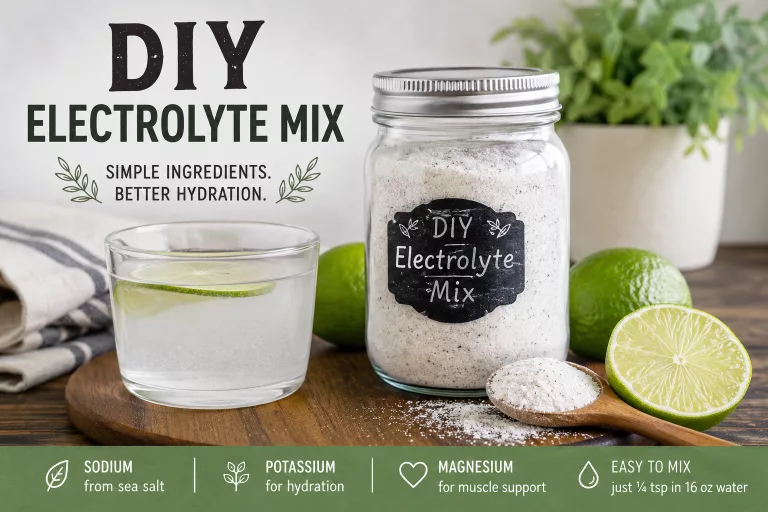
If you want the full recipe and breakdown of what I use, you can read my post on homemade electrolyte mix here:
DIY Electrolyte Mix for Simple Everyday Hydration
Like everything else in this post, it’s not a cure.
But learning how to support hydration more intentionally has absolutely become one of the biggest pieces of managing my Sjögren’s symptoms day-to-day.
FAQ about Sjögren’s Syndrome Products
What products help with Sjögren’s syndrome dryness?
For me personally, the biggest helps have been preservative-free eye drops, nighttime eye ointment, body oils applied after showering, scalp oil for dryness, electrolyte support, and avoiding heavily fragranced products that trigger irritation. You can view my full list of tested products in my Daily Moisture Recovery & Soothing Essentials collection on Amazon.
Why do preservative-free eye drops help more with Sjögren’s syndrome?
In my experience, regular eye drops with preservatives actually made my dryness and allergy symptoms worse over time. Switching to preservative-free drops felt much gentler and more soothing for my eyes.
Can Sjögren’s syndrome cause itchy ears?
I didn’t realize this for years, but dryness itself can absolutely contribute to itchy, irritated ears. I originally assumed mine were only allergy-related.
Does hydration help Sjögren’s symptoms?
For me, hydration support has made a noticeable difference, especially electrolytes. I found that simply drinking more plain water wasn’t always enough to help the constant dry, depleted feeling.
What supplements help you manage Sjögren’s syndrome?
The supplements that have personally helped me the most are quercetin, omega-3s, cod liver oil, and pumpkin seed oil. Quercetin especially made a noticeable difference for my inflammation and MCAS symptoms.
📌Pin It
Final Thoughts
One of the strangest things about finally getting diagnosed with Sjögren’s syndrome was realizing how many symptoms I had normalized for most of my life.
I genuinely thought I was just:
- bad at staying hydrated
- unusually sensitive
- constantly dealing with allergies
- or somehow failing at taking care of myself correctly
Now I understand that many of those symptoms were connected all along.
I’m still learning. I’m still figuring out which symptoms belong to Sjögren’s, MCAS, hEDS, inflammation, allergies, or some overlapping combination of all of them.
And honestly, sometimes untangling that still feels complicated.
But little by little, I’m learning that symptom management doesn’t have to look perfect to make a meaningful difference.
Sometimes it’s just:
- switching to preservative-free eye drops
- using body oil before your skin fully dries
- finding products that don’t trigger irritation
- supporting hydration more intentionally
- or building tiny routines that help your body feel safer and more comfortable
None of these things “fixed” me.
But together, they’ve helped make daily life much more manageable and much less miserable.
And when you live with chronic illness, that kind of comfort matters more than most people realize.
This post contains affiliate links, which means I may earn a small commission if you shop through them—at no extra cost to you. I’m partnered with Amazon, Walmart, and other brands through programs like Collective Voice and Mavely. I only share products I truly love or think you’ll find helpful.




Facebook Comments