How a two-day fever dream, an AI collaborator, and a cast of characters who refused to be quiet became my debut novel.
For thirty years, I tried to write a book; in forty-eight hours, The Girl in the Hall finally came to life.
This post contains affiliate links. As an Amazon Associate and Walmart Creator, I earn from qualifying purchases. I may also earn a commission through other affiliate programs at no extra cost to you. I only share products I genuinely find useful or interesting.
.
My first attempt was a mystery called Murder on Ouachita Plantation, featuring Detective Allison Zeagler. I was nine, I was from Louisiana, and I was absolutely obsessed with Agatha Christie. The ambition was there from the start. What wasn’t there — what has never quite been there, in the thirty-plus years since — was the executive function to get it finished.
If you have AuDHD, you already know exactly what I mean. The inspiration arrives like a lightning strike. You write with everything you have. And then life happens, or the hyperfocus shifts, or the momentum breaks — and by the time it comes back, you’re on a new computer, the old one is in a box somewhere, and the file you swore you saved is just gone. Physically gone. Digitally gone. Both, sometimes simultaneously.
The problem is not that you don’t have a story. You have too many stories and not enough infrastructure to hold them
I have started more books than I can count. I have finished exactly one.
The Girl in the Hall took me two days.
How It Started — And Why It Went So Fast
I want to be honest about something upfront: I did not write this book alone. I wrote it in collaboration with AI — specifically using it as a creative partner, a research assistant, a continuity editor, and the world’s most patient sounding board. Not because the story isn’t mine. It is entirely, completely, achingly mine. But because my brain works the way it works, and having one place to keep everything — every chapter, every character decision, every historical detail — made the difference between a book that exists and a book that lives in pieces on three different devices I can no longer find.
My husband helped with some wording choices too. This was a team effort in the best possible sense.
But here’s the thing about those two days. I wasn’t just writing fast because I’d found a workflow that worked. I was writing fast because they wouldn’t let me stop.
The Voices (And No, I Am Not Hallucinating)
I want to be clear: I do not physically hear voices. I am not describing a medical event. What I am describing is something that I think any writer who has ever been deep inside a story will recognize immediately.
The characters started talking.
It began quietly — just a feeling, a nudge. A sense that something I’d written was slightly off, that I’d gotten a detail wrong. But as the story built, it became more direct. More insistent. I would write something and hear, clearly and unmistakably in the back of my mind: That’s not right. That’s not how it happened. This is what I said.
By the end of the two days I felt like Mulan talking to her ancestors — every single one of them talking over the top of each other, each one desperate to get their story out before I stopped writing.
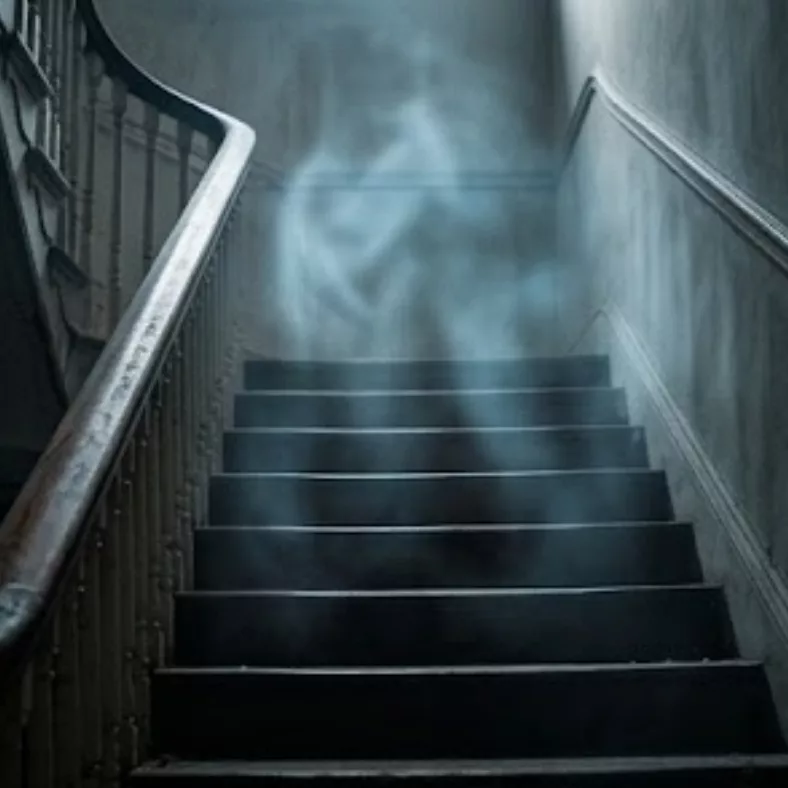
Even minor characters I had no intention of developing started offering me their histories. Celine — one of the women named in a generations-old Bible that appears in the novel — is from Barbados. She told me this. She really wanted it in the book. It didn’t serve the story, so it isn’t there, but I know it, and she made very sure I did.
This is why the two days happened the way they did. I took maybe a couple of naps. I was in full panic mode that if I stopped, if I lost the momentum, the voices would go quiet and I would be back where I have always been — with a brilliant beginning and no ending and a hard drive I can’t access.
I did not let them go quiet. I got it down.
Where It Came From
I had been turning over the idea of a ghost story set in Louisiana for a while. The original concept was different — set in an orphanage, closer to New Orleans, probably the 1930s. A different story entirely, though looking back I can see the bones of it in what I actually wrote.
I think Cora may have been the one who prompted the shift. I started with a simple premise: an orphan girl from Chicago moves to Louisiana to live with her aunt and uncle, and finds a ghost. And almost immediately the corrections started.
It was Chicago, not New York.
She’s my sister, not my wife.
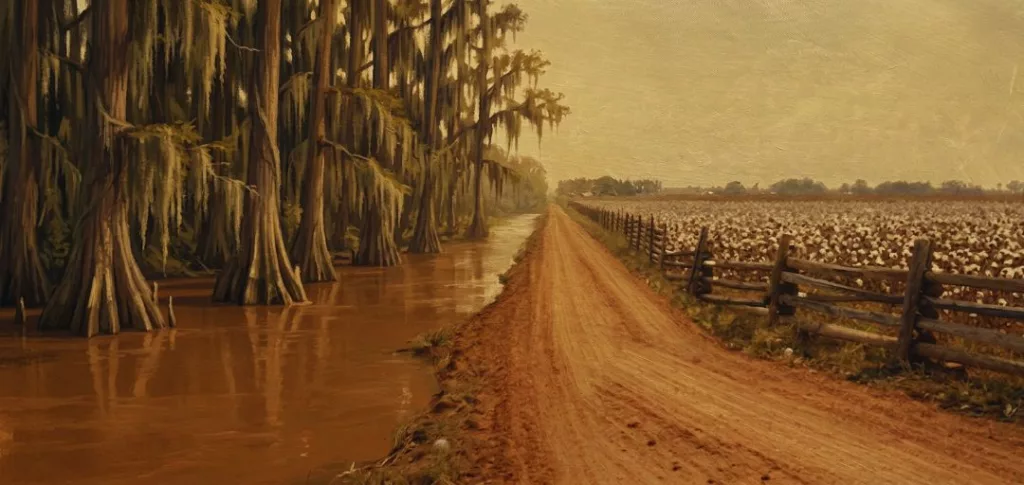
I had been picturing south-central Louisiana — the New Iberia area, bayou country I had a sense of. Adrian corrected me. It’s west-central Louisiana, he told me. Along the Red River, south of Shreveport. This was not a place I had ever thought about writing. It was not the Louisiana of my imagination. It was the Louisiana of his.
I was born and raised in Louisiana until I was ten, so this land is in me somewhere. But the specific geography of this book — Grande Chêne, the Red River parishes, that particular quality of heat and Spanish moss and low flat water — that came from the story, not from me. I just wrote it down.
What the The Girl in the Hall Is Actually About
The Girl in the Hall is a Southern Gothic ghost story set in 1910s Louisiana.
Cora Calloway arrives at Grande Chêne — her mother’s childhood home, a house she has never seen — after her father’s death leaves her with nowhere else to go. Her uncle Adrian is cold and closed-off. Her aunt Adelaide manages everything with the efficiency of someone who has been managing something heavy for a very long time. The housekeeper, Miss Lou, says less than she knows.
And in the upstairs hallway, there is a girl.
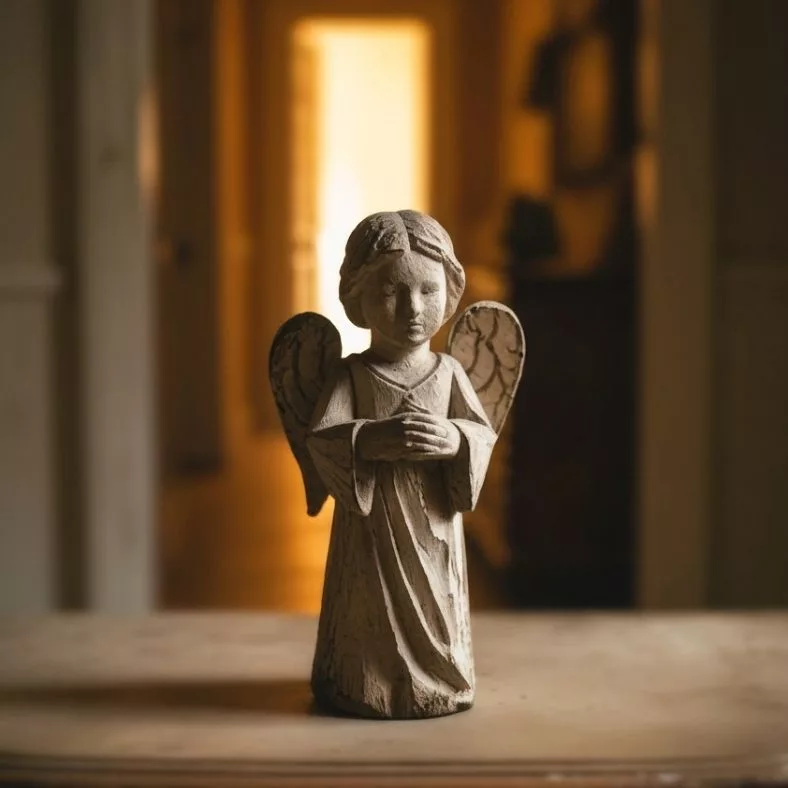
She appears at the bend in the hall, bare feet on the faded runner, her back to Cora. She holds a carved wooden angel. She doesn’t speak. She doesn’t need to.
What Cora slowly uncovers — through parish records, an old journal, a Bible passed from mother to daughter through four generations, and the careful silences of everyone around her — is a story that the house has been keeping for forty years. A story about a girl named Esther. About what was done to her, and who knew, and what it cost everyone who stayed.
It is a ghost story. It is a mystery. It is, at its heart, about the women whose names were almost never recorded — and what it means to finally say them out loud.
For My Fellow AuDHD Writers
I want to say something directly to anyone reading this who has been trying to write a book for years and hasn’t been able to finish one.
The problem is not that you don’t have a story. You have too many stories and not enough infrastructure to hold them. Every tool that helps you stay in one place, keep your work in one place, and maintain momentum without having to rebuild context from scratch every time you sit back down — that tool is not cheating. It is accommodation.
I used AI the way I use any other accommodation. I used it because my brain needed it. And the story that came out of that collaboration is the most complete, most fully realized piece of writing I have ever done — after thirty years of trying.
If you’ve been waiting to write your book until you can do it the “right” way, unassisted, in a neat organized process: stop waiting. Use what works. Get it down.
The Book Will Be Available Soon (Coming July 2026)
Author’s Update: The Girl in the Hall is currently back in the shadows! I’ve pulled it from shelves for a round of deep polishing and editing to make sure the final version is as magical as the dream that started it. Sign up for my newsletter [or follow my socials] to be the first to know when the new edition drops!
The Girl in the Hall by Angel Livingston is available on Amazon in both print (soon) and Kindle editions (soon).
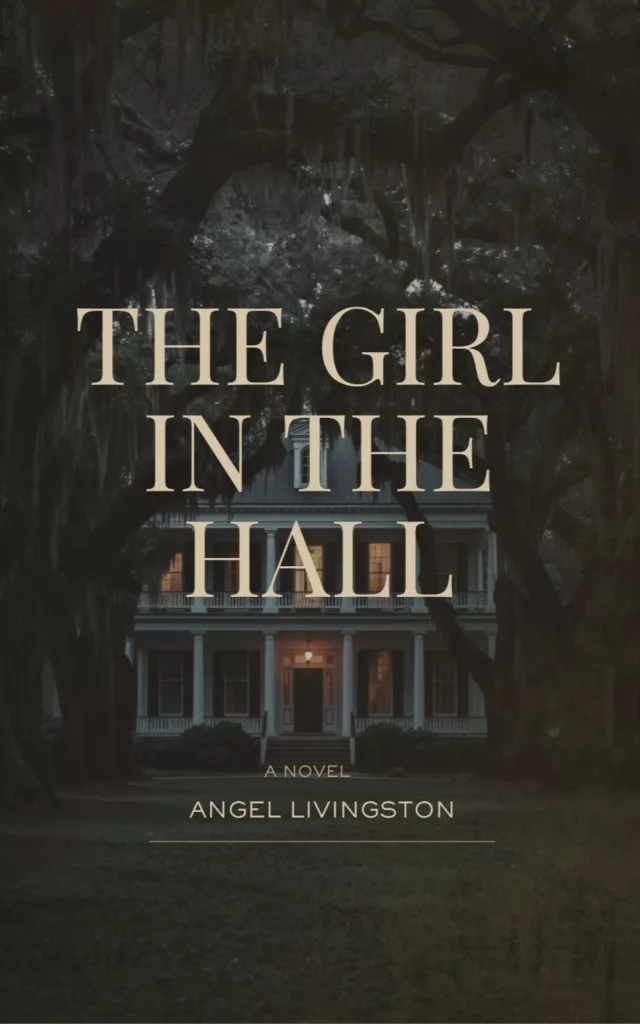
If you love Southern Gothic fiction, historical mysteries, ghost stories with emotional depth, or books that stay with you after you’ve finished them — this one is for you.
And if you’ve ever felt like the characters were more real than the page — you’ll understand exactly how it was written.
RELATED POSTS
How to Create a Witchy Room Aesthetic on a Budget
A cozy guide to transforming your space with dark cottagecore, thrifted finds, and magical little details.
Herbs & Spices
Witchy Room Decor at Walmart: 30+ Dark Cottagecore Finds
A curated list of affordable, witchy‑whimsical decor pieces you can grab online or in‑store.
15 Dark Cottagecore Crochet Patterns That Feel Like Pure Witchcraft
A roundup of moody, magical crochet projects — perfect for cozy nights and handmade home vibes.
15 Dark Cottagecore Outfits for Everyday Magic
A style guide full of floaty skirts, dark florals, and witchy accessories you can wear year‑round.
Cottagecore Meaning: A Cozy, Historical Deep Dive
Your beautifully researched essay exploring the roots, symbolism, and emotional resonance of cottagecore.